Natural Stone: Truths and False Myths Between Aesthetics and Durability
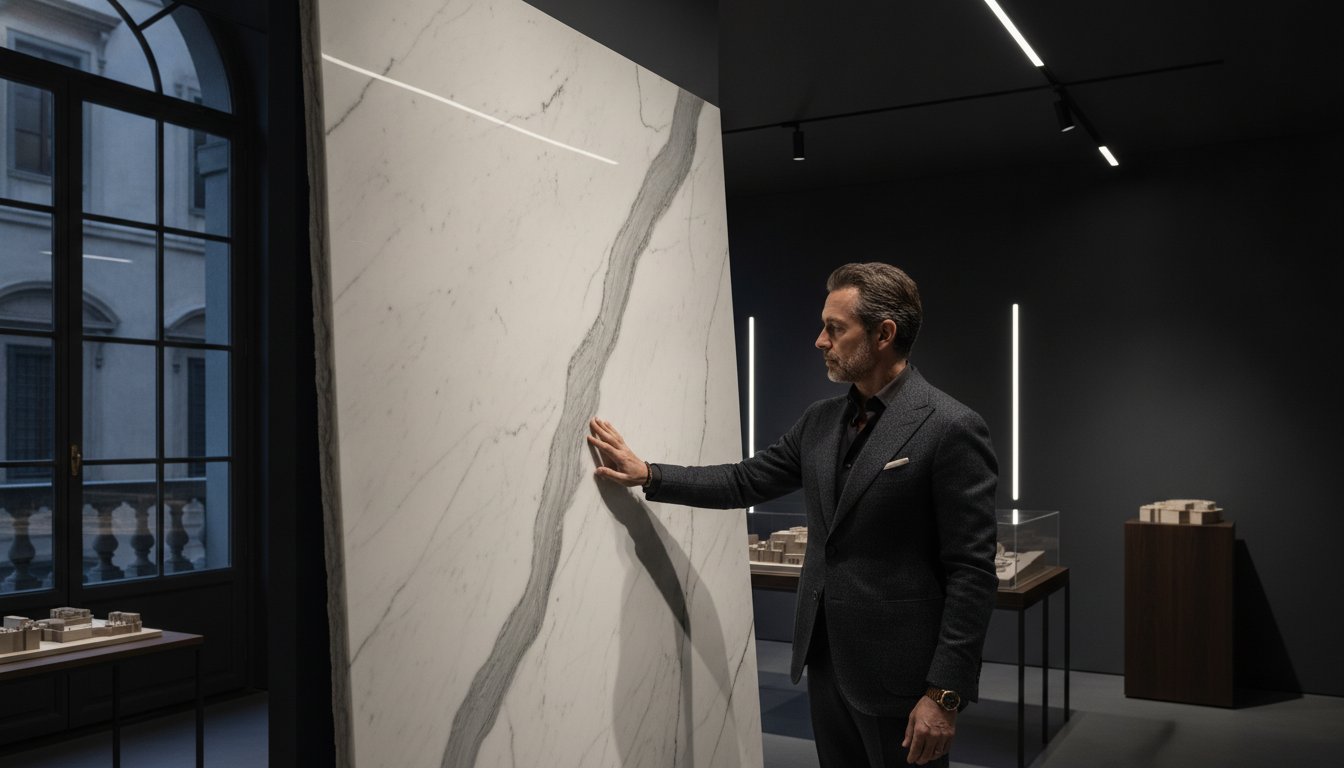
English (EN)
If you have been told that marble is a fragile material, destined to ruin at the first unexpected mishap, you have only been told half the story. Many architects and property owners hesitate when facing natural stone, held back by the fear that maintenance is a constant commitment or that ceramic imitations offer the same value with fewer risks. It is normal to feel confused among synthetic options that promise static perfection, often ignoring how much these lack the visual and tactile depth of the authentic material.
In this article, you will discover why the essence of a material extracted from the earth remains the choice of excellence for those seeking an elegance that defies time. We will show you how true natural stone is not a limitation, but an architectural investment capable of evolving and gaining prestige. We will explore the concrete facts behind surface durability, dismantle misconceptions about costs, and see how recent European regulations, including the EU Regulation 2024/3110 active from January 2026, are guaranteeing absolute transparency on the sustainability and traceability of every slab. Our goal is to guide you toward an informed choice, where beauty meets the solidity of a value that grows along with your project.
Key Points
- Learn to distinguish authentic natural stone from synthetic imitations, understanding the value of a material formed over millennia of geological history.
- Discover why the mechanical resistance of marble makes it structurally superior to many artificial products, dispelling the myth of fragility once and for all.
- Explore the luxury of aesthetic uniqueness and the exclusive way light interacts with the crystalline structure of authentic slabs.
- Evaluate the advantages of a long-term investment based on extractive sustainability and the total recyclability of the material.
- Understand how the selection method guarantees the integrity and prestige of supplies through direct access to the most renowned quarries.
Index
- What is Natural Stone? Definition and Distinction from Synthetic Materials
- The Myth of Fragility: Dismantling Prejudices About Durability
- Unique Aesthetics: Why the Marble Effect Will Never Replace Stone
- Sustainability and Value: The Long-Term Investment
- Sourcing and Selection: The Method for Quality
What is Natural Stone? Definition and Distinction from Synthetic Materials
Natural stone is not a simple industrial product; it is the result of a geological process lasting millions of years. Marble, granite, and quartzite are born under immense pressures and extreme temperatures, transforming common minerals into surfaces of extraordinary beauty. This millennial origin confers a unique density and porosity to every slab, serving as true certificates of authenticity. A material that has traversed geological eras cannot be replicated in a few hours inside a factory. Choosing it means bringing a piece of the planet's history into a project, an intrinsic value that does not follow trends but defines them.
Today, the market is saturated with products that imitate the veins of the earth. Often, the term is used improperly to describe engineered materials or cement agglomerates that have nothing to do with pure mineral extraction. To clarify, it is fundamental to consult the commercial Definition and Distinction that clearly separates authentic stone from its synthetic surrogates. The quality of a natural stone is measured by its crystalline structure, capable of reflecting light with a depth that synthetics can never emulate. The density of the material is not just a technical data point; it is the guarantee of a solidity that resists time.
Authentic Stone vs. Reconstructed Stone: How Not to Be Fooled
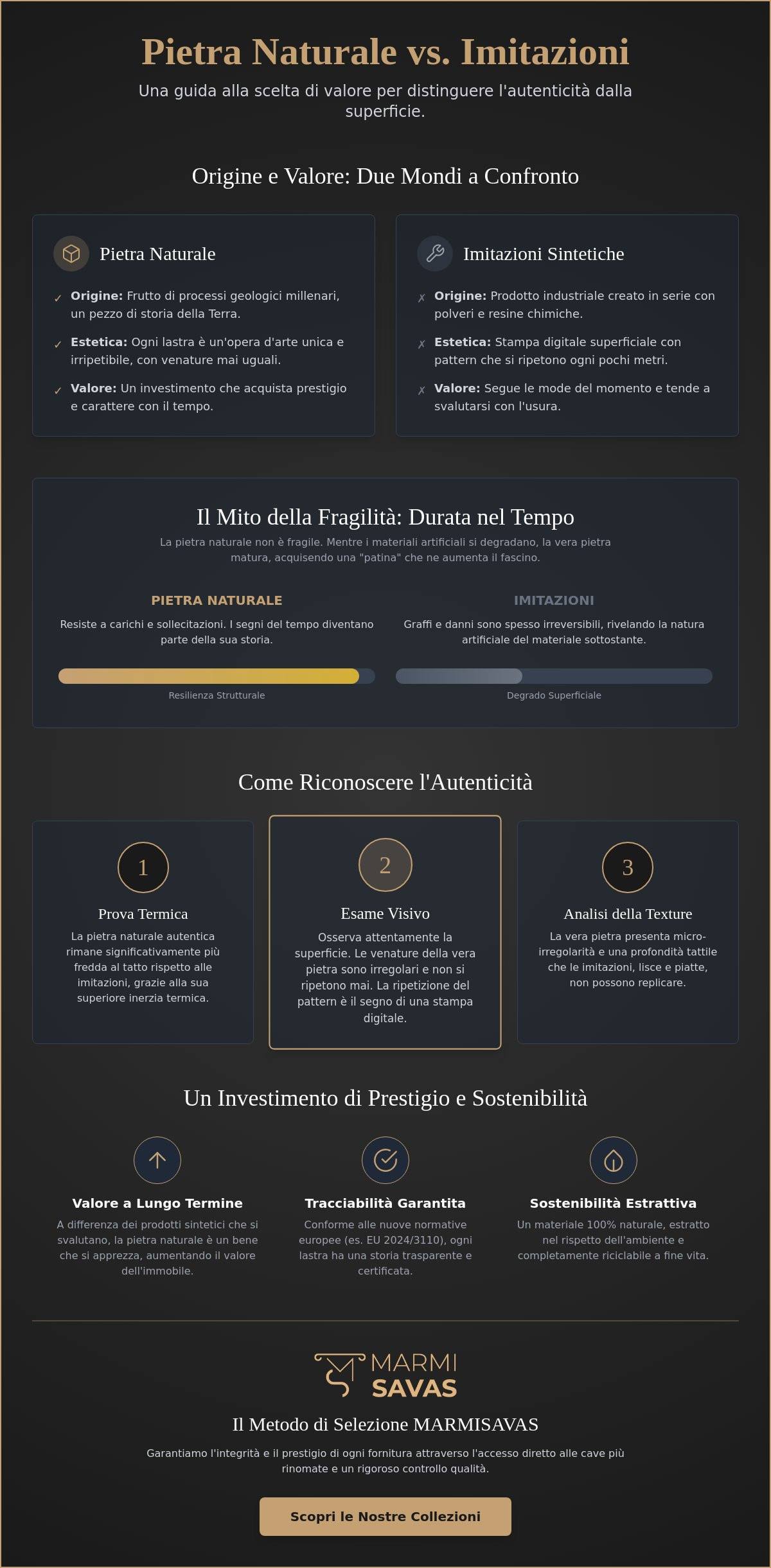
The substantial differences begin in the production process. While real stone is extracted in blocks directly from the quarry, reconstructed materials are the result of pressed powders and chemical resins. Recognizing them requires a critical eye. Digital prints on ceramic surfaces tend to repeat the same pattern every few square meters. In natural stone, however, every centimeter is unrepeatable. A practical method is the temperature test. Authentic stone remains cold to the touch even in heated environments, thanks to its superior thermal inertia. Furthermore, the surface texture reveals small natural irregularities that confer character, unlike the artificial flatness of imitations.
The Main Categories: Marbles, Granites, and Limestones
Every project requires an in-depth knowledge of the available varieties to achieve the best aesthetic and functional result. White marble, such as the famous Bianco Carrara, is appreciated for its brilliance and capacity to ennoble interior spaces with classic elegance. Granite offers extreme hardness, ideal for areas subject to heavy wear. Limestones, on the other hand, propose a chromatic versatility ranging from warm beige tones to softer shades. Choosing the correct typology means understanding how porosity influences daily use. A serious design approach does not stop at aesthetics; it analyzes the mineral structure to ensure the beauty remains intact for decades.
The Myth of Fragility: Dismantling Prejudices About Durability
A paradox exists in the world of architecture: natural stone tends to be considered a delicate material, despite being the very element that allowed the Pantheon and the Roman Forums to defy millennia. This distorted perception often arises from a lack of knowledge regarding the mechanical properties of extracted materials. Marble and granite are not fragile; they are simply alive. While a synthetic product or a laminate tends to degrade irreversibly when damaged, stone possesses a superior structural resilience that allows it to withstand loads and stresses that would bend many artificial materials. Often, prejudices about durability stem from a confusion between the need for aesthetic care and the real resistance of the material.
A fundamental aspect that distinguishes natural stone from imitations is the concept of patina. A marble floor that ages does not ruin, but acquires character. Every mark of time becomes part of an aesthetic narrative that increases the prestige of the environment. On the contrary, ceramic surfaces or engineered quartz, once scratched or chipped, show the underlying artificial core, immediately losing their visual value. Furthermore, technological innovation has introduced cutting-edge protective treatments that render surfaces almost totally waterproof, eliminating the fear of indelible stains at the root.
Resistance to Atmospheric Agents and Stresses
In outdoor contexts, authentic stone excels due to its thermal inertia and resistance to temperature fluctuations. It does not undergo the deformations typical of plastic materials or composites subject to strong solar radiation. The surface hardness of varieties like granite or certain quartzites far exceeds that of many industrial materials, making them ideal for high-traffic areas. If we analyze architectural longevity, we notice that stone is the only material capable of maintaining its structural integrity even in severe environmental conditions, requiring minimal restoration interventions compared to synthetic alternatives.
The Truth About Daily Maintenance
Many believe that exhausting cleaning protocols are required. In reality, managing a stone surface is surprisingly simple. For daily hygiene, using lukewarm water and a pH-neutral soap is sufficient. Acidic products or aggressive anti-limescale agents must be avoided, as they could dull the finish, but this does not mean the material is difficult to manage. Periodic sealing, a quick and non-invasive operation, guarantees an invisible protection that preserves the original brilliance for years. If you wish to deepen which treatments are best suited to your specific needs, you can request a technical consultation from our team to best protect your investment.
Unique Aesthetics: Why the Marble Effect Will Never Replace Stone
The marble effect is everywhere. From shopping mall tiles to cheap furniture surfaces, the industry has tried to democratize a luxury that, by its nature, cannot be replicated in series. However, a clear boundary exists between artificial perfection and the soul of a natural stone. While ceramics propose a two-dimensional texture printed on an inert support, authentic stone offers a visual depth born from the interaction between light and mineral crystals. This aesthetic complexity is what makes every project unique: owning an extracted slab means having an unrepeatable work of art in your home, a piece of the world that will never have an identical twin elsewhere.
The most evident difference manifests in the so-called through-veins. In an authentic slab, the design is not a simple surface decoration; it runs through the entire thickness of the material. This allows edge processing, engravings, and shaping that maintain the continuity of the pattern—an essential technical detail for those seeking excellence. To safeguard this distinction, initiatives work to certify the origin of materials, ensuring that the consumer receives a pure geological product and not an industrial surrogate.
Depth of the Material vs. Surface of Ceramic
The human eye instinctively perceives the difference between a digital print and natural light refraction. In the finest white marbles, light penetrates for a few millimeters between the calcite grains before being reflected, creating that "internal brilliance" effect typical of classical sculptures. Synthetic materials, on the contrary, appear flat and visually cold. Tactile warmth also plays a fundamental role: natural stone has a thermal inertia that makes it pleasant to the touch, harmonizing with the room temperature, unlike the glassy coldness of industrial ceramics.
Exclusivity in Interior Design Projects
In a high-profile project, stone defines the identity of the space. The "book-match" technique, where slabs are cut and placed in a mirrored fashion, is possible only thanks to the mineral continuity of the block. This creates spectacular natural geometries that transform flooring into a central scenographic element. The prestige of Italian sourcing remains insuperable, especially when talking about iconic materials like White Carrara Marble. For those wishing to explore the infinite shades of white and find inspiration for their environment, our selection of White Marble offers a complete overview of the chromatic and structural variety that only nature can create.
Sustainability and Value: The Long-Term Investment
Choosing natural stone is not just an aesthetic decision, but an act of environmental responsibility and economic foresight. While the production of synthetic and ceramic materials requires energy-intensive industrial processes and complex chemical synthesis, stone extraction relies on a mechanical transformation cycle with a low environmental impact. Nature has already completed the hardest work over millions of years; our only task is to extract and finish the material with care. This makes stone one of the most eco-friendly building materials available, especially in an era where reducing the carbon footprint has become a global priority.
Another often underestimated aspect is its total recyclability. Stone is an eternal material whose life cycle never truly ends. A slab can be recovered, reworked, or crushed for new uses, avoiding the problem of non-biodegradable waste typical of synthetic resins. Investing in an authentic material today also means anticipating future regulations. In Italy, the new Minimum Environmental Criteria (CAM), which became mandatory on February 2, 2026, for public tenders, are already driving the private market toward more transparent and traceable choices, aligned with the digital product passport introduced by EU Regulation 2024/3110.
Environmental Impact and Bioconduction
The purity of stone guarantees healthier indoor environments. Unlike many composite materials, natural stone is completely free of volatile organic compounds (VOCs) and toxic resins that could compromise indoor air quality. Its thermal properties are another major strength. Thanks to its high thermal inertia, marble or granite surfaces help naturally regulate room temperature—retaining heat in winter and ensuring coolness in summer. This translates into concrete energy savings and superior living comfort, a core pillar of modern biophilic design.
Natural Stone as an Architectural Safe-Haven Asset
From an economic standpoint, marble is comparable to a safe-haven asset. Prestigious varieties such as Calacatta or Arabescato do not undergo the devaluation typical of "trendy" materials that go out of style after a few years. On the contrary, a property enhanced by authentic stone finishes sees its resale value increase significantly. When analyzing the life-cycle cost, stone often proves more cost-effective than cheaper alternatives: its multi-decade lifespan eliminates the frequent replacement costs required for synthetic materials subject to wear and aesthetic degradation.
Sourcing and Selection: The MARMISAVAS Method for Quality
The quality of a natural stone is not decided in a warehouse; it begins in the heart of the mountain. An excellent supplier must possess a global vision and privileged access to the world's most renowned quarries. MARMISAVAS stands out as an attentive curator, capable of selecting only materials that meet rigorous aesthetic and structural standards. We do not simply supply slabs; we offer a consultancy process that begins with understanding the designer's creative vision. Each block is visually inspected to evaluate vein distribution and subjected to integrity tests to rule out microfractures invisible to an untrained eye.
Understanding the difference between various types of white marble is fundamental to the success of a high-level project. People often confuse the crystalline whiteness of Calacatta Marble—characterized by bold, wide veins—with the denser, grayer pattern of Carrara. Arabescato, on the other hand, offers complex, circular designs that make it ideal for statement furniture elements meant to capture attention. This precise distinction is what allows an architect to transform an idea into a tangible and prestigious reality.
From Quarry to Slab: A Rigorous Control
Our selection process is methodical. We monitor extraction to identify the blocks with the most harmonious patterns, ensuring that each slab respects the visual continuity necessary for large surfaces. The choice of surface finish is another pillar of our method. Whether it is a polished surface to enhance crystal depth or a brushed finish for a more textured, tactile effect, each process is executed to enhance the natural character of the material. We manage logistics with meticulous care: transporting heavy, imposing materials requires specific equipment and precise planning to ensure that the natural stone arrives intact at the construction site, ready for installation.
Exploring the Chromatic Range: Beyond White
Although white remains a timeless icon, our collection extends toward sophisticated chromatic horizons. Grey Marble offers a modern neutrality perfect for contemporary lofts, while the warm tones of Brown Marble infuse living spaces with warmth and coziness. For those seeking a dramatic and luxurious contrast, Black Marble represents the definitive choice, capable of defining volumes and geometries with timeless elegance.
Giving Permanent Value to Your Architectural Projects
Choosing natural stone means embracing a material that does not fear the test of time but transforms it into an ally of beauty and prestige. We have seen how mineral authenticity surpasses any synthetic imitation, offering a visual depth and structural resistance that enhance architecture in the long run. Investing in marble or granite is not just a high-profile aesthetic choice; it is a strategic decision that increases the market value of properties while ensuring a healthy, VOC-free, and totally sustainable environment.
MARMISAVAS stands by your side as an expert partner throughout this selection process. We are specialists in Calacatta Marble and premium Bianco Carrara, operating as a trusted partner for prestigious international architectural projects. Our strength lies in a rigorous selection from the finest Italian quarries, ensuring that each slab meets the highest standards of integrity and chromatic harmony. We are ready to transform your creative vision into a solid, elegant reality.
Frequently Asked Questions about Natural Stone
- Is natural stone suitable for underfloor heating? Yes, natural stone is one of the best materials for radiant underfloor heating systems due to its excellent thermal conductivity. Once heated, the slab acts as a thermal flywheel, retaining heat for a long time and releasing it uniformly into the room. This inertia allows indoor comfort to be maintained even after the heating system is turned off, optimizing the home's overall energy consumption.
- How can I remove acid stains from natural marble? Acid stains are not true stains but surface corrosions (etching) that require light honing or polishing to be removed. If an acidic substance has dulled the marble, it is necessary to use specific polishing kits or request professional intervention to restore the crystalline layer. To prevent damage, it is crucial to wipe the surface immediately with water and neutral soap as soon as contact with substances like lemon or vinegar occurs.
- What is the price difference between Carrara marble and porcelain stoneware? The main difference lies in the asset value: marble is an investment that increases the property's prestige and market value, while porcelain stoneware is an industrial product subject to depreciation. Although ceramic imitations may have lower initial costs, natural stone offers an unrepeatable aesthetic depth that never goes out of style. The price reflects the complexity of extraction and the rarity of a material unmatched in depth and brilliance.
- Can natural stone be used in the bathroom without moisture problems? Natural stone is perfect for bathroom use, provided a professional water-repellent sealer is applied during installation. This invisible protection seals the natural porosities, preventing water and vapors from penetrating the mineral structure. The millennial resistance of marble makes it ideal for shower trays, wall coverings, and vanity tops, guaranteeing a hygienic and aesthetically superior environment compared to plastic materials.
- How long does the protective treatment on stone slabs typically last? A high-quality protective treatment usually lasts from one to five years, depending on the intensity of use. In environments like the kitchen or bathroom, where exposure to water and cleaning products is frequent, it is advisable to check the water repellency every twelve months. Using exclusively pH-neutral detergents helps preserve the effectiveness of the protective barrier, preventing aggressive chemical agents from accelerating its degradation.
- Is it possible to order custom-cut natural stone slabs for specific projects? Yes, each slab can be cut and finished according to the exact dimensions required by your architectural project. Starting from blocks extracted from the quarry, we process materials to create flooring, wall cladding, or furniture details tailored precisely to your spaces. This flexibility allows for complex fabrications such as book-matching, where veins are placed in a mirrored fashion for a high-impact aesthetic effect.
- Why choose Italian marble over imported stones? Choosing Italian marble means investing in extraction and processing quality that has no equal in the world. Italian quarries are subjected to rigorous controls that guarantee the structural integrity and crystalline purity of the material—characteristics often absent in imported products. Furthermore, the Italian supply chain offers total traceability, ensuring that each slab comes from quarries managed according to excellent ethical and environmental standards.
- Is natural stone considered an eco-friendly material? Natural stone is one of the most sustainable building materials due to its very low energy-impact production cycle. Unlike synthetic materials that require chemical synthesis and industrial kilns at extremely high temperatures, stone is only extracted and shaped mechanically. Its multi-decade durability reduces the need for frequent replacements, and at the end of its life cycle, it is 100% recyclable as a natural aggregate.