Marble cladding for fireplace: selection guide for your project
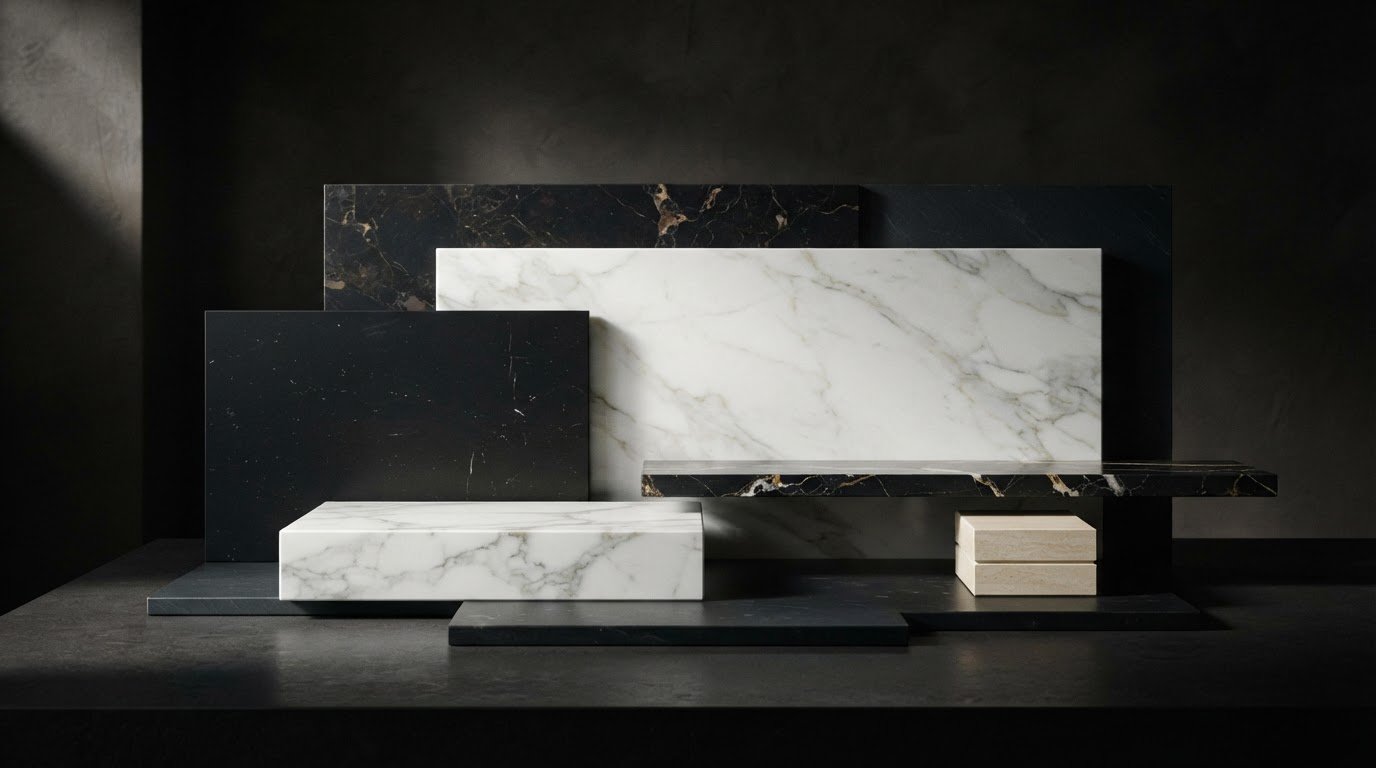
Choosing the most dramatic marble may not mean choosing the most suitable one for your fireplace. Marble fireplace cladding works best when its color, veining, and proportions complement the firebox and the surrounding space, rather than drawing attention to the slab alone. It can add character to a room, but comparing light and dark marbles, subtle or pronounced patterns, and different slab formats requires clear criteria.
The selection starts with the overall design. Bianco Carrara, with its generally more delicate veining, creates a different effect from Calacatta, which is often more contrasting and expressive. Grey or black marble, on the other hand, can define the fireplace with a stronger visual presence. Slab format also affects the result: the orientation and continuity of the veining contribute to creating the overall surface pattern.
In this guide, you will learn how to evaluate the colors, veining, finishes, and dimensions of marble slabs in relation to interior styles. You will also discover how to move from inspiration to a concrete selection, taking into account the fireplace configuration and the requirements specified in the project's technical documentation.
Key Points
- First, define the visual role of the fireplace and distinguish the cladding from the technical components of the installation.
- Evaluate the background color, contrast, and direction of the veining separately to determine which effect best suits the space.
- Choose marble fireplace cladding according to the desired style, considering combinations as design possibilities rather than fixed rules.
- Follow an organized slab selection process: clarify the aesthetic intention, gather the project's constraints, and compare the integrity and continuity of the pattern.
- Discover how the variety of marbles and the specialized supply services offered by MARMISAVAS can support the material selection process for your project.
Index
- Marble fireplace cladding: what to consider before choosing
- Veining, color, and finish: how to read marble for a fireplace
- Which marble should you choose for a modern, classic, or minimalist fireplace?
- How to select slabs for marble fireplace cladding
- Fireplace slab supply: the project process with MARMISAVAS
Marble Fireplace Cladding: What to Consider Before Choosing
Marble cladding is more than a simple frame: it helps integrate the fireplace into the interior design and define its presence in the room. Stone can discreetly complement the lines of the firebox or create a focal point, depending on the selected color, veining, and proportions.
Marble cladding brings together the appearance of the stone and the architectural composition of the fireplace. For this reason, the selection should not be based solely on an inspirational photograph. Consider the color tones, veining pattern, finish, and dimensions of the individual pieces together, comparing them with the walls, flooring, furnishings, and lighting of the space.
The aesthetic component should be distinguished from the technical aspects of the fireplace. The cladding contributes to the visual language, while the suitability of the stone and finish, as well as the installation requirements and methods, depend on the project and the applicable technical documentation. Keeping these aspects separate helps define the aesthetic intention without attributing unverified characteristics to the material.
How the Cladding Complements the Interior Style
Consider the fireplace as part of the overall composition rather than as an isolated surface. Light marble can echo bright walls or create contrast with dark elements. A grey, black, or brown background can pick up tones already present in the furnishings or introduce a deeper accent. Veining also matters: fine, regular patterns can complement the overall composition, while broad, pronounced lines draw the eye. No effect belongs to a single style; the combinations and the balance of the room determine the result.
Slab, Marble Tiles, or a Continuous Surface: What Design Effect Do You Want?
The format changes how the cladding is perceived. Larger pieces can emphasize the continuity of the natural pattern, while smaller pieces introduce more interruptions and define the composition. The result depends on the proportions of the fireplace, the arrangement of the veining, and the selected slabs. Therefore, determine the format as part of the project rather than assuming that a single configuration suits every space.
Before making a selection, note a few visual and design references:
- Color: Observe whether the background color echoes or contrasts with the tones already present.
- Veining: Evaluate the direction, intensity, and scale of the pattern in relation to the fireplace dimensions.
- Finish: Consider the appearance of the surface in relation to the lighting and other materials.
- Format: Identify where the joints would fall and how the pattern would continue across the different pieces.
These criteria turn an aesthetic impression into concrete guidance that can be shared with the people involved in the project. The selection connects the identity of the stone with the architecture of the firebox: material, proportions, and surroundings work together to shape the composition.
Veining, Color, and Finish: How to Read Marble for a Fireplace
To compare slabs carefully, separate three aspects that are often confused: the background, meaning the base color; the contrast between the background and the veining; and the direction of the pattern. A stone may appear light overall while featuring dark, pronounced lines, or it may display delicate variations that are particularly noticeable at close range. Evaluating these elements one at a time helps anticipate which part of the cladding will attract attention.
The direction of the veining also contributes to the composition. Predominantly horizontal lines can complement an elongated profile, while a vertical pattern can emphasize the height of the fireplace. These are visual indications, not fixed rules. The result depends on the slab, the proportions of the firebox, and the other materials in the room.
Calacatta, Carrara, and Arabescato: Visual Differences to Consider
Calacatta is appreciated for its light background and often broad, pronounced, and dramatic veining. Bianco Carrara marble tends to offer a softer luminosity, with generally delicate veins that vary from slab to slab. Arabescato is distinguished by its network-like veining, which forms lighter areas. For each variety, compare the specific slab: the name helps guide the selection but does not replace examining the background and the movement of the veining.
Color further expands the possibilities. White marble can visually lighten the wall or create contrast with a darker interior, while grey tones introduce a more restrained presence and black or brown can add depth and warmth. No color palette is inherently superior: evaluate how the stone works with the flooring, walls, metal elements, and natural and artificial lighting.
Finishes and Surface Appearance Around the Fireplace
The finish changes how light and veining are perceived. A polished surface reflects more light and can make contrast more noticeable, while a honed surface creates a more understated appearance and softens reflections. The matte finish, also known as a honed finish, has a soft, velvety appearance. Evaluate it in relation to the interior design and the finishes specified for the selected stone.
For an effective comparison, look at the entire slab and, if possible, observe it under lighting similar to that planned for the space. Check how the background and veining change with different lighting conditions, then consider whether you prefer a reflective surface or a more discreet effect. Aesthetic appearance alone does not determine the suitability of the stone or finish: these aspects must be evaluated according to the requirements of the fireplace project.
Considering the desired tones and the intended use of the space helps guide the comparison between materials. You can present your project requirements to begin an assessment of the slabs that best match the effect you want to achieve.
Which Marble Should You Choose for a Modern, Classic, or Minimalist Fireplace?
Style provides a starting point, not a rigid formula. To choose the marble, relate the desired effect to the fireplace dimensions, the room's lighting, and the materials already planned. Broad veining can become the focal point on an uncluttered wall, while a more discreet pattern can complement furnishings and finishes without competing with them.
The color and pattern of the slab influence the character of the fireplace, from understated to dramatic. The table presents possible combinations: these are options to evaluate in the actual setting, not rules associated with a particular style.
Desired effectVisual characteristics to evaluateMarble family to considerA focal point with a distinctive patternBroad veining, pronounced contrast, and a clearly defined direction across the surfaceCalacatta or ArabescatoA bright and understated presenceLight background and delicate veining, examined on the specific slabBianco Carrara or other white marblesA calm and intimate atmosphereNeutral, grey, or dark tones that work with the walls and furnishingsGrey or black marblesA warm accentBrown background and contrast compatible with the flooring and finishesBrown marblesA contemporary fireplace with prominent veiningA strong natural pattern that becomes a defining featureCalacatta or Arabescato
In a minimalist composition, pronounced veining can add rhythm to the wall and concentrate attention on the fireplace. Calacatta and Arabescato are options to consider when the project calls for a distinctive natural pattern; however, the effect depends on the space available for the stone and the elements surrounding it. When comparing Calacatta marble slabs, examine the pattern of each one and imagine how it would continue across the different parts of the cladding.
Light, Dark, and Neutral Tones: Creating Balance with the Room
Light marble can complement a design that seeks brightness, while grey or black marble can introduce deeper contrast. A brown tone can work with warm finishes already present in the space. Before deciding, compare the sample or slab with the planned wall colors, flooring, and furnishings. Lighting and material combinations can change how the same stone is perceived.
To make the comparison more concrete, note the effect you want to achieve and the materials that will remain visible next to the fireplace. Then assess whether the veining supports that intention or overwhelms it. A highly dynamic surface may require a quieter setting, while marble with a delicate pattern can give greater prominence to architectural elements or furnishings.
The final selection should reflect the project and the slab actually chosen. To share your vision for the space and begin a discussion about the material, you can present your project requirements.
How to Select Slabs for Marble Fireplace Cladding
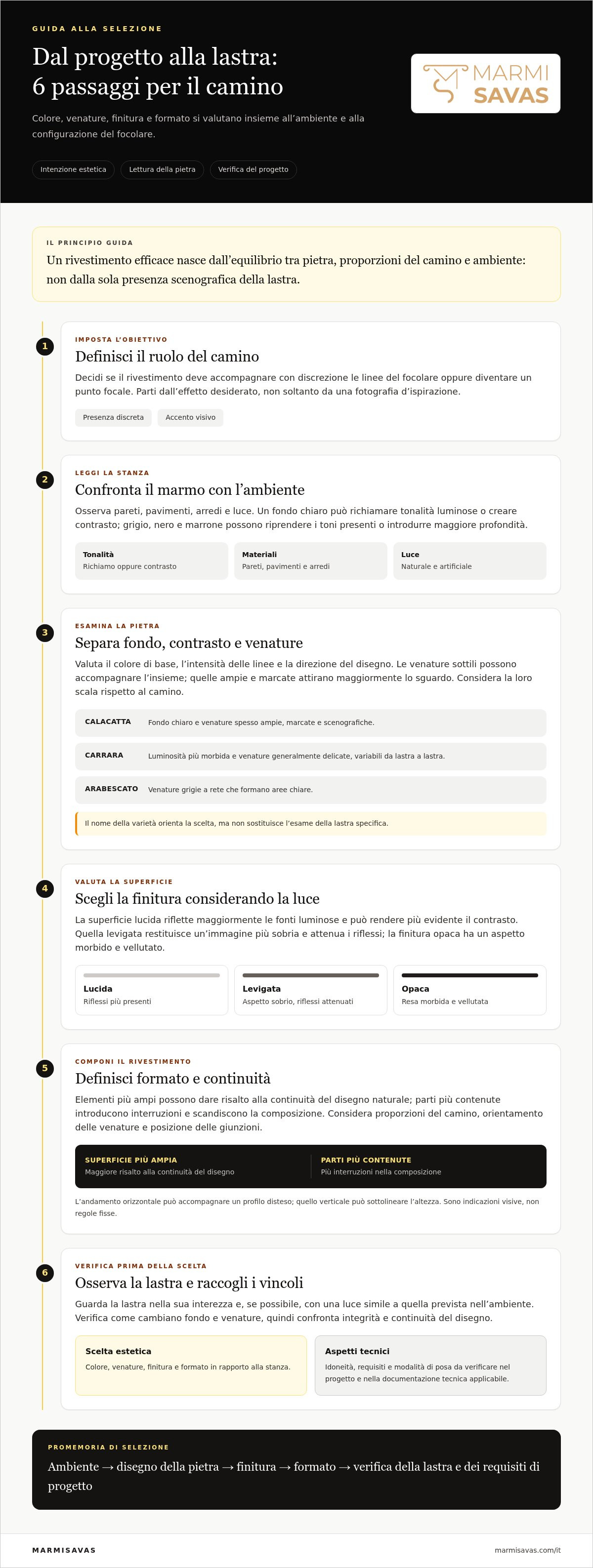
A selection process that translates aesthetic intention into useful criteria for comparing slabs. Before evaluating materials, define the role of the fireplace in the composition and gather the essential project information. The comparison will also take into account the context in which the stone will be placed, not just a sample or an inspirational image.
From the Design Vision to Material Selection
Prepare the indicative dimensions, the geometry of the fireplace, and the references to the colors and materials of the surrounding environment. Also note whether you want the cladding to complement the wall or become the main focal point. These details help identify coherent proportions and design directions; requirements, clearances, and installation methods must instead be verified through the project's technical documentation.
- Define the desired effect: describe the visual role you want the fireplace to play and gather the relevant references.
- Collect the requirements: consider the overall geometry and the indicative dimensions, together with the information available.
- Compare the slabs: examine the background, tonal variations, and movement of the veining across the entire surface.
- Evaluate the design: imagine how the stone will look once installed and how it will fit into the room.
Evaluate the finish in relation to the planned lighting and the desired appearance. If you have collected samples or visual references, compare them with the selected surface: differences in reflection can change the perception of color and pattern. However, the aesthetic appearance does not replace verification of the requirements applicable to the stone within the fireplace project.
Veining Continuity and Slab Inspection
Examine the slabs you are considering in their entirety. Follow the movement of the veining, note how the background varies, and evaluate which portions of the stone will be visible once assembled. If the design allows, bookmatching, meaning the mirror-image arrangement of consecutive slabs, can create a symmetrical composition. The choice depends on the characteristics of the slabs and the desired effect.
Slab inspection, or the quality control of the stone, considers the slab's condition, the continuity of the veining, and the presence of any visible defects. Evaluating the direction of the pattern and the natural characteristics of the marble, while distinguishing them from discontinuities that require professional assessment, helps identify which parts of the stone to highlight and how its design can remain coherent with the intended composition.
To begin a focused comparison, share the indicative dimensions, the visual references, and the role the fireplace will play in the room. Share your project with MARMISAVAS.
Fireplace Slab Supply: The Project Process with MARMISAVAS
Choosing the right stone becomes clearer when it forms part of a concrete project. MARMISAVAS specializes in supplying slabs and precious natural stones for residential and commercial architectural projects. The catalog includes more than 200 options and a broad warehouse availability for large volumes, offering a variety that makes it possible to compare different aesthetic directions and material families.
For marble fireplace cladding, moving from a visual preference to selecting the slab requires considering color, veining, finish, and format together. The material selection must also fit into the project and take into account the technical requirements relating to the fireplace.
From Comparing Stones to Defining the Slab
Calacatta, Bianco Carrara, and Arabescato are families to consider according to the desired design and the composition of the room. Compare the background tones and the movement of the veining, then consider how the finish and format may enhance or soften the design. MARMISAVAS supplies the material; detailed project design and installation are separate stages, defined within the scope of the project.
To make the comparison more precise, prepare visual references that show the intended effect in the space. Photographs of the room, inspirational images, and indicative dimensions of the surfaces help clarify the relationship between the fireplace, walls, flooring, and furnishings. If you already have a preference, specify it and also indicate whether you are looking for a light, dark, or neutral background and whether you prefer delicate or more pronounced veining.
- Desired effect: indicate whether the fireplace should integrate discreetly or become a visual accent.
- Indicative dimensions: share the reference dimensions and the overall geometry; the precise requirements depend on the project.
- Material preferences: describe the colors, veining, and finishes you would like to compare.
- Technical considerations: indicate whether the project's documentation requires any specific considerations when selecting the stone.
Share the Project and Start the Discussion
The more context you provide, the more precisely you can focus on the relevant characteristics of the slabs. Present the style of the space, the role of the fireplace, and the visual references you have collected. These elements help explore the selection through a professional and collaborative approach, distinguishing material selection from the subsequent technical stages.
When you are ready to discuss the project requirements and possible material directions, share your project with MARMISAVAS.
Turn Your Idea into a Material Selection
The next step is to compare the aesthetic intention with the actual slabs. Collect photographs of the space, color references, and indicative dimensions of the fireplace: these elements help you understand the relationship between the stone and the project and define the presence you want the surface to have.
Marble fireplace cladding gains coherence when the selection takes into account the character of the room and the natural design of the stone. Observe the veining together with the proportions, finishes, and lighting to move from inspiration towards a defined design direction, allowing the material to express its own identity without losing its connection to the space.
Share the references and requirements of your project to begin a discussion about marble selection. Start the discussion about the slab for your fireplace and move towards a choice that aligns with your vision.
Frequently Asked Questions About Marble Fireplace Cladding
Is Marble Suitable for Fireplace Cladding?
Yes, it can be considered for cladding on the basis of the specific project. To make the assessment concrete, identify on the drawings which surfaces will be clad and compare the selected material and finish with the fireplace's technical specifications. These references help evaluate the intended application without relying on a generic statement about stone or on parameters that are not relevant to the specific installation.
Which Marble Should You Choose for a Modern Fireplace?
Modern styles can accommodate a variety of choices. Start with the project drawings and consider the role of the fireplace in relation to materials such as wood, metal, and plaster; then compare the alternatives against these references. Calacatta, Bianco Carrara, and Arabescato may be included in the evaluation, but the decision should be based on the selected slab and the planned composition, not on the stylistic label of the room.
Can Marble Fireplace Slabs Have Different Veining Patterns?
Yes, the design may change from one slab to another. If the visual variation is important, define the acceptable level of variation within the project before making the selection and keep photographs and references of the slabs being considered. These elements facilitate discussion between material selection and surface design, especially when the cladding includes several parts that need to be read as a unified composition.
Is a Polished or Matte Finish Better for Marble Fireplace Cladding?
The decision depends on the desired effect, not on an absolute superiority of one finish over the other. For a practical comparison, observe samples positioned vertically, in the intended location for the cladding, rather than evaluating them only when placed flat on a surface. This allows you to judge the surface in its future setting and choose in harmony with the finishes already defined in the project.
How Do You Assess the Quality of a Marble Slab Intended for a Fireplace?
In addition to a professional visual inspection, note which areas you intend to highlight and which parts will fall within the planned cuts or joints. Keeping an overall photograph and an indicative map of the composition makes it easier to compare the selected material with the project design. The assessment should refer to the individual slab, without applying classifications or numerical thresholds that have not been defined for the specific case.
Is Calacatta Marble a Suitable Choice for a Fireplace?
Yes, it can be considered, but the assessment must be carried out on the selected slab and in relation to the overall cladding design. Before making a decision, compare the stone with the project views and check that the division of the surfaces produces the desired effect. A small sample, on its own, may not convey the impression of the complete composition.
How Much Does Marble Fireplace Cladding Cost?
The cost depends on the selected marble, the characteristics of the slab, and the quantity required. To obtain an assessment relevant to the project, prepare the indicative dimensions and the desired material type, distinguishing the supply of the stone from any processing and installation costs. The material price does not automatically equal the cost of the completed work; general estimates do not replace an assessment based on specific requirements.