Italian marble varieties: guide to colors, veins and uses
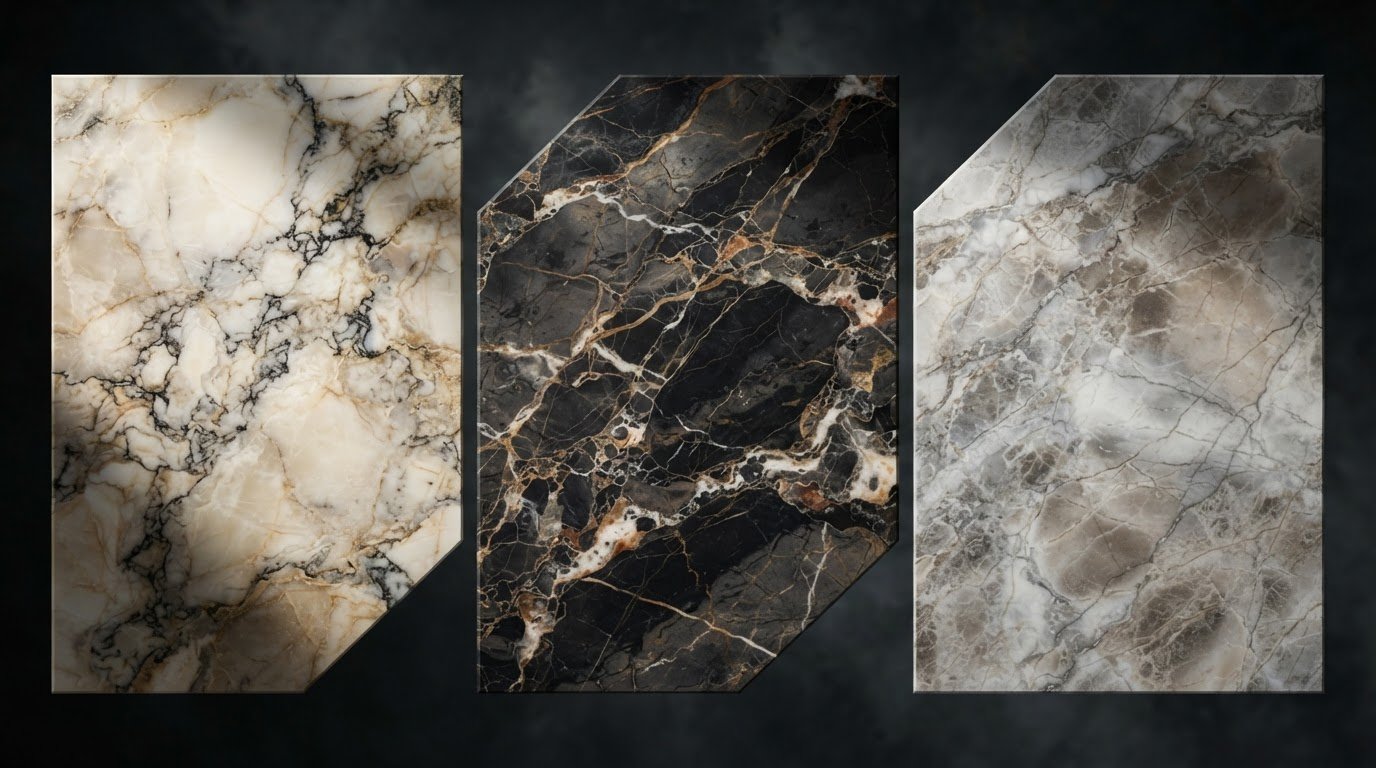
The most scenic white marble is not necessarily the most suitable one for the project. Among the varieties of Italian marble, names like Carrara, Calacatta and Arabescato evoke prestigious materials, but they do not describe by themselves the differences in background color and vein pattern. Bianco Carrara tends to present a grayish-white background crossed by fine and delicate gray veins; Calacatta has a light background and wider, often golden markings; Arabescato is distinguished by dark veins intertwined in articulated motifs. Observing these characters side by side helps to understand what effect each stone will have in the composition. This guide presents the main chromatic families of Italian marble and explains how to read the natural variations of each slab. Background, veins and design intensity influence the visual effect and help guide the choice based on the desired atmosphere and the scale of the project. The overview also includes black, gray and brown marbles, to identify categories to explore in function of environments and architectural solutions.
Key Points:
- To navigate among the varieties of Italian marble, observe background, veins and natural variations together: these are the elements that define the visual identity of each material.
- Compare Calacatta, Bianco Carrara and Arabescato based on contrast and movement of veins, so as to identify the most suitable effect for the project.
- Evaluate black, gray and brown marbles as chromatic families: intensity and design can change the perception of the environment.
- Define palette, format and application and then choose the character of the veins in relation to the scale of the surface.
- Discover how natural MARMISAVAS slabs and tiles can offer inspiration for architectural and interior design projects.
Index:
- What is meant by Italian marble variety?
- Italian white marbles: how to distinguish Calacatta, Carrara and Arabescato
- Black, gray and brown marbles: what atmospheres do they create?
- How to evaluate an Italian marble variety for the project
- MARMISAVAS and Italian marble varieties for custom projects
What is meant by Italian marble variety?
An Italian marble variety is a denomination that identifies a material through recognizable visual characteristics, such as the background tone or a recurring pattern of veins. This does not mean, however, that every slab has an identical appearance. Marble is a natural stone and can present differences even within the same type. To describe a surface in a useful way, it is convenient to distinguish three elements. The first is the general color, which determines the first impression. The second is the design, formed by lines, spots, clouds or swirls. The third includes natural variations, i.e., the differences in intensity and distribution that make each slab distinct. This lexicon allows architects, designers and clients to compare materials without relying solely on the commercial name. The chromatic classification, for example white, black, gray or brown, describes a visual family, but does not certify the place of extraction. Provenance is distinct information that requires specific documentation: attributing a quarry or a geographical area based solely on color or name can be misleading. For a general overview of the formation and characteristics of this stone, you can also consult the voice Marble. A practical method consists in observing the surface first and then considering the denomination. Look at the slab as a whole and ask yourself: is the background uniform or mottled? Are the lines discreet or immediately catching the eye? Is the design concentrated in some areas or distributed over the surface? These questions transform a generic description into useful criteria for imagining the result in the environment and architectural scale.
How to read background, veins and natural variations
The background is the base color perceptible on the surface, net of lines and the details that cross it. The expression marble veining indicates natural veins, i.e., lines and designs that create movement and contrast. They can be subtle or marked, diffuse or concentrated. Observing their direction, density and contrast helps to understand whether a slab offers a discreet or scenic effect. Comparison regarding what is effectively visible, without assuming unspoken standardized grades.
Variety name and provenance are not the same information
A name identifies a commercial type or material; provenance indicates the origin of the stone and requires documentary evidence. Furthermore, slabs of the same variety can differ in tone and design: it is a natural characteristic, not an inconsistency of the name. For this reason, comparing the slabs helps to evaluate variations and choose the one most coherent with the palette and project intent.
Italian white marbles: how to distinguish Calacatta, Carrara and Arabescato
Among the main varieties of Italian marble, white does not correspond to a single aspect. Calacatta, Bianco Carrara and Arabescato share a chromatic palette, but differ in background tone, contrast and trend of veins.(Tablo / Yapılandırılmış İçerik):
- Calacatta: Fondo: claro, a menudo percibido como luminoso. Carácter de las vetas: marcado, amplio o escenográfico. Indicación de uso visual: para dar relieve a la superficie y crear un punto focal.
- Bianco Carrara: Fondo: blanco grisáceo y delicado. Carácter de las vetas: fino, generalmente gris. Indicación de uso visual: para un resultado sobrio y armonioso.
- Arabescato: Fondo: claro, interrumpido por diseños veteados. Carácter de las vetas: gris y reticulado, con composición variable. Indicación de uso visual: para introducir movimiento y diseño articulado.
The characteristics change from slab to slab: the table guides the comparison, but does not replace the observation of the material. To expand the comparison between tones and designs, you can explore the category of white marbles.
Calacatta and Carrara: two distinct visual identities
Calacatta tends to create a strong contrast: a light background hosts veins often wide and marked, which can become protagonists of the composition. Bianco Carrara is appreciated for luminosity and for delicate gray veins, capable of depth without dominating the surface. The choice does not depend on a presumed superiority of one over the other, but on the desired balance between presence and discretion. On a large surface or in large-format cladding, a decisive design can attract the eye and define the character of the environment. On a surface where visual continuity is sought, finer veins can offer a quieter reading. To evaluate Carrara, consider luminosity and design of the slab in relation to the scale of the intended surface.
Arabescato: reading the design without flattening differences
Arabescato is distinguished for a design woven into a net, in which gray veins intertwine on clear areas. The result can resemble an arabesque or present wider spaces: intensity, continuity and composition vary from slab to slab. In comparison, consider the path of the veins as a whole, not just the background color. In this way it is easier to grasp the differences between the various expressions of this family. When the project requires a comparison between light backgrounds and veined designs, it is useful to define in advance which aesthetic characteristics to enhance. The MARMISAVAS contact page allows you to present the project and its selection needs.
Black, gray and brown marbles: what atmospheres do they create?
Black, gray and brown do not identify a single aspect, but wide chromatic families. In each one, the background can appear uniform or crossed by variations, while veins can be clear, dark, subtle or incisive. For a dark marble, consider the surface as a whole: color, contrast and movement of the design together contribute to the final atmosphere. A deep tone can give character to a composition; a contrasting vein introduces rhythm and direction. A discreet design, however, leaves the color to define the presence of the stone. In an interior design project these differences help decide whether the marble should become a visual accent or fit with greater continuity in the palette. These are aesthetic choices, not indications on the performance of the material.
Black and gray marble: contrast and visual depth
Black marble has a strong chromatic presence. If the slab presents light veins, the contrast can draw clear lines on the dark base and create movement; if the design is less marked, the surface appears more collected and compact. The category of black marble includes various expressions of this family, to be evaluated without reducing them to a single variety. Gray offers a more sfumata reading, where tones tend to be deeper. Clear or dark veins modify the perception of the tone: they can lighten the surface, accentuate depth or accompany the composition with a soft trend. When evaluating gray marbles, consider as tone and design relate to other materials and the finishes provided in the environment. To compare samples or slabs, observe the background from a distance and then get closer to the veins. The view as a whole is the chromatic detail; density and direction of the design reveal themselves if the marble is destined for an extensive surface, consider how the motif will be perceived on its overall scale.
Brown marble: warm tones and natural variations
The family of browns includes warm and articulated variations, from soft notes to deeper ones. It is not enough to recognize the dominant color: observe if the background tends to beige, brown or darker tones, then consider the distribution of the veins. A diffuse design can make the surface visually rich; a concentrated one creates accents and pauses. This reading helps explore the various expressions of brown marble. In combination, brown marbles can be combined with clear materials to create contrast or with warm palettes for an enveloping composition. The choice depends on the balance and quantity of visible surface: a central vein can assume a central role, while a quiet background supports the other elements of the project. The MARMISAVAS contact page offers a reference for sharing palettes and effects related to the selection of slabs.
How to evaluate an Italian marble variety for the project
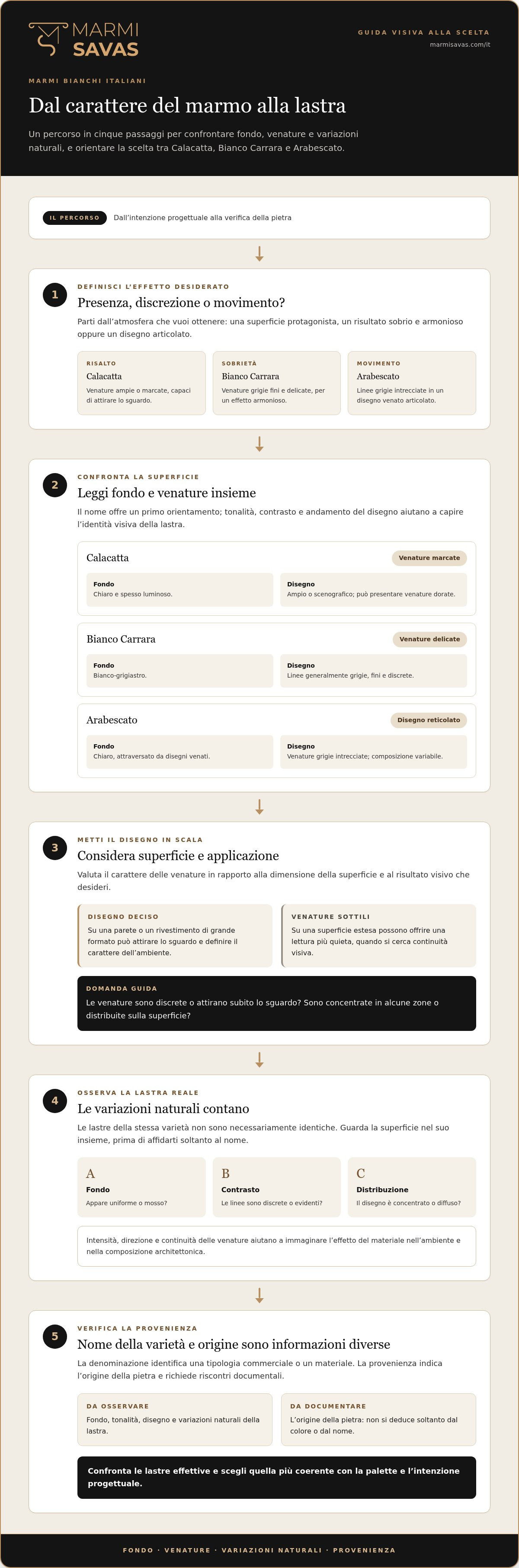
The choice of an Italian marble variety is clearer if an order is followed: first define the atmosphere, then read the design of the stone, evaluate the format and consider the application. This method connects the visual qualities of the slab to the scale of the project, instead of stopping at the name of the material.
From concept to reading the slab
Start with the desired effect: a luminous room, a contrasted composition, a discreet result or a scenic surface. Compare the sample with the planned palette, surrounding materials and the light of the environment. A tone can appear diverse next to woods, metals or very light colors; observing it in context helps to evaluate its balance. Then move to the veins. Whether subtle or evident, concentrated or distributed, and whether they have a recognizable direction. Format matters because the same design can appear different on a circumscribed element or on a large surface. If the project requires visual continuity, observe how the veins continue from one slab to another; if the goal is to create a focal point, consider the role of the design in the overall composition. Application also directs the choice. A wall cladding makes the movement of veins more readable than a floor; a localized surface can enhance a specific detail. Evaluate the marble at the scale in which it will be perceived and in relation to other surfaces in the project. The sample offers an initial reference, but does not necessarily represent all the variations present in the slabs.
Technical evaluation of the slab
Slab quality inspection, that is the evaluation of the slab quality, combines aesthetic reading with the examination of visible and structural characteristics. The technical criteria for slab inspection are professional criteria used to evaluate color uniformity, veins, thickness and presence of defects. They help to relate the material to project requirements, without transforming the inspection into a guarantee of absolute uniformity or total absence of natural variations.
- Color: observe the distribution of the background tone and differences in tone on the surface.
- Veins: consider direction, continuity and ratio between lines and desired design.
- Format and thickness: compare with planned dimensions and intended application.
- Visible conditions: examine the slab to identify possible defects and evaluate their position relative to the composition.
Concrete verification of slabs allows understanding how natural variations impact the result and choosing with greater awareness. You can present palettes, application and aesthetic goals through the MARMISAVAS contact page.
MARMISAVAS and Italian marble varieties for custom projects
The choice of natural stone takes shape when material quality meets project vision. MARMISAVAS specializes in supplying marble slabs and tiles and natural stones for architecture and interior design. The selection includes Calacatta, Bianco Carrara and Arabescato, together with black, gray and brown marbles: chromatic families to evaluate in relation to atmosphere and desired composition. For design studios, companies and private clients, comparing visual characteristics helps to define the direction of work with precision. A light background with delicate veins can support a luminous palette; a more evident design can become an accent in the composition. Dark tones offer other possibilities for contrast and depth. Material selection starts from these objectives and considers how color and veining dialogue with other planned elements.
A selection of natural stones for architecture and interior design
MARMISAVAS offers over 200 options in stock for large volumes, providing references for projects of different scales. Supply includes natural slabs and tiles, to be chosen based on architectural and interior needs. For a designer, stone format and reading of design affect surface perception; for a company or private client, comparing chromatic categories helps translate an aesthetic intention into a concrete choice of material. Variety is not just breadth of range. It means being able to compare a luminous white, a more measured gray or a brown with warm shades, considering the role each will have in the environment. Calacatta, Bianco Carrara and Arabescato represent three possible directions among light marbles, while black, gray and brown families expand the palette with contrasts and deeper tones. Each choice remains tied to the characteristics of natural slabs and project priorities.
From chromatic family to material selection
To move from inspiration to selection, clarify first the desired effect, compare background and veining, and finally consider format and application. A wider design can take on a different visual weight on an extensive surface compared to a circumscribed element; a more discreet pattern can accompany surrounding materials without taking away their attention. These references allow discussing material choice constructively, keeping in mind that slabs of the same type are not necessarily identical. The MARMISAVAS team is available to compare natural stone varieties with the needs of studios, companies and private clients. Sharing palette, intervention scale and desired atmosphere provides a clear base to guide selection. To explore the options most coherent with the project, contact MARMISAVAS.
Give shape to the next project scale
Natural stone can become an integral part of the language of a space: an element that accompanies light, dialogues with surrounding materials and contributes to defining the character of the environment. To transform an idea into a concrete choice, identify first the desired effect and the role marble will have in the composition. Italian marble varieties offer diverse expressive possibilities, but the most convincing decision arises from the relationship between material and project. An already defined palette, scale of surfaces and desired atmosphere can guide comparison and clarify which direction to explore. It is a useful step both for those developing an architectural project and for those wishing to give a new identity to a residential or commercial space. Define the palette and desired effect, then compare natural slabs and tiles most coherent with the project with MARMISAVAS. Contact the MARMISAVAS team to start discussing material selection.
Frequently asked questions about Italian marble varieties
What are the main varieties of Italian marble?
Among the main families we find white marbles, with Calacatta, Bianco Carrara and Arabescato, as well as black, gray and brown chromatic categories. This overview helps orient oneself, but does not constitute an exhaustive list. Even materials indicated with the same name can present natural differences. To describe a specific slab, consider effectively visible background and design.
How is Calacatta marble recognized?
Calacatta is generally recognized by its light background and marked, wide and scenic veins, which make the surface visually incisive. Design and intensity change from one natural slab to another. To compare it with Carrara and Arabescato, observe how much veins dominate the background and what role you want to assign to the stone in the composition. The comparative section deepens these differences.
What is the difference between Carrara and Arabescato marble?
Bianco Carrara is appreciated for its luminosity and delicate veins, while Arabescato is associated with a reticulated design crossing clear areas. These are general descriptive characters, not identical patterns for every slab. Comparison concerns above all visual effect: it can help choose between a more sober surface and a composition with more evident movement, without establishing rankings of quality or performance.
Is Italian marble always white?
No. Beside white marbles, the overview includes gray, black and brown families, with diverse visual expressions. Dominant color alone is not enough to identify a typology: observe background tone, contrast and arrangement of veins. Two dark surfaces, for example, can appear very different if one presents clear evident lines and the other a more discreet design. The choice depends on desired atmosphere.
How to choose a marble variety for an interior project?
Start from the atmosphere you want to create and compare palette with planned light and nearby materials. Then evaluate contrast and veins in relation to surface dimension: an articulated design can have a different impact on a wide area compared to a detail. Since natural marble varies, consider technical slab evaluation separately from chromatic preference.
Are veins always the same in all slabs of the same variety?
No. Being a natural stone, marble can vary from slab to slab in direction, intensity and composition of veins. Variety name offers a general indication, but does not describe an identical design on every surface. If the project involves side-by-side slabs or requires visual continuity, observing specific material allows evaluating how motifs relate to each other.
What white marble varieties does MARMISAVAS propose?
MARMISAVAS supplies white marbles such as Calacatta, Bianco Carrara and Arabescato, suitable for different project directions. These names guide among material families, but do not describe every slab in a uniform way. Background and veins present natural variations. To choose based on palette, surface and desired effect, you can present project requirements through the MARMISAVAS contact page.