Marble Flooring for Stores: Finishes and Combinations

The most polished finish is not always the most suitable for a store: when choosing marble flooring for retail spaces, visual appeal must be balanced with everyday use. Marble can enhance commercial environments with natural veining and luminous surfaces, but the finish and intended use also affect the performance of the floor.
It is understandable to want to combine elegance, practicality, and consistency with the store’s identity. To guide your choice, consider the risk of slipping in relation to the finish, as well as colors, formats, and combinations with other materials. A honed surface has a softer, matte appearance, while a polished surface reflects more light and highlights the veining: the environment and expected foot traffic help determine the most suitable solution.
Here is how to evaluate these elements when designing a balanced floor, taking into account the character of marble and its combinations with wood, metal, and other coverings. This practical guide helps you choose carefully and give your commercial space a distinctive aesthetic without separating the design from its function.
Key Points
- Evaluate the finish in relation to the intended use of the space: gloss contributes to aesthetics, while texture should also be considered in terms of slip risk.
- Combine marble with other materials by choosing contrasts or color continuity that reinforce the store’s identity.
- Select the color and format according to lighting, room dimensions, and the desired visual effect.
- Coordinate flooring and modern furnishings to enhance the veining without making the overall design feel heavy.
- Discover how marbles such as Calacatta, Bianco Carrara, and Arabescato can be interpreted in different ways in commercial spaces.
Index
- Marble Combinations with Other Materials
- Finishes and Slip Risk
- Customized Flooring by Color and Format
- Combinations of Marble Flooring and Modern Furnishings
- Marble Flooring for Commercial Spaces
- MARMISAVAS
Marble Combinations with Other Materials
Installation and reopening times depend on the size of the store, subfloor preparation, and cutting complexity. The premises may reopen once adhesives and filling materials have completed the curing times specified in their respective technical data sheets.
Combining marble with wood adds a warm note to an environment characterized by mineral surfaces. In a boutique, for example, a Bianco Carrara floor can complement natural oak shelving: the grey veining picks up darker details, while the wood softens the overall brightness. For a harmonious composition, repeat the same wood finish in a few elements, such as the counter or an display frame.
Metal and marble create a more urban aesthetic. Brushed brass pairs well with white backgrounds and golden veining, while dark steel creates a striking contrast with light-colored stones. In a clothing store, metal profiles and frames can connect the floor with display structures without competing with the stone’s natural pattern. Choose metals that harmonize with the tones already present in the environment.
Glass adds transparency and leaves a large marble surface visible, for example through interior display windows or partitions. Concrete, on the other hand, creates a more pronounced material contrast: its uniform appearance highlights the marble veining. For a continuous composition, define where each material ends and carefully design the transition point.
To create a coherent palette, consider three design steps:
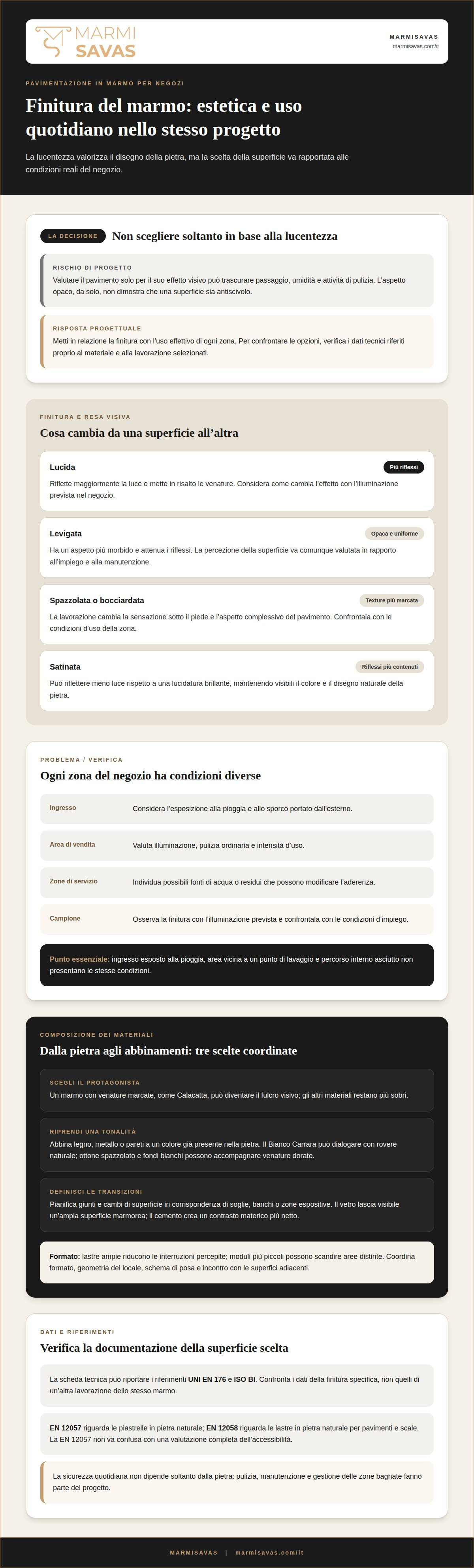
- Choose the focal material: a marble with pronounced veining, such as Calacatta, can become the visual focal point; other materials should remain understated.
- Repeat a tone: match wood, metal, or walls to a color already present in the stone instead of introducing random contrasts.
- Define the transitions: plan joints and changes in surface material around thresholds, counters, or display areas.
The size of the slabs contributes to visual continuity: a large format reduces perceived interruptions, while smaller modules can define specific areas. European standard EN 12058 concerns natural stone slabs for floors and stairs. In a project, the format should be coordinated with the geometry of the premises, the laying pattern, and the transitions to adjacent surfaces.
For marble flooring in stores, the combination works when materials, colors, and details follow the same design concept. Comparing a sample with the actual furniture finishes helps assess differences in tone and veining before defining the overall composition.
The duration of the installation varies according to the dimensions, subfloor conditions, and cutting complexity. Reopening is possible once the curing times required for adhesives and filling materials have elapsed.
Finishes and Slip Risk
In Italy, accessibility and floor safety depend on the regulations applicable to the project and the building. For marble, the technical data sheet may refer to UNI EN 176 and ISO 81; European standard EN 12057 concerns natural stone tiles, but it should not be confused with a comprehensive accessibility assessment.
The finish changes the appearance of the stone and its tactile perception. A polished surface reflects light and makes the veining more visible, while a honed, matte, and uniform finish softens reflections. Brushed or bush-hammered treatments create a more pronounced texture, changing the sensation underfoot and the overall appearance of the floor.
The choice must take the store’s actual use into account. An entrance exposed to rain, an area near a washing point, and a dry indoor route present different conditions. Consider expected foot traffic, the presence of moisture, and cleaning activities together with the stone finish. A matte appearance alone does not demonstrate that a surface is slip-resistant.
To compare options, consult the technical data relating to the material and the specific treatment. The data must refer to the surface actually selected, not to another finish of the same marble. Format and joint layout also affect the continuity of the floor: consider them in the overall design.
- Entrance: consider exposure to rain and dirt brought in from outside.
- Sales area: evaluate lighting, routine cleaning, and intensity of use.
- Service areas: identify possible sources of water or residue that could affect grip.
- Sample: observe the finish under the planned lighting and compare it with the intended operating conditions.
A satin finish may reflect less light than a bright polish while keeping the natural color and pattern visible. For example, in a store with grazing light, a light-colored marble may show veining and surface marks differently from the same material under diffuse lighting. Therefore, evaluate the aesthetic effect together with the function of the space.
Safety does not depend solely on the stone: cleaning, maintenance, and management of wet areas matter in everyday use. An unsuitable cleaning product may leave residue, while a neglected surface may lose visual uniformity. Defining the finish and cleaning routine as parts of the same project helps maintain a consistent store experience.
To guide material selection in relation to the commercial environment and the desired finish, you can share the project details.
The marble technical data sheet may include references to UNI EN 176 and ISO 81; EN 12057, on the other hand, concerns natural stone tiles and does not, by itself, constitute a complete accessibility assessment. The applicable requirements depend on the project and the building.
Customized Flooring by Color and Format
Color and format determine how the floor complements merchandise, furnishings, and store lighting. A light background, such as Bianco Carrara, can highlight dark shelves; a grey stone, on the other hand, creates a more discreet base for displays in vivid colors. Start with the project palette, not with an isolated sample.
Marble is a natural material: the background and veining vary from one slab to another. To achieve a harmonious result, evaluate the overall pattern of the surfaces intended for the floor, considering the direction and intensity of the veining. Arabescato, with its graphic pattern, can become a striking visual element; a more uniform marble gives greater prominence to furnishings and products.
Light also changes the perception of color. An ivory tone may appear warmer next to beige walls and cooler with grey finishes. Therefore, evaluate samples near the walls, counter, and planned lighting. A practical comparison, for example between light marble and black furnishings, helps determine whether the contrast is balanced throughout the environment.
The format changes the visual rhythm and the amount of perceived grout lines. Large slabs create a more continuous appearance, while smaller modules can define routes or display areas. The store’s geometry and the position of columns, thresholds, and furnishings guide the composition. Before defining the layout, trace the laying lines on the floor plan to avoid unbalanced cuts in the most visible areas.
For interior residential flooring in marble or natural stone, the indicated thickness is 10–20 mm, depending on the format and substrate. This information concerns residential environments and should therefore not be automatically transferred to a store: loads, substrate, and intended use require a specific project assessment. European standard EN 12058 concerns natural stone slabs for floors and stairs.
Grout completes the floor design. For natural stone interiors, grout joints of 2–3 mm are often indicated: the chosen color can make them discreet or turn them into a visible pattern. A color close to the marble softens the grid, while a strong contrast emphasizes individual elements. The result also depends on the alignment of joints with entrances and fixed furnishings.
- For a bright store: combine a light background with finishes that echo its shades.
- For a dramatic floor: leave room for pronounced veining while keeping surrounding surfaces simpler.
- For an orderly composition: coordinate format, grout joints, and the geometry of the floor plan.
When defining marble flooring for stores, make the color and format work together with the scale of the environment. The design can guide the eye toward the entrance, distinguish a display area, or create continuity along circulation routes while remaining consistent with the store’s visual identity.
Combinations of Marble Flooring and Modern Furnishings
Yes, marble can work well with modern furnishings when the design balances materials, proportions, and function. Its natural surface has a distinctive visual presence: furniture with clean lines allows the floor pattern to stand out without turning every element into a focal point.
In a clothing store, for example, essential display units and simple backdrops can frame the circulation route without interrupting the perception of space. A geometric counter becomes a visual reference, while lightweight seating keeps the environment open. Arrange furnishings according to the room's main directions and leave the floor visible in circulation areas.
To coordinate marble and modern furnishings, establish a visual hierarchy: decide which surface should attract attention first, then assign the other elements a complementary role. If the floor has a strong pattern, a simpler wall can create balance. If the marble is more understated, furnishings can introduce bolder shapes.
Light contributes to the dialogue between stone and furnishings. Directional spotlights can highlight a display area, while diffuse lighting creates a more uniform overall perception. Evaluate the effect at different times of the day, especially in stores with windows: natural light changes the perception of colors, shadows, and reflections.
The cost of flooring varies according to the selected marble and the project requirements. To compare options, consider the overall result, including how the material interacts with furnishings and the identity of the retail space.
For daily cleaning, use products suitable for natural stone and follow the specific instructions for the selected surface. In a store, a regular routine helps keep the floor presentable during opening hours: promptly remove any residue left by packaging or merchandise handling.
Think about maintenance in relation to the activities carried out in the premises. A store with frequent display changes may require more attention in areas where display units are moved; a boutique with carefully maintained windows may prioritize cleaning areas visible from the entrance. In both cases, suitable supports beneath furnishings reduce direct contact between movable elements and the floor.
A successful project does not impose a single style: it connects the character of marble with the way people move through and experience the store. Furniture layout, lighting, and consistency of shapes can make the flooring an integral part of the commercial identity.
Marble Flooring for Commercial Spaces
In a store, marble combines visual identity and technical design: material, format, and substrate must be considered together. The most suitable choice comes from the actual use of the premises, from circulation routes to display areas.
Types of Marble for Stores
For commercial flooring, choose marble by considering appearance, finish, and the intended use of different areas. Bianco Carrara, Botticino, and some travertines are used for floors; their light or beige tones create an elegant base for boutiques and showrooms.
Calacatta and Statuario have more dramatic veining and can become the focal point of an entrance or display area. When selecting, consider the desired effect, visual continuity between slabs, and expected intensity of use.
Resistance to Traffic and Loads
Floor resistance depends on the selected stone, thickness, substrate, and correct installation design. Therefore, choosing a marble by name alone is not enough: frequent foot traffic, carts, and heavy furnishings influence the specifications to be evaluated.
A store with fixed shelving experiences different stresses from a space where display units are frequently moved. The project considers load distribution, substrate flatness, and slab format. European standard EN 12058 concerns natural stone slabs for floors and stairs; technical documentation helps identify the intended material.
Marble Installation in Commercial Premises
Installation begins with evaluating the substrate and defining the layout to coordinate cuts, joints, and thresholds. This is followed by substrate preparation, slab positioning, and installation with compatible materials; finally, the joints are completed and the surface is cleaned.
Before work begins, the project establishes entrances, circulation routes, and areas that must remain accessible during the intervention. When calculating the supply, it is advisable to allow at least 10% additional material for cuts and possible electrical or plumbing work. Reopening follows the curing times of the materials used.
To define the marble and format most consistent with your commercial space, discuss the project with our team.
The product is intended for installation as flooring or cladding in interior environments, so the cost assessment refers to the marble type and price range considered. These values provide an initial estimate, distinguishing stock availability from higher-end selections.
Premium marbles, such as Calacatta and Statuario, for example, cost approximately €150 to €350/m². The difference between price ranges makes it useful to compare the aesthetic choice with the available budget, considering indicative actual prices.
MARMISAVAS
MARMISAVAS supplies natural marble slabs for commercial projects and helps guide the selection according to color, veining, and format. For a bright store, Bianco Carrara offers a light background with delicate veining; Calacatta and Arabescato feature more pronounced patterns that can give character to the environment. The selection considers the desired effect and the interaction with furnishings and finishes, while also taking flooring design requirements into account.
When defining marble flooring for stores, comparing slabs helps evaluate natural variations and imagine the overall result. MARMISAVAS offers marble slabs for architects, designers, and commercial businesses identifying the material best suited to their space.
Contact MARMISAVAS to discuss your project.
Shape the Design of Your Store
Defining marble flooring for stores means translating the identity of the space into a concrete material choice. Before proceeding, focus on the desired atmosphere: minimal and bright, or richer in contrasts and veining. This direction helps evaluate marble together with furnishings and the everyday needs of the retail space.
To develop the project, MARMISAVAS offers marbles such as Calacatta, Bianco Carrara, and Arabescato, with natural patterns suited to different aesthetic preferences. The selection can begin with a palette or a combination of elements that create continuity between the floor and display space. Comparing these priorities makes the design process clearer.
Share your vision of the space and flooring requirements with MARMISAVAS: discuss your project with the team. A dedicated consultation can help you shape an elegant commercial environment consistent with your identity.
Frequently Asked Questions
Is choosing marble flooring for modern interiors worthwhile?
Yes, marble is a suitable choice if the project focuses on a natural material with a lasting visual presence and rich nuances. In a store with essential lines, it can add depth without introducing artificial decorative patterns. Its suitability also depends on the willingness to care for its surface: for a boutique with carefully arranged displays and regular cleaning, it can be a consistent choice, while a business prioritizing reduced maintenance can decide according to that priority.
Which marble finishes are more slip-resistant and suitable for commercial spaces?
Surfaces with a perceptible texture, such as brushed or bush-hammered finishes, tend to offer more grip than smooth polishing. However, the finish must be evaluated in relation to usage conditions: an entrance exposed to rain requires different considerations from a dry indoor area. To make an informed choice, compare the technical documentation for the specific treatment and consider how grip and cleaning change in different areas of the premises.
What are the risks of marble staining, scratching, and slipperiness?
In addition to stains and surface scratches, localized impacts can chip edges, especially near checkout counters and in handling areas. A height difference between slabs or an unconnected threshold can also create a tripping hazard. In a store, protective supports beneath display units and lifting furniture during movement help limit damage; regularly checking joints and transitions makes it possible to identify potential critical points.
How long does marble installation take, and when can the store reopen?
Installation duration depends on the size of the store, substrate preparation, and cutting complexity. The store can reopen once the curing times indicated in the technical data sheets for adhesives and filling materials have elapsed.