Premium Marble Slabs: The Ultimate Checklist for Professionals and Luxury Projects
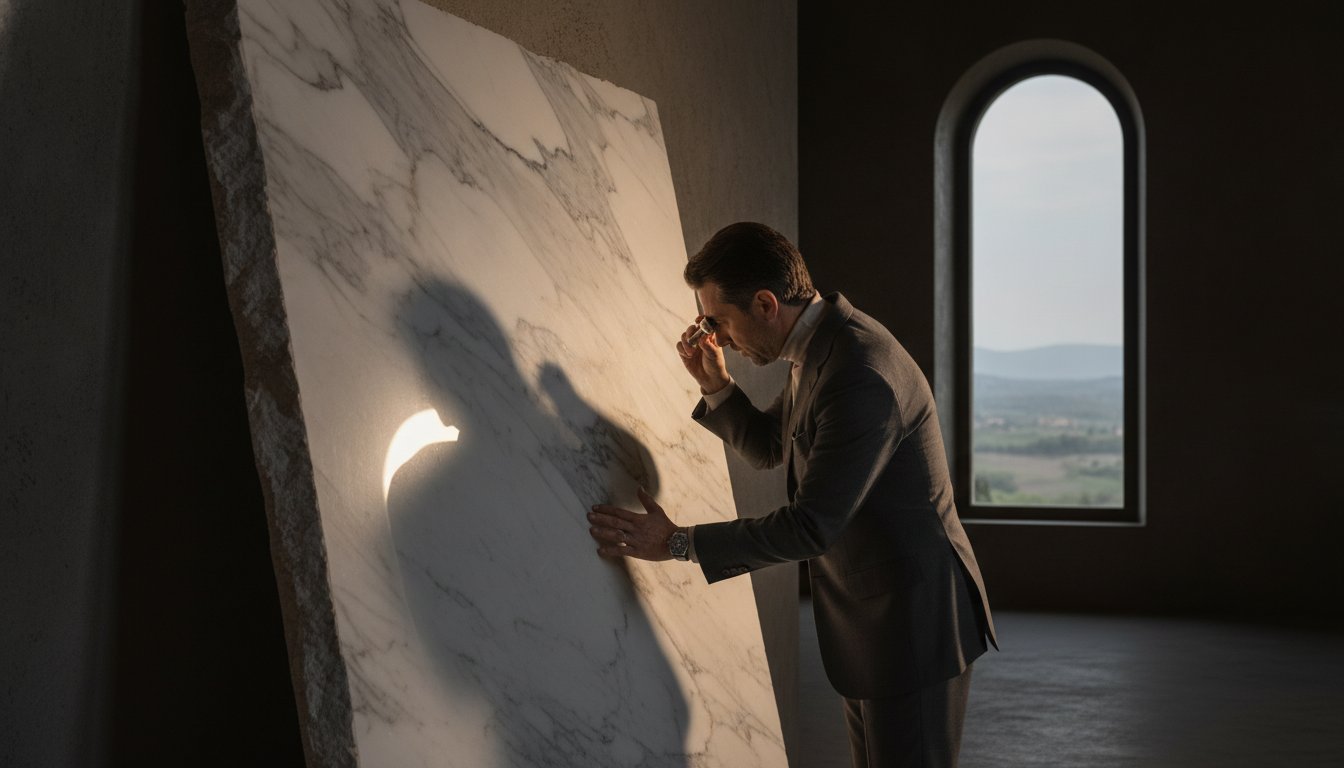
Can an invisible detail, unnoticed by the untrained eye, turn a prestigious investment into a structural compromise? When selecting marble slabs for a high-end interior design project, the difference between an outstanding result and a hidden technical issue often lies in what cannot be seen at first glance. We understand that, for professionals, the pursuit of perfect color consistency and harmonious veining is far more than an aesthetic preference—it is a fundamental requirement for ensuring visual continuity and the structural integrity of every luxury installation.
This technical and design guide has been created to support you throughout the complex process of inspecting and sourcing the world's most iconic natural stones, including Calacatta and Arabescato. You will learn how to identify structural micro-cracks before purchase and how to manage bookmatched installations to achieve a seamless, visually striking result. Together, we will examine the rigorous criteria used to evaluate the quality of authentic Italian marble. We will provide the knowledge you need to select every slab with the confidence of an expert, ensuring that your creative vision becomes a flawless and long-lasting reality.
Key Takeaways
- Learn how to select the ideal slab thickness and the most appropriate finish to maximize both the beauty and functionality of every luxury interior project.
- Develop the expertise to evaluate the direction of the veining and the purity of the color in marble slabs, achieving a flawless bookmatched effect.
- Identify the essential technical criteria for distinguishing structural defects from professional resin treatments that reinforce the strength and durability of the material.
- Understand the strategic advantages of sourcing marble directly from Italy, ensuring access to the finest varieties and certified logistics.
- Transform every architectural decision into a long-term investment by choosing iconic materials such as Calacatta and Bianco Carrara.
Table of Contents
- Beyond the Surface: Why Choose Marble Slabs for Premium Projects
- Technical Checklist: Slab Thickness, Finishes, and Dimensions
- Aesthetic Evaluation: Veining, Color, and the Bookmatched Effect
- Quality Inspection: How to Identify an Exceptional Marble Slab
- From Quarry to Construction Site: Sourcing and Logistics of Italian Marble
- Beyond the Surface: Why Choose Marble Slabs for Premium Projects
Choosing marble for an architectural project means investing in a material whose value goes far beyond temporary design trends. It is not simply about selecting a surface finish. It is about incorporating a material that enhances both the market value and the prestige of a property. The geological origin of marble reminds us that this metamorphic rock is the result of thousands of years of natural transformation. Every vein tells a unique geological story that no machine can ever reproduce with the same authenticity and depth.
Marble slabs provide a natural canvas where design meets timelessness. Unlike industrial materials, natural stone offers durability measured in decades while preserving its original beauty. It is a living material that ages gracefully and can be restored through polishing whenever necessary. For those seeking uncompromising excellence, marble represents a sustainable choice by significantly reducing the need for future replacements that are common with less durable synthetic materials.
Marble Slabs vs. Marble Tiles: When Large Formats Are Essential
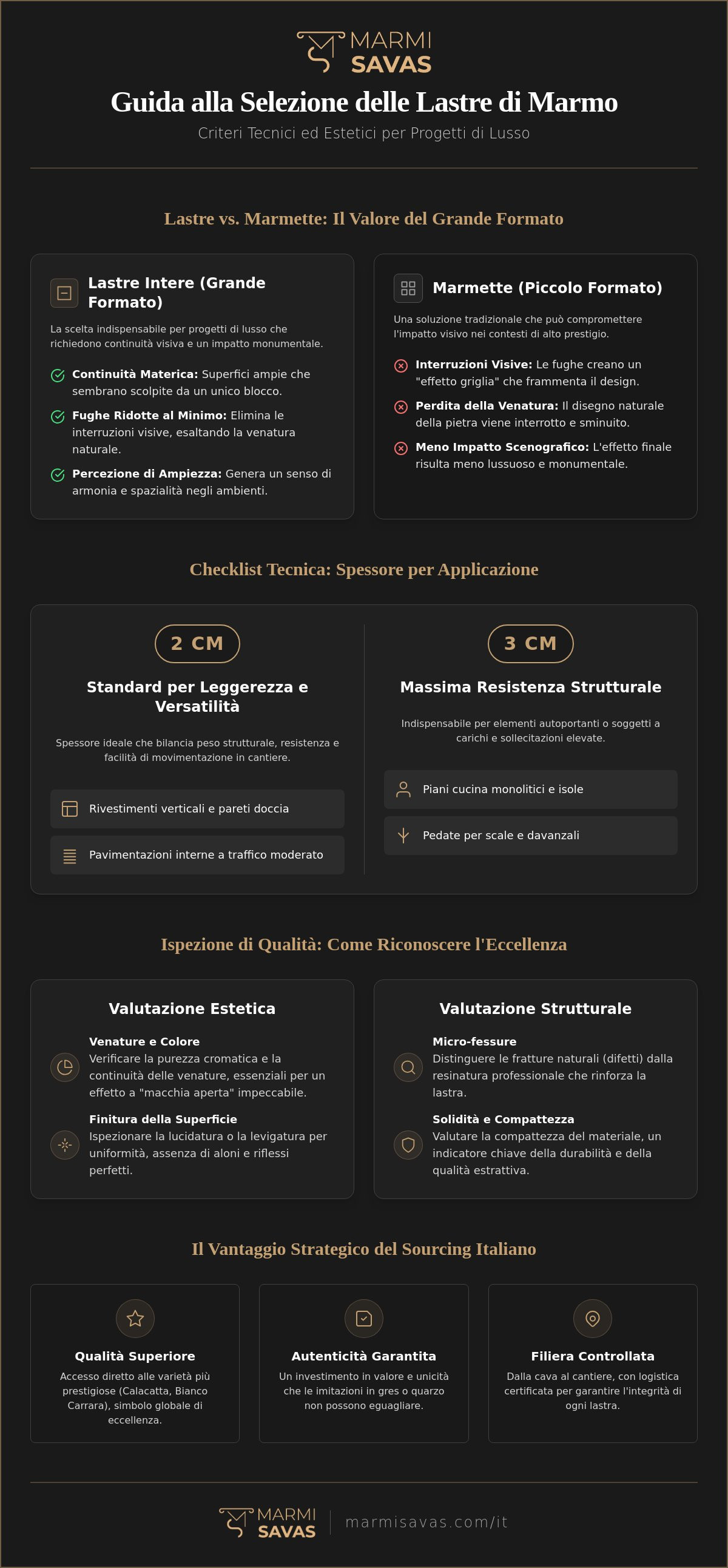
Choosing large-format slabs is not merely an aesthetic decision; it follows a design philosophy centered on material continuity, a defining characteristic of contemporary luxury. Full slabs dramatically reduce the number of grout lines, creating surfaces that appear to have been carved from a single block of stone. This approach is indispensable in high-end projects, particularly for full-height shower walls, monolithic kitchen countertops, and expansive flooring in prestigious living spaces.
The perception of space changes dramatically when the eye encounters no visual interruptions. The uninterrupted flow of the natural veining, achievable only through the skillful use of marble slabs, creates a greater sense of openness and visual harmony. In luxury interiors, this continuity conveys solidity and exceptional craftsmanship, elevating the overall design and transforming an ordinary room into an immersive architectural experience.
The Value of Italian Marble in the Global Market
On the international stage, marble quarried and processed in Italy remains the gold standard for architects and designers. Varieties such as Calacatta and Bianco Carrara are far more than commercial names—they represent unmatched extraction quality and centuries of technical expertise. Although the market increasingly offers synthetic alternatives such as porcelain stoneware and engineered quartz, natural marble retains a unique character and resale value that artificial materials simply cannot match.
Many ceramic manufacturers promote porcelain stoneware as a more practical alternative while overlooking the tactile richness and chromatic depth of genuine natural stone. To better understand the technical differences and learn how to avoid common selection mistakes, we invite you to read our article Natural Stone: Truths and Common Myths. Choosing authentic Italian marble means giving every project a distinctive identity and a timeless beauty capable of outlasting passing design trends.
Technical Checklist: Slab Thickness, Finishes, and Dimensions
The success of a luxury architectural project depends on technical precision. While aesthetics capture attention, it is the technical specification that ensures the project maintains its integrity for decades. Every decision—from slab dimensions to millimeter-level tolerances—must follow rigorous standards. For industry professionals, consulting the technical standards established by the Natural Stone Institute is an essential step in validating material quality and guaranteeing the long-term performance of every installation.
Choosing the Right Thickness for Every Application
Selecting slab thickness is never an arbitrary decision. 2 cm marble slabs represent the ideal standard for wall cladding and interior flooring, offering the perfect balance between structural weight and ease of installation. When maximum strength becomes the primary requirement—as in monolithic kitchen countertops or self-supporting stair treads—3 cm slabs become essential. This thickness provides greater structural stability and superior resistance to impacts and concentrated loads.
The average dimensions of marble slabs typically range between 280 cm and 330 cm in length. Optimizing these dimensions through digital nesting, the process of digitally mapping cutting layouts, is essential for minimizing material waste while ensuring perfect alignment of the natural veining. In large-scale commercial projects, maintaining minimal millimeter tolerances guarantees that joints remain virtually invisible, enhancing the perception of quality while simplifying installation for construction teams.
How Surface Finishes Influence Color Performance
The chosen finish completely transforms the personality of the stone. A polished finish is the preferred option for highlighting crystal depth and enhancing color intensity, making it ideal for prestigious reception areas and luxury interiors. By contrast, a honed finish offers a refined matte appearance with a silky texture. It has become increasingly popular in contemporary architecture thanks to its ability to conceal minor surface scratches while diffusing light more softly, creating warmer and more sophisticated living spaces.
For outdoor applications or environments that require a more textured appearance, brushed and sandblasted finishes add a distinctive tactile quality. These treatments emphasize the stone's natural character while providing enhanced slip resistance without compromising its elegance. If you are planning a technically demanding project and require expert guidance regarding material tolerances, you can request a personalized technical consultation from our specialists to identify the most effective solution for your project.
Aesthetic Evaluation: Veining, Color, and the Bookmatched Effect
The beauty of a natural stone surface is never accidental. It is the result of meticulous selection based on chromatic balance and geological symmetry. When evaluating marble slabs for a high-end project, a professional's eye must look beyond the background color. It must be able to interpret the density and intensity of the veining, as these elements define the character and visual energy of a space. Every extracted marble block carries its own unique geological fingerprint, making each supply a one-of-a-kind opportunity to create an architectural masterpiece.
One of the most important factors in achieving outstanding aesthetics is the consistency of the slab batch. Ensuring that every slab originates from the same marble block is the only way to avoid noticeable color variations once installation is complete. This consistency also makes it possible to successfully execute the Bookmatching (open-book) technique. This method involves placing mirror-image slabs, cut consecutively from the same block, side by side to create striking geometric compositions and natural symmetrical patterns that appear almost hand-painted. It is the preferred solution for dramatic feature walls in prestigious living areas and luxurious wellness spaces.
Iconic Marble Varieties: Calacatta, Carrara, and Arabescato
The world of Italian white marble offers distinctive characteristics to suit every creative vision. Calacatta is renowned for its refined elegance, featuring bold gray or golden veining set against a warm creamy-white background. For those seeking brighter spaces and a more uniform appearance, Bianco Carrara remains the benchmark. The unique geological formation of Carrara marble has created a crystalline structure that reflects light in an unmatched way, making it the perfect choice for surfaces that visually enlarge interior spaces. For projects that demand a stronger visual statement, Arabescato captivates with its distinctive dark gray "oval" veining, creating dynamic and expressive contrasts. To learn more about the application of these exceptional materials, we invite you to explore our guide on white marble flooring.
Dark and Colored Marbles for Sophisticated Contrasts
Contemporary design is rediscovering the visual power of darker tones. Black marble and gray marble varieties have become essential design tools for architects seeking to create interiors with depth, sophistication, and modern character. These marble slabs make it possible to create dramatic focal points, particularly when paired with premium wood finishes or satin-finished metals. For projects that call for a warmer and more organic atmosphere, brown marble introduces rich earthy tones that convey a sense of comfort, balance, and permanence. You can discover our most exclusive selections in the dedicated Marmisavas Black Marble Collection, where elegance meets the highest standards of Italian stone craftsmanship and quality.
Quality Inspection: How to Identify an Exceptional Marble Slab
Inspecting marble slabs is a technical process that requires precision and an experienced eye capable of recognizing the subtle differences between the natural character of the stone and potential structural weaknesses. A visually attractive surface alone is not enough—it must also be structurally sound. The presence of through-cracks or deep fissures can compromise not only the installation process but also the long-term safety of the application, particularly in large-format vertical cladding. An outstanding marble slab is distinguished by its compact structure and the quality of the protective treatments applied during processing.
Contrary to common belief, professional resin reinforcement and filling treatments are not attempts to conceal imperfections. In many cases, they are indicators of high-quality craftsmanship. These processes strengthen the stone's natural structure, especially in premium and more delicate marble varieties, ensuring that marble slabs maintain their integrity throughout transportation and final fabrication. A perfectly uniform polished surface, free from haze or dull areas, is the ultimate sign of an industrial process carried out to the highest standards.
Physical Inspection Checklist (Key Points)
- Backlighting Inspection: Position yourself parallel to the slab surface to detect micro-cracks or fine hairline fractures that are invisible when viewed from the front.
- Back Surface Inspection: Verify the presence and proper adhesion of the reinforcing mesh. A well-applied mesh demonstrates careful attention to the structural stability of the material.
- Flatness Test: Use a straightedge or laser measuring equipment to ensure that the slab has no warping or deformation that could complicate installation.
- Photographic Documentation: Capture high-resolution photographs of every slab in the batch. This documentation helps map the veining for digital nesting while also serving as a pre-delivery quality record.
Natural Characteristics vs. Manufacturing Defects
Knowing how to distinguish between an open natural vein and a structural crack is what separates an experienced consultant from an ordinary supplier. Natural veining is part of the stone's geological identity and does not compromise its strength when properly treated. A crack caused by impact or thermal stress, however, represents a potential point of structural failure. It is equally important to examine the quality of the slab edges. Chipping or irregularities along the perimeter often indicate poor maintenance of cutting equipment during production.
Selecting the marble block directly at the source remains the most effective quality control measure. Only exceptional raw material can produce finished products that fully comply with technical specifications and international certification requirements. If you would like to ensure that your marble supply meets these demanding standards, our consultants are available to assist you with real-time guided material selection.
From Quarry to Construction Site: Sourcing and Logistics of Italian Marble
The journey of natural stone—from the depths of the Apuan quarries to the heart of an architectural project—is both a logistical and technical challenge that leaves no room for compromise. Sourcing directly from Italy is not merely a geographical advantage; it guarantees a shorter supply chain that allows strict quality control throughout every stage of material selection. Within this process, MARMISAVAS serves as a global curator of premium natural stone, transforming the complexity of marble procurement into a seamless and transparent experience for architects and design professionals.
Managing marble slabs on a national and international scale requires specialized expertise in handling materials that are both heavy and naturally fragile. Logistics planning must be integrated from the earliest stages of every project to ensure that construction schedules remain on track. Partnering with an experienced supplier eliminates uncertainties related to transportation and material availability, guaranteeing that the quality inspected in the warehouse is exactly the quality delivered and installed on-site.
Professional Marble Sourcing for Architecture and Interior Design Firms
Architectural and interior design studios require rapid responses and privileged access to rare marble varieties. Our specialization in Italian white marble allows us to offer exclusive batches of Calacatta and Arabescato Corchia, materials that define contemporary luxury. We go beyond supplying marble—we provide dedicated technical consulting to evaluate the suitability of each variety according to the project's climate conditions and intended application.
To simplify the decision-making process, we provide advanced digital tools. Through physical samples and high-resolution photographs of available lots, architects and designers can evaluate the aesthetic appearance of marble slabs before they even leave our distribution center. This continuous support significantly reduces the risk of errors while allowing perfect coordination between marble, wood finishes, metals, and every other element of the interior design project.
Logistics and Transportation Safety
Transportation is often the most critical phase of the entire supply process. To prevent breakage or the formation of micro-cracks, every shipment is packed in certified custom-built wooden crates (cradles) specifically designed for natural stone. These protection systems ensure that the slabs remain securely positioned vertically while being cushioned throughout transportation. Protecting the material is our highest priority because we understand that delays caused by damaged slabs can affect the entire construction schedule.
Beyond physical protection, we carefully manage all documentation required for the traceability of natural marble. Every shipment is accompanied by technical data sheets certifying the origin and physical characteristics of the material—essential documentation for the most demanding international construction specifications. If you are planning a prestigious project and are looking for a reliable partner capable of managing every aspect of the supply chain, we invite you to visit the Marmisavas Contact Page for Quotations and begin discussing your project with our logistics specialists.
Designing for Eternity: Elevating Architecture with Authentic Natural Stone
Choosing marble for a luxury project is an act of careful curation that demands both technical expertise and refined aesthetic judgment. As we have seen, evaluating slab thickness and inspecting structural integrity are essential steps in preventing costly issues during installation. Likewise, achieving visual perfection through Bookmatching and carefully selecting uniform batches creates the uninterrupted continuity that only premium marble slabs can provide.
MARMISAVAS serves as your strategic partner, offering dedicated technical support for architects and interior designers. Our rigorous selection of every individual slab, combined with our specialization in iconic marble varieties such as Calacatta and Arabescato, ensures that every creative vision finds its highest expression in natural stone. We are ready to support your project from quarry to construction site with certified logistics and uncompromising quality at every stage.
Explore our exclusive collection of white marble slabs and schedule a consultation to transform your next project into a timeless architectural masterpiece. Nature spent thousands of years creating these extraordinary surfaces—together, we can shape them into the defining feature of your next exceptional project.
Frequently Asked Questions About Selecting Marble Slabs
What is the main difference between marble slabs and marble tiles?
The primary difference lies in their size and the visual continuity they provide. Marble tiles are pre-cut into standard dimensions, while marble slabs are large-format pieces that can exceed three meters in length. Their larger size significantly reduces the number of joints, creating a seamless, monolithic, and luxurious appearance that cannot be achieved with smaller tiles.
How can I calculate how many marble slabs I need for my project?
The calculation should begin with the net surface area of the project, followed by the addition of a technical waste allowance, typically ranging from 20% to 30%. Since slabs have irregular edges and natural veining that requires precise alignment, it is essential to prepare a detailed nesting plan before cutting. Professionals should always calculate the usable surface area of each slab, excluding the unfinished outer edges.
Can the Bookmatch effect be achieved with any type of marble?
No. The Bookmatch effect requires marble varieties with strong, directional veining. The process begins during block cutting, where consecutive slabs are numbered and polished on opposite faces so they create a mirrored pattern when placed side by side. Varieties such as Arabescato and Calacatta are ideal for this technique, while marbles with very uniform grain patterns cannot produce the same dramatic symmetrical effect.
What does it mean when a marble slab has undergone resin treatment?
Resin treatment is an advanced technical process designed to reinforce the natural structure of the stone. It involves applying epoxy resins that penetrate natural micro-fissures, increasing structural strength while improving the surface finish. Rather than concealing defects, resin treatment is a premium-quality process that makes marble slabs more durable and better suited for processing and installation.
Which white marble varieties are most popular for luxury projects?
Calacatta, Bianco Carrara, and Arabescato remain the preferred choices in the luxury market. Calacatta is renowned for its bold veining on a creamy white background, while Bianco Carrara is appreciated for its timeless brightness and exceptional versatility. Arabescato, with its distinctive oval-shaped veining, is the preferred choice for designers seeking bold visual expression in luxury cladding and interior applications.
How does slab thickness affect the final price per square meter?
Slab thickness directly influences the final cost because it determines both the amount of raw material required and the complexity of processing. A 3 cm slab requires more stone and longer cutting times than a 2 cm slab. In addition to the material cost, thicker slabs also generate higher logistics expenses due to their increased weight and the need for specialized handling equipment.
Does natural marble require special maintenance after installation?
Yes. Natural marble should be maintained using only pH-neutral cleaning products to protect its surface finish. Since marble is naturally porous, it is essential to apply a professional water- and oil-repellent protective treatment immediately after installation. This protective layer prevents the absorption of liquids and stains without affecting the stone's natural breathability, making daily cleaning easier while preserving the long-term value of the installation.
Why is it preferable to purchase marble slabs directly from an Italian supplier?
Purchasing directly from an Italian supplier guarantees access to the finest available selection and ensures the authenticity of the material. Italian suppliers possess generations of expertise in evaluating the quality of marble slabs directly at the quarry, providing a level of technical guidance that general distributors cannot match. This shorter supply chain also allows strict quality control over essential processes such as resin treatment and polishing, both of which are crucial for the success of luxury architectural projects.