High-Quality Marble Sourcing: A Strategic Guide for Professionals (2026)
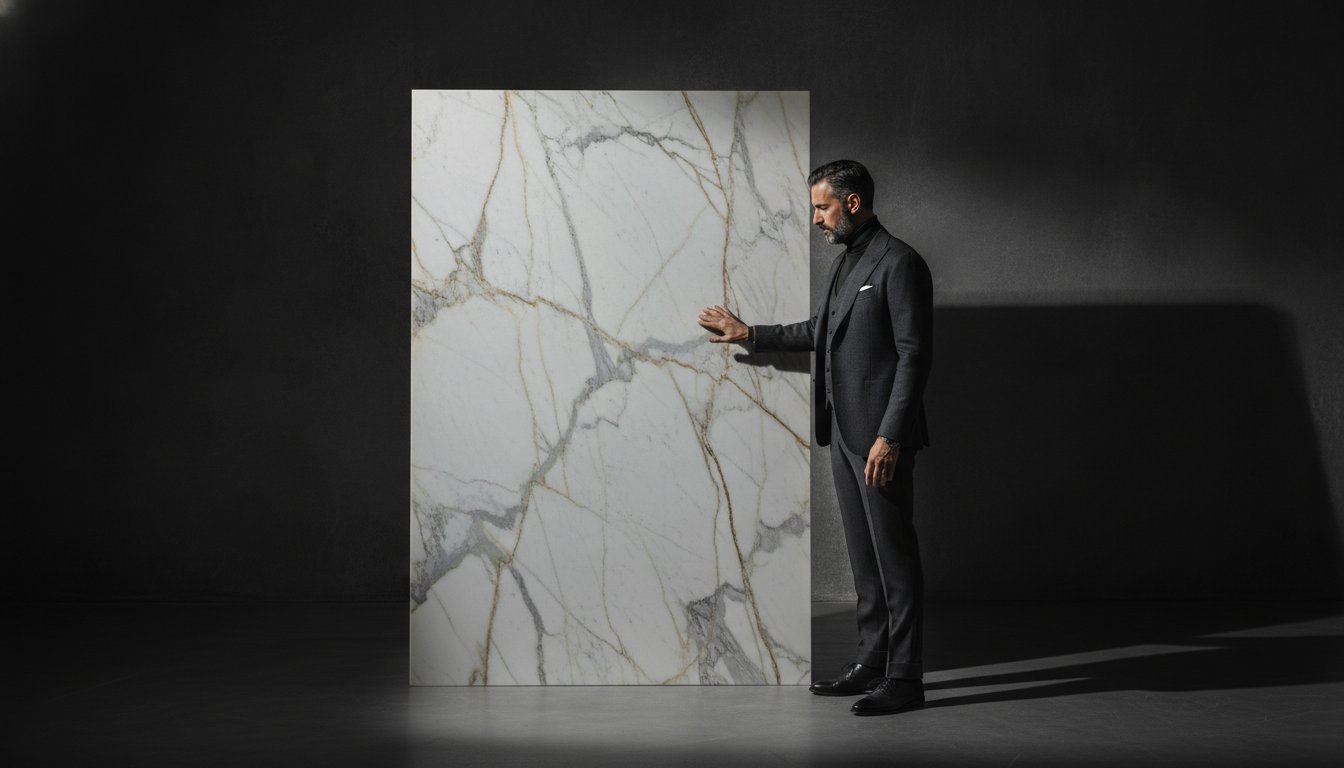
An outstanding architectural project is not born on the drawing board, but within the silent walls of a quarry, where mastery of high-quality marble sourcing defines the boundary between the ordinary and the eternal. We know that nothing is more frustrating for a professional than discovering a discrepancy between the samples presented and the slabs delivered or having to manage logistical delays that jeopardize the completion of a prestigious contract project. The pursuit of perfect aesthetics requires expertise that goes beyond simply choosing a color, demanding a comprehensive understanding of the very nature of the material.
In this strategic guide, we will explore the pillars of sourcing for 2026, providing architects and designers with the essential criteria for selecting the finest Italian marbles, from Bianco Carrara to Calacatta, while ensuring maximum structural quality. You will learn how to assess material resistance according to UNI EN 12370:2020 standards and manage vein continuity, including the sought-after bookmatch effect, to achieve impeccable aesthetic results. We will examine how to identify a reliable partner capable of optimizing supply times, transforming marble selection into a process of technical curation and shared creative vision.
Key Points
- Discover the critical distinction between commercial marble and architectural-grade selection to elevate the quality standards of your luxury projects.
- Learn high-quality marble sourcing strategies to navigate confidently among the different grades of Bianco Carrara, Calacatta, and Arabescato.
- Access a professional checklist for the technical inspection of slabs, focused on verifying flatness and millimeter-precise cutting.
- Optimize the sourcing workflow by strategically coordinating ordering times with the construction schedule and international logistics.
- Guarantee aesthetic excellence for your clients through rigorous management of vein continuity and the selection of first-choice blocks.
Table of Contents
- The Art of Sourcing: Why Marble Quality Should Never Be Taken for Granted
- Selection Criteria: Understanding Grades and Origins of Fine Varieties
- Technical Inspection of Slabs: How to Identify Excellence
- Sourcing Workflow: From Selection to Delivery at the Construction Site
- MARMISAVAS: Italian Excellence in Sourcing Marble and Natural Stone
The Art of Sourcing: Why Marble Quality Should Never Be Taken for Granted
Marble sourcing is not a simple commercial transaction. It is a strategic selection process that requires a trained eye and extensive geological knowledge. In the 2026 market, the concept of high-quality marble sourcing has evolved into genuine technical curation. Choosing a name from a catalog is not enough; it is necessary to understand that every quarried block is a unique piece of natural history, with characteristics that vary dramatically from one quarry to another.
The fundamental distinction for a professional is between commercial marble and architectural-grade marble. While the former focuses on mass production and accepts chromatic variations and structural defects, the latter meets rigorous standards of purity and resistance. The Origins of Fine Varieties directly influence market value. Knowing the specific quarry or even the extraction level within the same quarry makes it possible to predict the final aesthetic result and the longevity of the architectural work.
In large-scale projects, continuity remains the primary challenge. Ensuring that hundreds of square meters of flooring or cladding maintain the same shade and veining pattern requires meticulous planning. Without a dedicated sourcing strategy, the risk of receiving inconsistent batches is extremely high, compromising the visual harmony of the entire architectural space.
Beyond Aesthetics: Structural Quality
Outstanding sourcing evaluates parameters that an inexperienced eye overlooks. The stone’s density and natural porosity are decisive for its use in humid or high-traffic environments. Identifying microfractures or unwanted mineral intrusions is essential to prevent breakage during processing. The extraction technique used in the quarry significantly affects the stability of the slab; modern, less invasive methods preserve the molecular integrity of the material, ensuring a safer and more durable surface over time.
The Supplier’s Role as Curator
Relying on Italian marble specialists provides access to a level of consulting that general suppliers cannot offer. An experienced partner applies the principles of high-quality marble sourcing to translate the designer’s vision into a precise selection of blocks. This approach guarantees access to exclusive batches of white marble, where the purity of the background and the elegance of the veining reach their highest expression. The supplier becomes a strategic collaborator who ensures that the raw material matches the project’s creative ambitions.
Selection Criteria: Understanding Grades and Origins of Fine Varieties
Material selection is the precise moment when the design vision meets geological reality. A rigorous high-quality marble sourcing process cannot disregard an understanding of quality grades, which distinguish an outstanding slab from ordinary building stone. For design professionals, identifying the correct “grade” means ensuring that the purity of the background and the intensity of the veining are consistent with the expectations of a high-end client.
The Prestige of Italian White Marble
Italian white marbles remain the absolute benchmark for global luxury. However, the selection must be targeted. White Carrara marble, with its iconic “fine grain” and softly shaded gray veins, represents the ideal solution for contract projects requiring classic elegance and consistent availability. By contrast, Calacatta marble stands out for bolder and more dramatic patterns, varying between gold, purple, and anthracite-gray shades on a milky-white background. For those seeking an even more dynamic visual impact, Arabescato is the preferred choice; its brecciated structure makes it perfect for bookmatched cladding, where the continuity of the natural pattern transforms a wall into a work of art.
Determining the value of these stones requires an analysis that goes beyond aesthetics. Following industry standards, professionals must assess the rarity of the batch and the structural integrity of the block. These factors directly influence the price of marble per square meter. Informed sourcing makes it possible to balance the budget without ever sacrificing the project’s final result.
Dark Marbles and Alternative Colors
The trends of 2026 show growing interest in warmer and deeper color palettes. The use of black marble in luxury interiors provides magnetic depth, especially when combined with brushed metals or fine woods. For contemporary design accents, earth tones such as brown marble or shades of gray offer tactile textures that respond to the desire for more organic and welcoming luxury. Rare varieties such as Arabescato Verde or Corchia and Vagli selections make it possible to create unique spaces where natural stone becomes the narrative focal point of the environment. If you are planning a project that requires a specific chromatic selection, you can request personalized consulting to identify the batch best suited to your needs.
Technical Inspection of Slabs: How to Identify Excellence
Technical inspection represents the moment of truth in the high-quality marble sourcing process. While digital images provide a necessary initial screening, physical verification or a high-definition video inspection remains the fundamental step for confirming that the slab complies with the project’s technical specifications. An experienced eye does not merely observe the stone’s pattern; it analyzes surface flatness and millimeter-precise cutting, factors that determine ease of installation and the quality of the joints in the final result.
The surface treatment must be assessed with extreme care. Whether it is a mirror-polished, matte-honed, or brushed finish for a tactile effect, the uniformity of the reflection reveals the quality of the industrial processing. For projects involving the combination of multiple slabs, such as cladding in Calacatta marble, verifying the potential for “bookmatching” is essential. This requires sequential batch inspection to ensure that the veins mirror one another perfectly, creating the visual continuity that defines true architectural luxury.
Detecting Defects and Inconsistencies
Distinguishing between the intrinsic beauty of nature and structural defects is a rare skill. Natural veins, however bold, should not be confused with structural cracks that could compromise the slab’s integrity during transportation or installation. For an objective assessment, professionals rely on the marble soundness classification, a system that categorizes materials according to their stability and the reinforcement treatments required. It is equally critical to identify oxidation stains or excessive tonal variations that may appear only under specific lighting conditions; for this reason, inspection should always take place under lighting that simulates the destination environment.
Documentation and Traceability
Professional sourcing is founded on data transparency. Requesting high-resolution photographs and detailed videos of complete batches makes it possible to map every individual slab before it leaves the warehouse. Documentation should include certificates of origin and updated technical data sheets attesting to the physical properties of the material. Correct labeling of every slab is essential to ensure that, once it reaches the construction site, the material corresponds exactly to the approved selection. Fine varieties such as Arabescato Corchia require complete traceability to preserve the harmony of the original batch and facilitate the work of experienced installers.
Sourcing Workflow: From Selection to Delivery at the Construction Site
The success of a luxury architectural project depends not only on the beauty of the selected stone, but also on the millimeter precision of the supply chain. Managing high-quality marble sourcing means orchestrating a constant dialogue between aesthetic vision and logistical constraints. An error in ordering times or an underestimation of weight can cause cascading delays, compromising the construction schedule. For this reason, planning must begin months before installation, considering that the availability of specific batches of fine varieties can change rapidly.
Cutting optimization is another fundamental pillar. Smooth technical communication among the supplier, the architect, and the marble fabricator responsible for processing makes it possible to reduce waste drastically. By analyzing the dimensions of the slabs against the project schedules in advance, it is possible to maximize material yield and stay within budget without sacrificing quality. This coordination ensures that every vein is positioned exactly where the original design specifies.
Sampling and Approval
The process begins with the creation of professional mood boards. However, physical samples should be considered only a chromatic starting point. It is essential for the professional to approve the specific batch of slabs, not merely the general type of material. Whether it is Calacatta marble or Arabescato Corchia, natural variability makes every block an entity in its own right. Managing the end client’s expectations by explaining the uniqueness of every vein transforms potential criticism into the added value of authenticity.
Protection and Transportation of Slabs
Transporting heavy and fragile loads requires rigorous safety standards. Packaging should involve the use of certified wooden A-frames or reinforced crates designed to absorb vibrations during national or international transit. Responsibility for the load and insurance coverage must be clarified during the contractual phase to protect the client’s investment. An experienced logistics partner coordinates “just-in-time” delivery, preventing slabs from remaining unproductively at the construction site, where the risk of accidental damage is higher.
If you are planning supply for a large-scale project and want trouble-free logistics management, you can contact our specialists to define a customized sourcing plan. Effective high-quality marble sourcing provides professionals with complete peace of mind by delivering Italian excellence directly to its destination.
MARMISAVAS: Italian Excellence in Sourcing Marble and Natural Stone
MARMISAVAS does not operate as a simple supplier, but as a strategic partner that transforms the complexity of high-quality marble sourcing into a competitive advantage for every architectural project. Our privileged position at the heart of the Italian stone industry enables us to operate as global curators, selecting only blocks that meet rigorous criteria for aesthetic excellence and structural integrity. We support the creative vision of architects and designers with technical expertise developed directly at extraction sites, ensuring that every selected slab is a coherent and prestigious extension of the original design concept.
Our consultative approach bridges the gap between artistic inspiration and the reality of the raw material. Thanks to an established network of direct contacts, we have access to rare varieties and exclusive batches that rarely reach general distribution channels. Whether defining the flooring of a monumental lobby or the cladding of a luxury private residence, our role is to ensure that the high-quality marble sourcing process is smooth, transparent, and focused on the most ambitious final result.
Our Specialization in White Marble
The heart of our offering lies in the selection of the world’s finest white marbles. We have developed specialized expertise in Calacatta, Arabescato, and Carrara, materials that represent the pinnacle of timeless design. Every individual slab undergoes careful manual selection; we analyze the purity of the background, the direction of the veining, and the absence of structural defects to guarantee superior quality standards. This rigor is essential for flooring and large surfaces, where material consistency determines the aesthetic success of the entire architectural project.
Contact Us for Your Next Project
Planning today for the sourcing requirements of 2026 projects is the best way to secure access to the most sought-after selections on the market. Our team of experts is available to provide specific technical consulting, helping you navigate among the different shades of white or explore exotic stones and colored marbles for contemporary design accents. You can visit our digital catalog to explore the available varieties and request a personalized quotation that considers your specific logistical and design requirements. At MARMISAVAS, your creative vision finds its purest form in outstanding natural stone.
Elevating Design Through Informed Selection
The success of the most ambitious architectural projects of 2026 lies in the ability to transform raw material into a unique narrative element. We have analyzed how high-quality marble sourcing requires deep integration among creative vision, technical rigor, and logistical precision. From distinguishing among the different grades of white marble to verifying soundness standards, every step defines the aesthetic impact and longevity of the final work.
Relying on specialists in Italian white marble such as MARMISAVAS means choosing a partner who understands the real needs of architectural studios. As an exclusive supplier of premium slabs and marble tiles, we provide established support that goes beyond simple sales, guaranteeing access to outstanding varieties such as Calacatta and Arabescato. Your vision deserves the stability and timeless beauty that only manual selection and extensive knowledge of quarries can ensure.
We are ready to collaborate to make your next spaces extraordinary. Contact MARMISAVAS for a consultation on sourcing for your project and transform natural stone into the beating heart of your design. Together, we will shape authentic and timeless luxury.
Frequently Asked Questions About Marble Sourcing
What is the main difference between sourcing Calacatta marble and Bianco Carrara?
The difference lies in the rarity and aesthetics of their patterns. Calacatta marble is rarer and features a milky-white background with bold and dramatic veining, making sourcing more selective and complex for luxury projects. By contrast, Bianco Carrara has a grayer shade and finer veins; its greater availability makes it the ideal choice for large-scale contract projects requiring uniformity and optimized budgets.
How can I verify the quality of a marble slab before purchasing it?
To guarantee high-quality marble sourcing, verifying surface flatness and the structural integrity of the block is essential. A careful visual inspection conducted through high-definition video or physical examination makes it possible to distinguish natural veins from potential structural cracks. Requesting images of the specific batch is essential to confirm chromatic consistency and the quality of the surface treatment, ensuring that every slab complies with the project standards.
What are the average sourcing times for high-quality Italian marble?
Times vary according to the rarity of the selected variety and the complexity of the logistics. For fine selections such as Arabescato or Calacatta, we recommend beginning sourcing procedures at least three or four months before installation. This advance notice makes it possible to select the best batches directly at the quarry and manage national or international transportation without compromising the construction schedule or material availability.
What does “bookmatching” mean in slab sourcing?
“Bookmatching” consists of placing two consecutive slabs cut from the same block next to one another so that the veins mirror each other perfectly along the central axis. This technique creates a symmetrical pattern with a powerful visual impact, transforming a wall into a natural work of art. In professional sourcing, it requires purchasing sequential batches and millimeter-precise cutting to ensure that the natural pattern appears fluid and continuous after installation.
Why is natural marble preferable to synthetic imitations in luxury projects?
Natural marble offers authenticity and material depth that synthetic products cannot replicate. Every slab is a unique piece with an unrepeatable pattern, adding intrinsic value and timeless prestige to the property. Beyond aesthetics, natural stone guarantees centuries-long durability and the ability to age gracefully, preserving the high value of the client’s investment over the long term thanks to its noble nature.
How does the surface finish affect the perception of marble color?
The finish significantly alters light refraction and chromatic saturation. A mirror-polished surface darkens the tones and makes the veins extremely sharp, making it ideal for enhancing the depth of black marble. By contrast, a honed or brushed finish softens contrasts and lightens the overall shade, providing a more organic and silky appearance that reduces the visual perception of wear scratches in high-traffic environments.
Which technical documents should I request from the supplier for a contract project?
Requesting certificates of origin and technical data sheets attesting to the material’s physical and mechanical properties is essential. Documents based on UNI EN 12371:2010 standards for flexural strength and UNI EN 12370:2020 standards for durability are necessary to ensure regulatory compliance. These data ensure that the selected marble is suitable for its intended use, protecting the professional and the client from potential structural or future maintenance problems.
Is Italian marble suitable for high-traffic exterior applications?
Yes, many varieties of Italian marble are excellent for exterior use, provided that the selection is tailored to the specific environmental conditions. Varieties such as Travertine or certain compact white marbles have historically been used because of their resistance to atmospheric agents. For high-traffic areas, choosing slip-resistant finishes such as sandblasting or bush hammering and confirming that the material has passed frost-resistance and mechanical-wear tests are crucial.