How to use black marble at home: A practical design guide
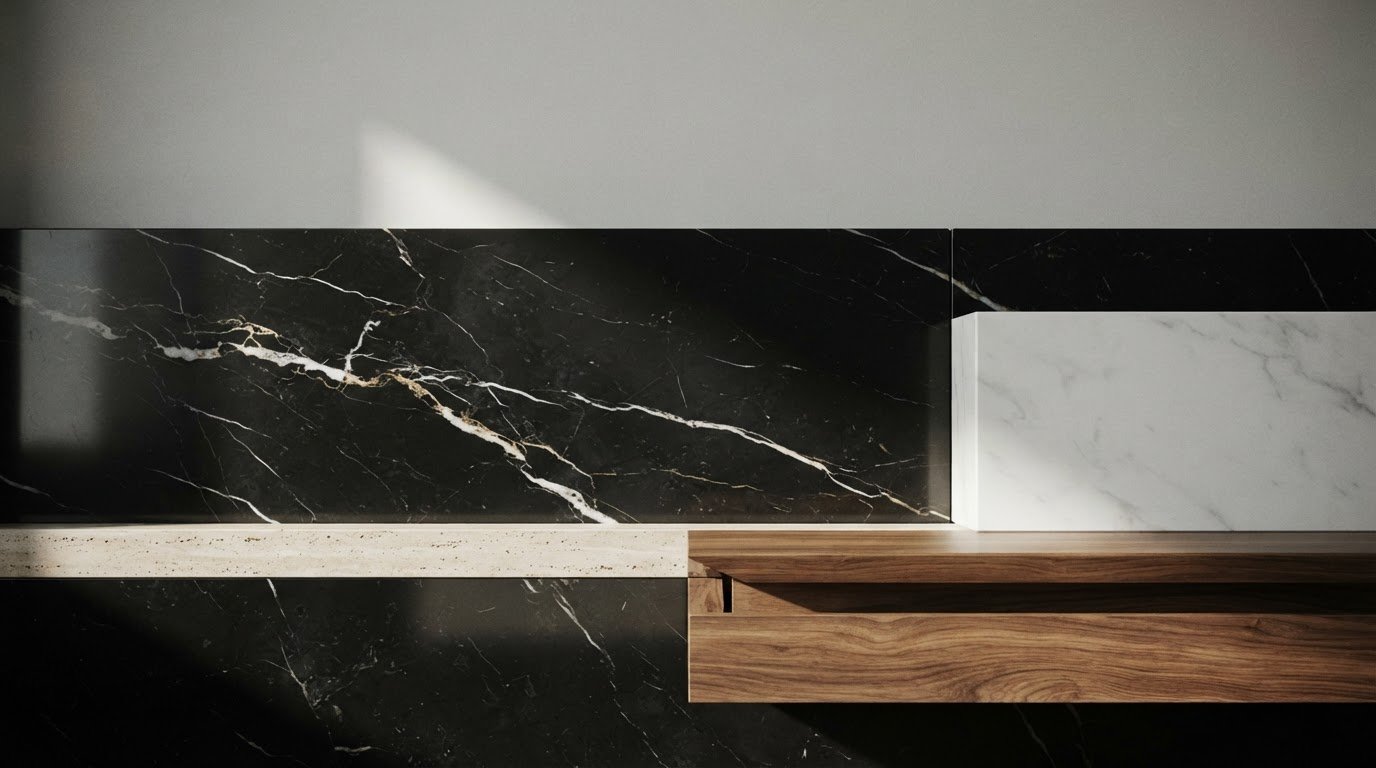
What if black marble didn't make a room darker, but instead gave it depth and character? The result depends on how to use it: a scenic slab can become the focal point of a room, while extensive use requires attention to light and color balances. It is natural to fear that black weighs down the space or that veins and different materials come into contrast. Understanding how to use black marble at home means starting from these evaluations, before defining the desired effect.
In this guide you will discover which environments and surfaces you can enhance with black marble, from the accent wall to the floor, and how to combine it with light tones, wood, and metallic details. You will also see how light, vein pattern, and finish affect perception: a glossy surface reflects light, while a honed one returns a softer and more discreet aspect. The goal is to help you compose a harmonious project, choosing the slab and combinations according to the space and intended use. Thus black marble can express its own intensity without dominating the environment, in contemporary interiors or in warmer and more tactile combinations.
Key Points
- To decide how to use black marble at home, establish if it will be a focal point, a continuous surface, or a material accent.
- Observe the slab in its entirety to evaluate variations and continuity of the veins before choosing it.
- Compare the glossy and honed finishes in the room's light: reflections and surface perception change.
- Consider kitchen, bathroom, living room, and entryway based on function, proportions, and light.
- Define palette and materials, then check samples and the actual slab to build coherent combinations.
Table of Contents
- How to use black marble at home without weighing down rooms
- Light, veins, and finishes: how to evaluate black marble
- Black marble in the kitchen, bathroom, and living room: which application to choose?
- How to combine black marble with colors, materials, and surfaces
- From the choice of black marble to the selection of the slab
How to use black marble at home without weighing down rooms
Black marble can give depth and intensity to an interior, but its impact depends on the role you assign to it. To prevent it from dominating the room, evaluate how much surface area it will occupy, how it will be lit, and what materials will surround it. You can use it as a focal element, continuous surface, or material accent.
This distinction transforms aesthetic inspiration into a concrete choice. A clad wall, a floor, and a circumscribed detail have different visual weights: consider them in relation to the function and proportions of the environment. Natural and artificial light also modify the perception of the dark background. Therefore, observe the material under the conditions foreseen by the project, without taking for granted that a particular finish always makes the space brighter.
What effect does black marble create in an interior?
The contrast with light walls can highlight the depth of black; warm-toned woods or metallic details add chromatic and material variations. However, there is a combination suitable for every room. The result changes based on the overall palette, the amount of light, and the design of the slab. Portoro marble, for example, is recognizable for its dark background crossed by golden veins: it shows how color and the natural design of the veins contribute together to the visual effect.
A large slab allows you to better read the trend of the veins and the variations of the material compared to a small sample. Before defining combinations, therefore, compare the actual slab with the expected colors and materials, in the room's light. A photograph can suggest an atmosphere, but it does not replace the direct observation of the stone.
How to choose the role of black marble in the room?
As a focal point, black marble concentrates attention on a specific surface or element. As an extensive cladding, it assumes a more marked role and requires greater care in the relationship with light, proportions, and surrounding finishes. A circumscribed detail instead introduces the material without making it the protagonist of the entire environment. To decide how to use black marble at home, start from the function of the surface and the scale of the room, then select a slab whose design is coherent with the general composition. Comparing different black marble slabs helps evaluate backgrounds and veins, keeping in mind that characteristics and availability can vary from one material to another.
Light, veins, and finishes: how to evaluate black marble
Once the role of the stone in the project is chosen, observe how color, design, and surface interact. To understand how to use black marble at home, it is not enough to rely on a photograph or the name of the material: light, surface dimensions, and surrounding colors can modify the perceived yield. Evaluating the actual slab helps to choose with greater awareness.
How to read veins and natural variations?
Observe the background color, the direction of the veins, and the differences present on the slab. If the material is intended for a large surface, looking at it in its entirety allows you to better understand the rhythm of the design and its continuity. Ask yourself what effect you are looking for: discreet veins that accompany the whole, or an evident design destined to become a protagonist. Compare the stone with the expected samples of walls, woods, and metals, presumably in the project's lighting conditions. Natural light changes throughout the day, while artificial light depends on the position and type of lighting chosen. Direct comparison avoids basing the palette on images that might return different tones or contrasts. For further insights on contemporary design with black marble, also observe the way the material dialogues with the rest of the environment.
Which finish to consider for the project?
The polished finish produces reflections and makes the relationship between background and veins more evident. The honed one has a matte appearance and a softer visual presence, with less evident reflections. If possible, compare the finishes on the same stone: observe how color and design change in the expected light, without assuming that one is always more suitable than the other. The destination of the surface matters as much as the aesthetic effect. For a floor, cladding, or other application, check the specific technical indications of the material and ask what requirements are relevant to the intended use. Maintenance and suitability cannot be deduced from color alone: they depend on the selected stone and application. You can consult black marble slabs and discuss with the supplier on the selection of the slab, verifying characteristics and availability case by case.
Black marble in the kitchen, bathroom, and living room: which application to choose?
The same slab can have a different effect depending on the room and the chosen surface. In the kitchen or bathroom, black marble can be evaluated for cladding or as a visual presence; in the living room and entryway, it can define a focal point. No application is automatically suitable: evaluate together the intended use, light, dimensions, and technical indications of the material.
Application Breakdown
Kitchen
- Possible role of marble: Cladding or accent surface
- Visual effect: Decisive contrast with light walls and materials
- Design check: Suitability for intended use, light, and relationship with other surfaces
Bathroom
- Possible role of marble: Circumscribed cladding or countertop to be defined in the project
- Visual effect: Cozy and tactile atmosphere
- Design check: Technical requirements, maintenance, and lighting
Living Room
- Possible role of marble: Decorative surface or focal point
- Visual effect: Scenic sign, to be coordinated with furnishings
- Design check: Surface dimension and vein continuity
Entryway
- Possible role of marble: Accent on a wall or architectural detail
- Visual effect: Impactful contrast in a passageway
- Design check: Proportions, available light, and surrounding materials
Where to evaluate black marble in the kitchen and bathroom?
In the kitchen and bathroom you can start from a wall or a circumscribed surface, before evaluating a greater extension. Light, proportions, and the relationship with other materials help predict visual balance. However, suitability depends on the specific stone and application: check the technical and maintenance instructions, without deducing them from color. The supply of slabs is distinct from the creation of furnishings or the installation of kitchen countertops. For design examples on walls, floors, and kitchens, ArchDaily's article on how to creatively use black marble offers insights to adapt to the characteristics of your own space.
How to introduce it in the living room and entryway?
In the living room, a wall or decorative area can highlight the veins without cladding the entire room. In the entryway, a more contained intervention can mark the transition between environments. In both cases, compare the design of the slab with existing furnishings, finishes, and palettes: a very busy motif requires a different context compared to more discreet veins. To understand how to use black marble at home, first define the desired effect and then choose the surface based on the function and scale of the environment. It is this relationship, more than the simple presence of the material, that guides the composition and visual continuity of the project.
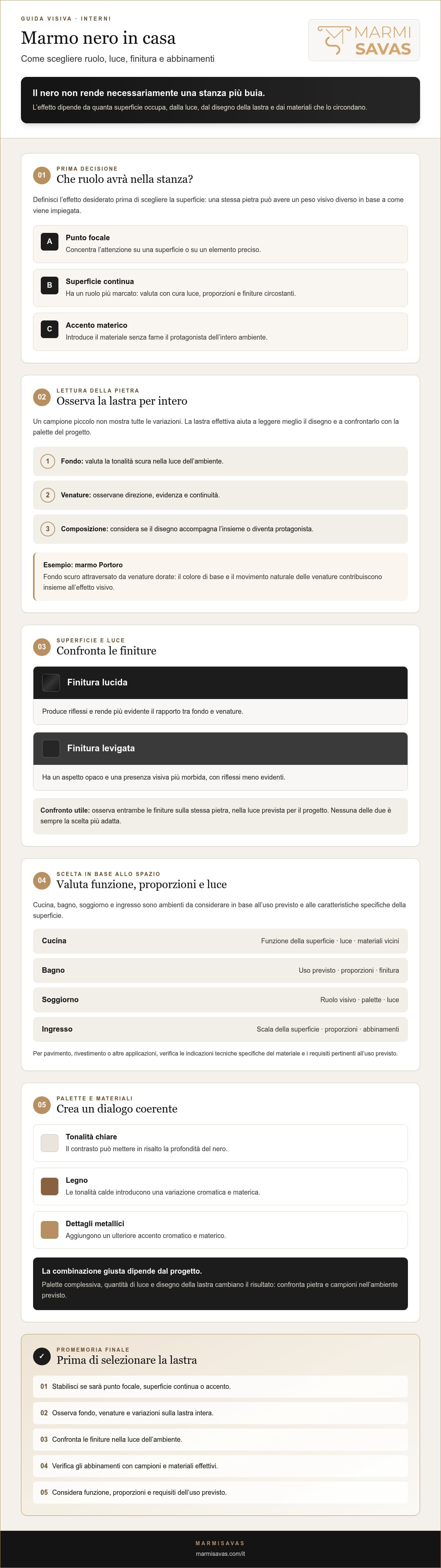
How to match black marble with colors, materials, and surfaces
A successful match stems from a clear visual hierarchy: black marble can be the protagonist or dialogue with other elements without competing with them. To understand how to use black marble at home, proceed with concrete comparisons and evaluate tones, veins, finishes, and proportions together. Samples help move from the idea to the actual composition.
- Define the effect. Choose whether you want a sharp contrast, a sober ensemble, or a composition richer in material accents.
- Set the palette. Identify the colors of walls, floors, and furnishings before choosing combinations.
- Compare samples. Match the marble with the wood, metal, and finishes planned in the project, not just reference images.
- Check light and proportions. Observe the samples in the environment and consider how much surface will be occupied by each material.
How to balance black marble with light colors?
A light color next to black can create contrast and make the different surfaces more legible. White marble is a possibility: the light background and its veins offer a different visual presence than that of black marble. Matching it can define a hierarchy between elements, but it is not a universal rule. In some projects, a more uniform palette with neutral tones or intermediate shades may be preferable. The choice depends on the slab design, the light, and the desired overall effect.
How to coordinate veins and nearby surfaces?
Before pairing multiple materials, establish which surface should attract the gaze. If the slab has evident veins, you can leave it at the center of the composition and choose more discreet surrounding surfaces. If the design is contained, other materials can contribute with textures or color variations, as long as the result remains balanced. To evaluate woods and metals, compare real samples with the slab: a warm or cold shade can change the impression of the whole, as can an opaque or reflective finish. If the project includes the floor, consider the relationship between the black marble and the floor surface, verifying visual continuity, dimensions, and passages between materials. For finishes, rely on the observed yield and relevant technical indications, without attributing undocumented performance to them. To delve deeper into your project's pairings and evaluate available slabs, consult with the supplier on the choice of marble.
From the choice of black marble to the selection of the slab
Once the desired effect is defined, the choice moves from the palette to the concrete material. To understand how to use black marble at home, evaluate the slab in relation to the destination, project measurements, and overall composition. Color and veins can vary from one slab to another: relying solely on ambient photographs might not render the actual design of the stone.
What criteria to use to choose a black marble slab?
Examine the slab as a whole and compare the background, direction, and intensity of the veins. Consider the required dimensions and expected finish, verifying whether the design can maintain the desired visual continuity on the designed surface. Before choosing, also check the technical information relating to the specific stone and application, including relevant instructions for maintenance and use. Examining the actual slab helps evaluate the visible variations and veins of the material. Images can guide the search, but do not replace the observation of the stone that will be selected. If the project includes multiple slabs, ask to evaluate them together and verify that their design is consistent with the expected composition.
- Application: define the surface and intended use.
- Dimensions: compare the necessary measurements with available ones.
- Design: evaluate background, trend, and continuity of veins.
- Finish: compare visual yield with the project language.
- Light and pairings: consider lighting, palette, and surrounding materials.
How to request a consultation on the material?
Prepare some essential information: destination environment, indicative dimensions, palette, and visual references. This framework helps discuss the role of the slab in the project and ask targeted questions about the technical characteristics to be verified. You can start by exploring the category of black marble in slabs, keeping in mind that availability and characteristics must be confirmed for the specific material. MARMISAVAS is specialized in the supply of slabs and natural stones for residential and professional projects. The consultation concerns material selection, not installation or the creation of finished furnishings. To discuss which slab can meet the needs of your project, consult with MARMISAVAS on the selection of slabs.
Design your space starting from the slab
To decide how to use black marble at home, consider function, light, surface dimensions, veins, and finish together. A circumscribed use can create a decisive accent; a more extended surface requires attention to visual continuity and pairings. The choice should start from comparison with the actual slab, not just from an image or a color idea. Evaluate the intended application, observe the natural design of the stone, and compare samples and materials in the project environment. Before defining the choice, also check the technical and maintenance instructions relating to the specific slab and its use. MARMISAVAS supplies natural slabs and stones, including black marble varieties. To discuss your project needs and evaluate the most relevant material, contact MARMISAVAS to consult on slab selection. Careful evaluation of the stone is the first step towards a balanced and personal environment.
Frequently asked questions about black marble at home
Does black marble make a room darker?
Not necessarily: the effect depends on available light, room proportions, finish, and the amount of surface clad. A circumscribed presence can have a different impact than an extensive floor or wall. To understand how to use black marble at home, observe samples or slabs in the intended environment, alongside the project's colors and materials, with both natural and artificial light.
In which rooms of the house can black marble be used?
Black marble can be considered for kitchens, bathrooms, living rooms, and entryways, as a cladding or visual accent. However, the room alone does not determine suitability: the specific stone, chosen surface, and intended use matter. Before defining the project, verify relevant technical and maintenance indications with professionals and suppliers, also evaluating light, proportions, and adjacent materials.
How to match black marble with white marble?
The combination creates a marked contrast, but must be calibrated based on veins, surface dimensions, and light. You can assign the role of accent to black and background to white, or invert the visual hierarchy. Compare real samples and observe the relationship between designs: veins that are both very evident can compete, while a more measured composition can favor continuity.
Which finish to choose for black marble at home?
The glossy finish reflects light and makes the contrast between background and veins more evident; the honed one has an opaque and softer appearance. The choice depends on the desired effect, light, and surface destination. If possible, compare the same stone in different finishes within the project context and check specific technical indications before defining the application.
Is black marble suitable for the bathroom?
It can be evaluated for a bathroom project, but the aesthetic effect is not enough to establish suitability. It is necessary to verify the characteristics of the specific stone, the finish, the surface destination, and maintenance instructions. Bring dimensions and intended use to the consultation to evaluate the material with professionals and suppliers. Availability and characteristics of individual slabs must be confirmed case by case.
How is black marble cleaned and maintained?
Cleaning and maintenance must be defined based on the specific material, finish, and application. There is no universal procedure to deduce from the stone's color: ask the supplier for appropriate indications for the selected slab and follow relevant professional instructions. Before purchasing, clarify what attentions the planned surface requires, so as to consider them alongside the daily needs of the environment.
How to choose a black marble slab for your project?
Compare background color, vein trend, available dimensions, and required finish. Then evaluate the slab in the project context, considering light, palette, and visual continuity on the planned surface. Ambient images can inspire, but do not always show the natural variations of the material. For an informed choice, examine the specific slab and check the technical indications relating to the intended application.