Kitchen Marble: Pros and Cons and How to Choose in 2026
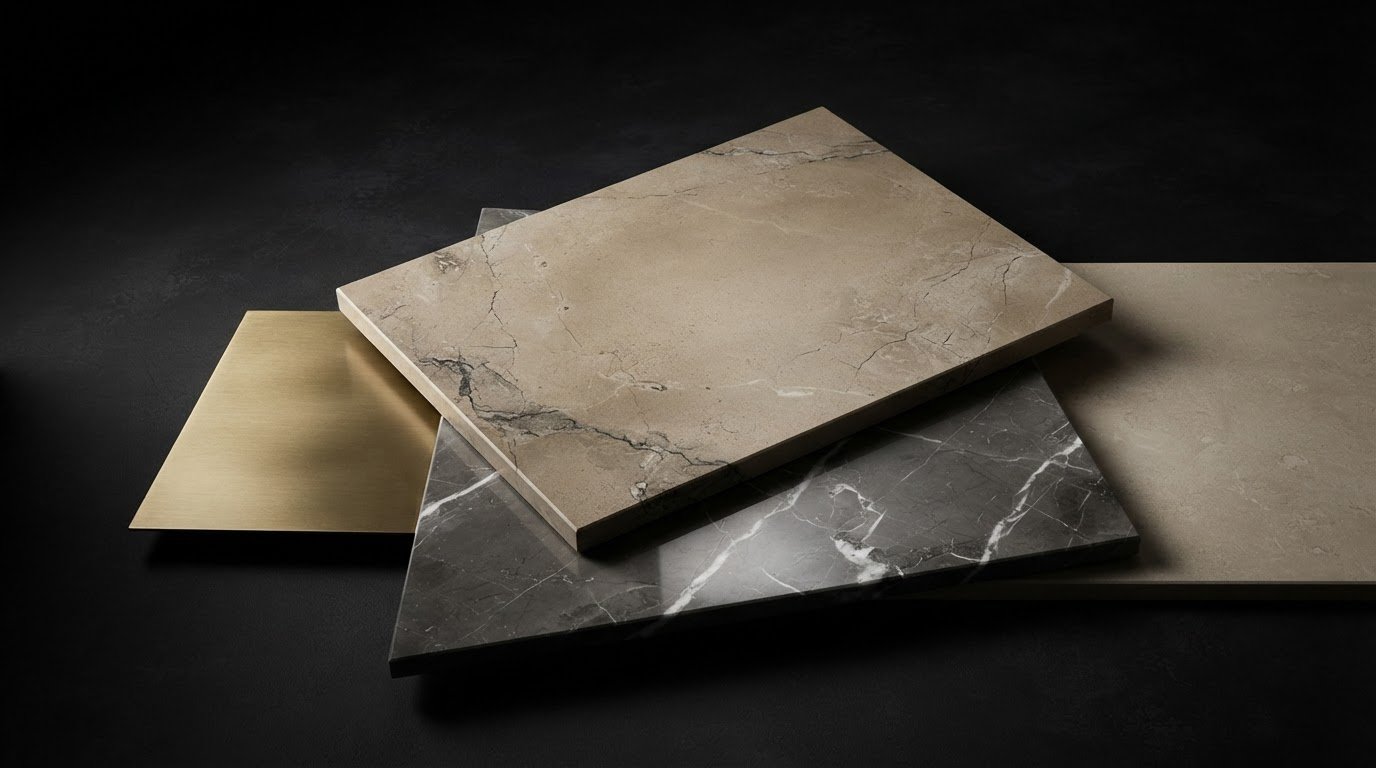
What if the charm of a vein required a little daily attention? Marble can give character to the kitchen, but it is understandable to wonder how it reacts to stains, water rings, or acidic substances. Evaluating the pros and cons of kitchen marble means comparing beauty, usage habits, and care, without expecting every slab to behave the same way. Bianco Carrara, Calacatta, and Arabescato offer distinct tones and patterns. Furthermore, the finish and characteristics of the individual slab affect its appearance and the necessary care. Therefore, when choosing, it is not enough to be guided solely by aesthetics: consider how you use the kitchen and ask what maintenance instructions apply to the selected material. In this guide, you will find the main advantages and limitations of marble, the aspects to observe on the slab, and the questions to ask before deciding. We will also see how to navigate finishes and treatments and what to ask regarding food contact suitability. The objective is to find a solution consistent with the project and your way of living the kitchen.
Key Points
- To evaluate the pros and cons of kitchen marble, compare the aesthetic effect with your daily habits.
- Observe Bianco Carrara, Calacatta, and Arabescato on the entire slab, so you can evaluate tones, contrast, and the flow of the veins.
- Consider the effect of the finish on light and surface appearance, then ask which maintenance instructions to follow.
- Clarify the characteristics of the slab, any treatments, and specific care instructions with the supplier.
- Define priorities, examine the material as a whole, and verify that it suits the project's needs.
Table of Contents
- Kitchen marble: what advantages it offers and what expectations to clarify
- Marble in the kitchen: how veins, finish, and surface influence the experience
- Pros and cons of kitchen marble: comparing with your priorities
- How to evaluate a kitchen marble slab before choosing it
- Choosing marble in the kitchen: from project evaluation to the slab
Kitchen marble: what advantages it offers and what expectations to clarify
Marble can enhance the kitchen with visual depth and a character that is difficult to reproduce, but it must be chosen with care. Background, color, and veins help define the atmosphere: a Bianco Carrara with delicate lines can provide luminosity, while a Calacatta with broader veins can become a scenographic element. The result depends on the slab and how it matches the light, furnishings, and dimensions of the space.
To understand the pros and cons of kitchen marble, look at the overall picture. Marble is a natural stone: design and characteristics can vary from one slab to another. For a geological framing of the material, you can explore what marble is. When choosing, observe the entire slab. A photograph or a small sample might not show the continuity of the veins and all tone variations.
Why marble continues to be chosen in the kitchen
Light highlights the background and shades, while veins guide the gaze and participate in the room's composition. Each slab has its own design, which can be expressive both in a classic kitchen and in a contemporary project with essential lines. This does not mean that marble is always preferable to a uniform surface: it offers a natural language, in which variations are part of the appearance.
To compare different interpretations of marble, observe the Bianco Carrara slabs and evaluate the actual design of the stone relative to the project, rather than relying solely on the variety name.
What trade-offs to consider before choosing
Contact with acidic substances, such as lemon or vinegar, can leave dullness or marks on a marble surface. Stains can also alter its appearance. The answer depends on the stone, the finish, and any treatments, so ask for specific instructions for the chosen slab rather than assuming every marble requires the same care.
Evaluate how much you use the kitchen and how much attention you are willing to dedicate to the surface. If you desire a natural look and accept that the stone may acquire signs of use, marble might meet your expectations. If instead you prefer a visually uniform appearance, ask in advance what attention is necessary and how to behave in case of stains or contact with acidic substances.
The choice depends on the balance between aesthetic yield, daily habits, and the maintenance indicated for that specific slab. Asking the supplier for information on characteristics, finish, and any treatments helps define realistic expectations before completing the project.
Marble in the kitchen: how veins, finish, and surface influence the experience
In the kitchen, marble is also evaluated up close: the design of the veins, the light on the surface, and the characteristics given by the finish matter. Being a natural stone, it can present differences in composition and structure from one slab to another. Veins and finish influence the appearance of the marble and the perception of the surface, therefore they must be considered together with the project and care instructions.
Two slabs of the same variety can differ in tone, movement, and contrast. Even a Bianco Carrara with delicate lines and a Calacatta with a more marked design can change character depending on the slab. A small sample helps orient oneself, but does not necessarily show the design as a whole: whenever possible, observe the entire slab and compare it with the expected materials and colors.
Veins and natural variations: what to observe
Examine the distribution of the veins: are they thin or broad? Is the contrast subtle or prominent on the background? Also evaluate the continuity of the design and ask yourself if it matches the desired effect. Natural and artificial light can change the perception of colors and shades, so consider the environment as a whole and not just the isolated stone. Variation is a characteristic of the material, not a defect to be eliminated.
Finish and care: why there is no single answer for every slab
A polished finish reflects more light and makes the design appear brighter. Honed is matte and gives a softer impression, with attenuated reflections. These differences help choose the visual effect, but are not enough to predict how the surface will react in daily use. To explore marble finishes, evaluate the desired yield together with the project and the characteristics of the slab.
For a specific slab, check the supplier's instructions and available technical information. Ask which products are compatible for cleaning, if the stone has received treatments, and what precautions are recommended. Instructions are not automatically the same for every variety or finish. You can also consult industry guides and specialized publications as additional reference, comparing them with the stone's specific instructions.
When evaluating the pros and cons of kitchen marble, consider the finish to define the effect you want and ask separately how to clean and maintain that slab. To compare varieties and characteristics based on the project, you can request information from the supplier MARMISAVAS, comparing them with the specific instructions of the stone.
Pros and cons of kitchen marble: comparing with your priorities
To evaluate marble in the kitchen, compare the desired effect with the frequency of use of the surface and the attention you are willing to dedicate to it. The table offers a practical guide, not a verdict valid for every case: characteristics and maintenance vary based on the variety, slab, and finish.
Priorities
Potential advantage of marble
- Attention required
- Question to ask the supplier
Veins and natural character at the center of the project
- Marble can give depth and a distinctive presence to the composition. Evaluate the entire slab: tone and veins can vary. Can I observe the specific slab and compare its design with the project?
Frequently used kitchen
- Marble can contribute to a sophisticated and tactile environment. Clarify how to clean and protect the surface, especially in case of contact with aggressive substances. What care instructions apply to this variety and finish?
Preference for a uniform-looking surface
- Careful selection can help identify a slab with visual movement compatible with the desired effect. Natural variations are not necessarily represented by a small sample. What differences in tone and vein does the chosen slab present?
Willingness to follow a maintenance routine
- The stone can maintain an expressive role in the project if its characteristics are understood in advance. Instructions depend on the specific material and any treatments. What products are compatible and what treatments have been applied?
Synthesis
Marble is more coherent when the project enhances naturalness and uniqueness and care expectations are realistic. When marble can be coherent with the project: If veins and natural character are central elements of the project, marble can give the project a visual presence in tune with the initial idea. However, it is necessary to accept the variations of the stone and consider that use may leave marks. White Carrara marble is a variety to be evaluated by observing the background and design of the individual slab, not a universal solution.
When it is advisable to reflect more carefully
If you want to minimize attention or prefer a surface that is always visually uniform, examine the trade-offs before deciding. In a heavily frequented kitchen, ask yourself how realistic it is to protect marble from potentially aggressive substances and follow care instructions. Before relying on specific performance or maintenance instructions, ask for confirmation for the slab and finish considered.
The pros and cons of kitchen marble are therefore addressed by relating aesthetic priorities and daily habits: there is no single answer valid for everyone. To explore the characteristics of the slabs based on the project, you can ask the supplier for information.
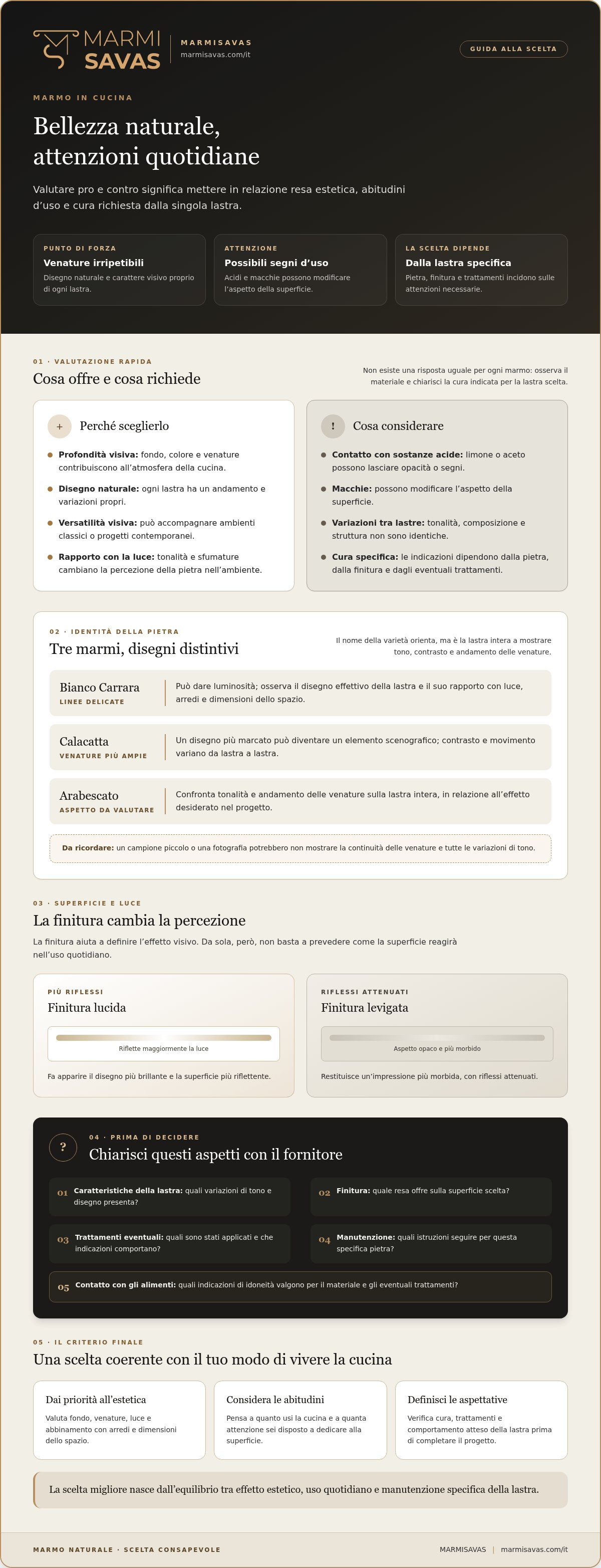
How to Evaluate a Marble Slab for the Kitchen Before Choosing It
The choice does not end with the variety name: the specific slab and how it fits into the project matter. An effective selection starts with the inspection of the slab and the needs of the kitchen. Proceed methodically: clarify aesthetic and usage priorities, observe the material, gather technical information, and verify care instructions.
Technical and Visual Criteria to Check
- Observe the slab as a whole, not just a detail or a small sample.
- Check the background, chromatic variations, distribution, and continuity of the veins.
- Evaluate whether the design corresponds to the desired effect and how it might appear with the expected light in the kitchen.
- Consider the visible characteristics of the surface and compare them with the project and surrounding materials.
To check the most concrete aspects, prepare a brief checklist:
- Color and veins: Is the contrast and movement of the design consistent with the concept?
- Surface: What finish does the slab have and what visual yield does it offer in the environment?
- Technical data: What are the thickness and characteristics declared for this slab?
- Treatments: Has a treatment been applied? Is documented information available?
- Care: What cleaning and maintenance instructions are recommended for this stone?
Do not take for granted that thickness, treatments, or behavior are the same for all varieties. Ask for data related to the slab you are evaluating and, if information is crucial for the project, verify that it is reported in the documentation or confirmed by a stone professional.
What Questions to Ask the Supplier
- Ask for the declared origin, known characteristics of the material, and current availability of the chosen slab.
- Ask which products are compatible for cleaning and what precautions to take in case of contact with substances that could mark the surface.
- If you evaluate Calacatta, you can explore available varieties through white Calacatta marble, remembering that tones and veins must be examined on the specific slab.
The right questions make the comparison on kitchen marble pros and cons concrete: they help understand not only what effect you desire, but also what characteristics and attention the material entails. To clarify the details of the slab relative to the project, contact the supplier and request relevant information.
Choosing Kitchen Marble: From Project Evaluation to the Slab
An informed choice relates the project to the concrete characteristics of the stone. After comparing kitchen marble pros and cons, reorder priorities: define the aesthetic effect, evaluate how much maintenance you are willing to follow, observe the slab, and ask for confirmation of technical and care instructions. In this way, the selection is not based solely on the name of the marble or a sample, but on compatibility with the environment and your way of living the kitchen.
From Kitchen Needs to Stone Selection
To start the comparison, describe the kitchen style, color palette, and the role the surface will have in the composition. Also clarify your expectations on maintenance: the desire for a natural design must be considered together with the willingness to follow the specific instructions of the stone. These indications help narrow down the choice, without taking for granted that a variety is suitable for every project.
Among the options to examine can be Calacatta, often characterized by more marked veins, Bianco Carrara, appreciated for luminous tones and delicate designs, and Arabescato, with a distinctive visual character. In any case, compare the actually available slabs: color, veins, finish, and declared characteristics must be evaluated on the specific material. Verify availability before associating it with a concrete application.
A Comparison with a Specialized Supplier
Comparison with the supplier can help you gather and evaluate information on the slab: declared origin, characteristics, finish, any treatments, and maintenance instructions. If an aspect is decisive for the project, ask for it to be clarified based on the information available for that specific stone. Do not transfer performance or instructions referring to another variety to a slab. MARMISAVAS supplies marble and natural stone slabs and tiles for residential and professional projects. Material evaluation can start from project needs and comparison of slab characteristics, keeping in mind that the company deals with the supply of materials.
To start a targeted comparison, prepare a description of the kitchen, desired tones, and the variety you want to evaluate. Consult with MARMISAVAS on slab selection and share your design needs to gather information on options to consider.
Choose the Slab for Your Kitchen with Awareness
Marble can give the kitchen a tactile and distinctive presence, but the choice requires balance between aesthetic yield, daily use, and care. To evaluate kitchen marble pros and cons, define priorities, observe the slab as a whole, and ask for documented instructions on finish, treatments, and maintenance. Color and veins change from one slab to another, so it is the specific material that must meet the project's needs.
Bianco Carrara, Calacatta, and Arabescato offer different visual characters to be compared with the kitchen's palette and style. MARMISAVAS specializes in the supply of natural stone slabs and tiles. Availability and characteristics must be confirmed for the slabs you are considering.
Share the project needs and varieties you want to evaluate to explore material characteristics. Contact MARMISAVAS to discuss marble slabs. With the right questions and careful evaluation, you can choose a stone in harmony with the kitchen you imagine.
Frequently Asked Questions About Marble in the Kitchen
- What are the main advantages of marble in the kitchen? Marble offers natural veins, color variations, and a tactile presence that can become a central element of the project. Each stone has its own design, so background and veins contribute to creating a distinctive composition. To choose with awareness, evaluate these qualities together with daily use and care instructions of the specific stone. Aesthetics are important, but should not be the only criterion.
- Is marble delicate for a kitchen countertop? Marble may require attention, but behavior depends on the variety, finish, and any treatments of the slab. Stains and acidic substances can alter the appearance of the surface. When evaluating kitchen marble pros and cons, ask for documented instructions on cleaning, compatible products, and maintenance. Compare them with the frequency of use of the kitchen and the attention you are willing to dedicate to the surface.
- Does marble stain or get damaged with lemon? Lemon juice, being acidic, can react with some marble surfaces and leave marks or dullness. The outcome depends on the characteristics of the stone and any treatments, so do not assume every marble reacts the same way. Before choosing, ask the supplier how to clean and protect the specific slab and what instructions to follow in case of contact with acidic substances.
- Which marble finish is most suitable for the kitchen? There is no absolute best finish: the choice depends on the desired effect and stone care instructions. The polished surface reflects more light and highlights the design; the honed one has a matte appearance and a softer visual yield. Ask the supplier what finish the slab you are evaluating has and what products are indicated for its cleaning.
- How to choose a marble slab for the kitchen? Start from the project priorities, then observe the slab as a whole: evaluate background, veins, chromatic variations, and finish. Compare the design with the kitchen palette and the expected light in the environment. A small sample can help understand the color, but does not always return the entire flow of the veins. Also ask for documented information on characteristics, any treatments, and maintenance.
- Is Calacatta marble suitable for the kitchen? Calacatta can be considered if the project features a light background and marked veins, often wide and scenographic. However, compatibility with kitchen needs is not evaluated solely by name or appearance. Examine the specific slab and ask for information on the finish, any treatments, and maintenance instructions. Tone and design can vary from one slab to another.
- How much does kitchen marble cost? The price depends on the variety and characteristics of the chosen slab, so a generic figure might not represent the right option for your project. To correctly compare materials, ask for information referring to the specific slab and also check finish and availability. Consider the cost together with aesthetic priorities and required attention: these are useful elements to evaluate kitchen marble pros and cons with realistic expectations.