Marble Selection for Large-Scale Projects: Professional Guide to Excellence in Supply 2026
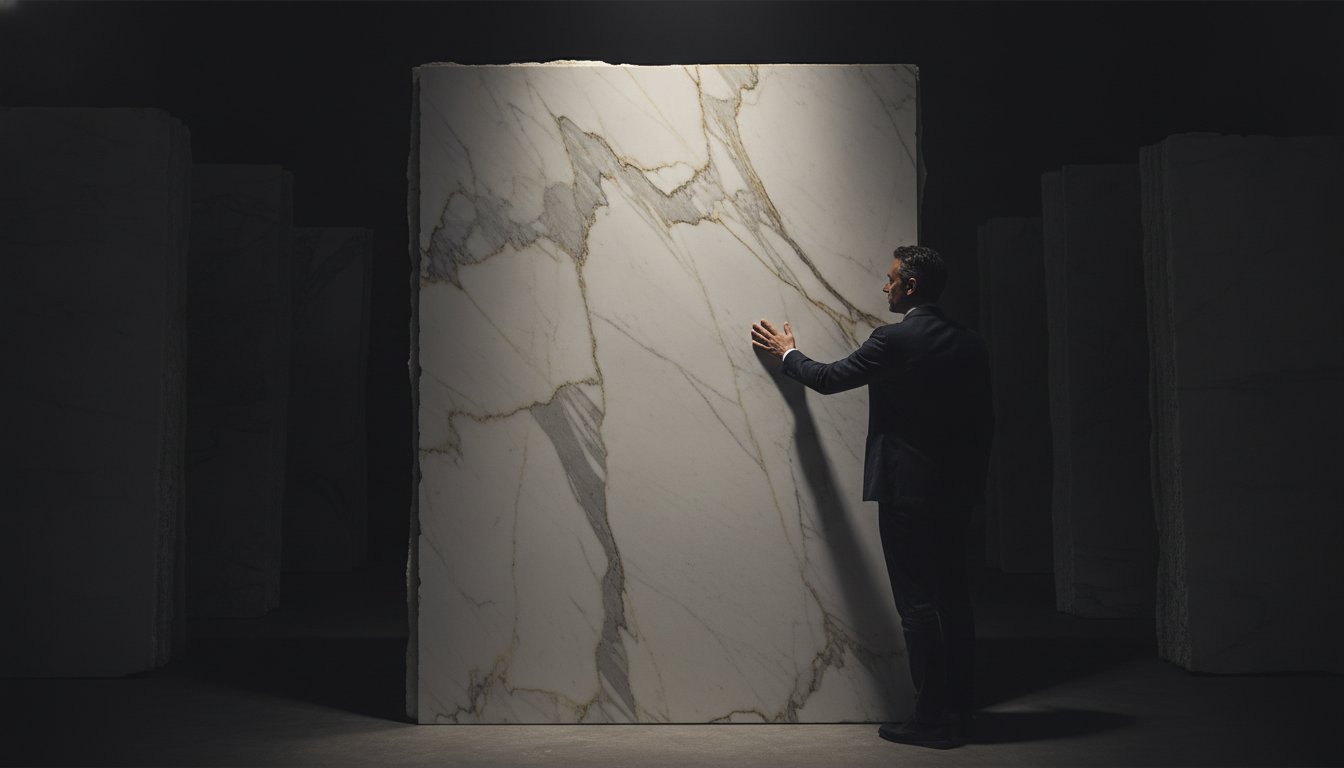
Did you know that more than 56% of architects specify natural stone in premium construction projects in 2026, yet the most complex challenge remains managing color consistency across large volumes? When addressing the process of selecting marble for large-scale projects, the difference between an ordinary result and a timeless work of art lies in the surgical precision of the supply process. We share your awareness: nothing poses a greater risk to a prestigious construction site than unexpected tonal variations between lots or a shortage of high-grade slabs when they are needed.
This strategic guide has been designed to provide architects and developers with a clear path toward excellence, ensuring aesthetic consistency and logistics that keep pace with the demanding schedules of modern construction. We will show you how to transform the complexity of natural stone into a competitive advantage through meticulous planning. We will analyze the criteria for selecting varieties such as Calacatta or Arabescato directly at the source, explore techniques for optimizing slab yield while reducing waste, and define the transparency standards required for a successful partnership. Prepare to discover how material selection can elevate every one of your design visions.
Key Points
- Understand the evolution of natural marble in the luxury contract sector to enhance the architectural identity of large developments in 2026.
- Decode the commercial grades of stone to distinguish precisely between valuable aesthetic characteristics and potential structural vulnerabilities.
- Master the strategies of selecting marble for large-scale projects, prioritizing the purchase of entire blocks to ensure impeccable visual continuity.
- Plan sourcing schedules and packaging protocols to protect the integrity of large-format slabs during every stage of transportation.
- Optimize material yield through meticulous cutting plans, reducing waste without compromising the magnificence of the veining.
Table of Contents
- The Importance of Marble Selection in Large-Scale Architectural Projects
- Technical and Quality Criteria: Beyond the Aesthetics of Natural Stone
- Ensuring Visual Uniformity: Managing Blocks and Veining
- Logistics and Sourcing: From the Quarry to the Construction Site
- Partnering with MARMISAVAS: Italian Excellence for Luxury Contract Projects
The Importance of Marble Selection in Large-Scale Architectural Projects
In the landscape of contemporary architecture in 2026, natural marble is not merely a cladding material; it represents a statement of prestige and durability. For large luxury contract projects, natural stone remains the preferred choice because it offers an authenticity that synthetic materials cannot match. The importance of marble selection lies in its ability to give a soul to extensive surfaces, transforming residential developments or hotels into design icons. However, managing thousands of square meters requires a vision that goes beyond a simple purchase. Marble is a product of the earth and is intrinsically variable. In this context, the process of selecting marble for large-scale projects becomes a strategic mission. The supplier is not merely a seller but an essential bridge between the architect’s creative vision and the geological reality of the quarry. Careful selection not only elevates the aesthetics but also increases the project’s long-term property value, ensuring a solid and timeless investment. Similarly, integrating modern, high-performance exterior materials, such as those offered by Paveezzi Composites, makes it possible to maintain outstanding quality in every construction detail while ensuring uncompromising durability and style.
Defining Aesthetic and Functional Objectives
Every surface in a large project has a specific function. High-traffic flooring in a lobby requires compressive strength and low-porosity parameters that are very different from those of decorative cladding in a lounge area. For large flooring surfaces, Bianco Carrara offers reassuring visual purity and unbeatable technical versatility. By contrast, if the objective is visual drama, Calacatta, with its bold veining, defines the space with authority. Selecting correctly means balancing beauty with technical performance, ensuring that the material responds perfectly to the stresses of its intended environment.
The Concept of Dynamic Uniformity
Perfection across large volumes does not lie in the absence of variation but in controlling variability. In a large-scale project, it is essential to educate the client about the stone’s intrinsic “personality.” Slabs are not photocopies. We speak of dynamic uniformity: an underlying chromatic consistency that embraces and enhances the natural evolution of the veining. Defining tolerance ranges before completing the process of selecting marble for large-scale projects is a step that prevents costly construction-site stoppages. Varieties such as Arabescato require particular sensitivity. Each block tells a story spanning thousands of years that, when orchestrated with professional mastery, creates a unique, harmonious visual rhythm deeply connected to nature.
Technical and Quality Criteria: Beyond the Aesthetics of Natural Stone
Marble grading is not only about aesthetics but also guarantees dimensional and structural yield for the construction site. When undertaking the complex task of selecting marble for large-scale projects, it is essential to understand that professional classification into Grade A, B, or C determines not only the cost but also the technical success of the project. Grade A marble displays crystalline purity and an almost complete absence of microfissures, ensuring superior structural strength. Lower grades, by contrast, may display natural impurities that, although they add character, require careful evaluation: a vein may be a unique aesthetic feature or, if excessively pronounced, a potential point of weakness during cutting.
Classification of Bianco Carrara and Calacatta
In the professional market, the distinction between Bianco Carrara varieties is precisely codified. Carrara C features a white background tending toward light gray with fine veining, while C/D and D selections transition toward darker and grayer tones. Choosing the correct grade directly affects the budget and the brightness of the spaces. For Calacatta marble, selection focuses on continuous veining and the purity of the white background. Chromatic continuity between slabs is the parameter that defines supply quality, especially when surfaces covering thousands of square meters must be completed without unpleasant visual interruptions.
Certifications and Technical Data Sheets
Technical documentation is the only instrument that guarantees safety within tender specifications. The technical and quality criteria must comply with international ASTM standards for parameters such as frost resistance and coefficient of friction. Every extracted block must be accompanied by complete traceability, from its quarry of origin to the numbered slab. This precision makes it possible to verify surface treatments, such as the use of specific resins or reinforcing mesh, which are essential for maintaining the integrity of large-format slabs during transportation and handling.
Another critical factor for level installation in large spaces is consistent thickness. Millimetric variations can compromise floor alignment, creating unsightly and dangerous raised edges. Ensuring supplies with minimal tolerances is an integral part of our mission. If you are defining the technical details of your next specification document, you can request a specific technical consultation to align the project’s requirements with the finest selections available at the quarry.
Ensuring Visual Uniformity: Managing Blocks and Veining
In an expansive architectural project, visual consistency is the element that transforms a series of rooms into a fluid and harmonious experience. The main challenge in selecting marble for large-scale projects is maintaining the uniformity of the background and vein movement across surfaces that may exceed one thousand square meters. To achieve this objective, sourcing entire blocks is the most effective strategy. Purchasing slabs from the same block or from blocks extracted from the same quarry bench ensures that the white tone and gray intensity remain consistent across different production lots.
By following the guidelines of the Natural Stone Institute’s Dimension Stone Design Manual, it is possible to define specifications that require rigorous management of the extraction sequence. Meticulous cutting plans make it possible to optimize material yield and significantly reduce waste, especially when selecting large-format marble flooring. Balancing aesthetic quality with economic efficiency requires in-depth knowledge of marble prices per square meter, directing the investment toward lots that minimize waste without sacrificing the project’s visual prestige.
Bookmatched Application
The mirrored effect, or bookmatching, represents the pinnacle of mastery in stone design for halls and representative spaces. This technique requires slabs to be cut sequentially and polished on opposite sides to create spectacular symmetrical patterns that appear to open like a book. Varieties such as Arabescato and Calacatta are ideal for this application because of the expressive power of their veining. In a large project, bookmatched installation requires rigorous slab numbering and an installation plan that treats every joint as part of a broader natural composition.
Dry-Lay: Pre-Installation Inspection
To eliminate all uncertainty before installation, a physical dry-lay is a crucial step in contract projects. Arranging the slabs on the floor before shipment allows project management to approve the “range sample” and verify the chromatic transition between the different areas of the construction site. Today, this practice is complemented by digital dry-lay: high-resolution scans that virtually map the entire project using dedicated software. This approach ensures that every individual slab finds its perfect position, preventing unpleasant chromatic breaks between adjacent rooms and ensuring that the final result faithfully reflects the architect’s original creative intention.
Logistics and Sourcing: From the Quarry to the Construction Site
Logistics transforms an ambitious project into a tangible architectural reality. In the complex process of selecting marble for large-scale projects, choosing between sourcing raw blocks and purchasing precut slabs represents a strategic crossroads. Opting for the entire block guarantees complete control over chromatic continuity but requires perfect synchronization with the construction schedule. It is essential to order the material sufficiently in advance to account for extraction, cutting, and finishing times, ensuring that the slabs are ready for installation exactly when the construction site needs them. This approach prevents costly delays and guarantees that the quality reviewed during sampling is the quality actually delivered. At the same time, integrating document-flow management systems such as Make It Mine makes it possible to coordinate administrative and accounting processes more effectively, ensuring that every stage of sourcing is precisely tracked.
Preparing the Bill of Quantities (BOQ)
Preparing an accurate Bill of Quantities (BOQ) is the first step toward a supply process free from unexpected issues. A detailed list prevents insufficient orders that would require additional material to be sourced from different lots, risking visual discrepancies. For varieties with complex veining, such as Arabescato, it is prudent to calculate a higher-than-average waste allowance, usually between 15% and 20%. This margin makes it possible to manage the cuts required to respect the stone’s natural pattern. At this stage, we precisely define the finishes: from polished surfaces for monumental halls to honed or brushed finishes for areas requiring softer light reflection or greater slip resistance.
Quality Control During Loading
Quality control reaches its most critical phase during loading. Every large-format slab must be inspected one final time before being placed on reinforced stands and protected with certified packaging. We follow a rigorous checklist that includes verifying the sequential numbering and structural integrity of every piece. We document the entire process with high-resolution photographs shared with the client, ensuring complete traceability and clear logistics accountability. Maintaining a safety stock of 3–5% from the same lot is a practice we strongly recommend to address accidental breakage on site without interrupting the pace of installation.
Relying on a supplier with deep roots in Italy offers unmatched advantages in terms of rapid response and direct supervision. If you are planning the supply for a new architectural development, you can request a customized sourcing plan to align marble delivery perfectly with your construction deadlines.
Partnering with MARMISAVAS: Italian Excellence for Luxury Contract Projects
MARMISAVAS positions itself as the ideal strategic partner for architectural studios and developers seeking not merely a supplier but an expert natural-stone consultant. Our identity is founded on a sophisticated balance between professional authority and passion for aesthetics. We understand that the process of selecting marble for large-scale projects concerns not only the purchase of material but also the realization of a creative vision that must endure over time. We act as a direct bridge between the quarries and the construction site, guaranteeing that every slab meets the highest standards of quality and consistency. Our experience enables us to anticipate technical challenges, offering solutions that optimize both the aesthetic yield and logistical efficiency of large contract projects.
Our Selection of White Marbles
At the heart of our offering is a curated selection of Italian white marbles, materials that define the very concept of architectural luxury. We specialize in supplying prestigious varieties such as Bianco Carrara, Calacatta, and Arabescato. We offer slabs selected for projects requiring impeccable vein continuity, an essential quality for monumental applications. Our national sourcing capabilities give us access to exclusive lots, ensuring that the background and movement of the veining remain harmonious throughout entire supplies. Whether for a large residential development or a high-end commercial facility, we guarantee materials that reflect the prestige of Made in Italy.
Services for Professionals
We support the work of architects and interior designers through dedicated services that simplify the specification and sourcing phases. We believe in transparency and continuous dialogue, which is why we offer:
- Shipment of selected samples to allow precise tactile and visual evaluation within the design studio.
- Technical assistance in choosing the most suitable commercial grade, balancing aesthetic ambitions with project budget constraints.
- Support in defining lots to ensure that selecting marble for large-scale projects takes place with a clear overall vision and without surprises during delivery.
Our mission is to transform the complexity of stone supply into a smooth and reassuring process. Choosing MARMISAVAS means working with a partner that shares your dedication to perfection and detail. If you are defining the materials for your next architectural project, we invite you to request a personalized consultation to discover how our selections can enhance your project.
Elevating Architecture Through Outstanding Natural Materials
The success of a monumental project depends not only on the beauty of the material but also on the strength of the processes that guarantee its supply. We have analyzed how integrated block management and rigorous grading control are the pillars of maintaining visual uniformity across thousands of square meters. The process of selecting marble for large-scale projects requires a vision that combines aesthetics with logistics, transforming natural variability into a harmonious and consistent rhythm. MARMISAVAS is the ideal partner for those unwilling to compromise on quality, offering privileged access to the finest selections of Bianco Carrara, Calacatta, and Arabescato.
Choosing a supplier with deep expertise in Italian sourcing means securing continuous technical support and impeccable risk management. We are ready to place our experience at the service of your creative vision, guaranteeing superior-grade materials and efficient logistics. We invite you to take the next step toward architectural perfection. Contact MARMISAVAS for your luxury marble supply, and let us begin designing together a project destined to endure over time. The magnificence of genuine natural stone awaits to give form to your most ambitious dreams.
Frequently Asked Questions
What Is the Main Difference Between Calacatta Marble and Bianco Carrara for a Large Project?
The difference lies in visual impact and budget management. Bianco Carrara offers a light-gray background with fine, diffuse veining, making it ideal for extensive surfaces requiring restraint and uniformity. Calacatta, by contrast, stands out for its exceptionally pure white background and bold, more widely spaced gray veins. In a large project, Carrara is often selected for standard flooring, while Calacatta is reserved for halls and suites to create luxurious focal points.
How Can I Ensure That the Marble Color Is Uniform Throughout the Building?
The definitive solution is to source entire blocks extracted from the same quarry bench. When undertaking the process of selecting marble for large-scale projects, purchasing slabs from the same production lot eliminates unpleasant tonal variations. It is essential to coordinate the supply so that the material comes from a contiguous extraction sequence, ensuring that the stone’s personality remains consistent in every wing of the architectural development.
What Is the Average Waste Allowance for a Supply of Veined Marble Slabs?
The average waste allowance for veined marble generally ranges between 15% and 20%. This percentage may increase if the project includes bookmatched layouts or complex geometric patterns requiring millimetric cuts to align the veining correctly. Including an adequate margin in the Bill of Quantities (BOQ) prevents the need for supplementary orders that may come from chromatically different lots and compromise the project’s final aesthetic harmony.
Can Numbered Slabs Be Requested for a Bookmatched Effect?
Certainly, sequential numbering is a standard requirement for premium supplies intended for luxury contract projects. The slabs are cut sequentially from the same block and numbered to enable the creation of the bookmatched effect. This procedure is essential for varieties such as Arabescato or Calacatta, where vein symmetry must be planned during the production phase to obtain mirrored walls or floors.
What Are the Average Delivery Times for a Contract Supply of Italian Marble?
Time frames vary according to the complexity of the sourcing process, but a contract project generally requires a period of between 8 and 12 weeks. This period includes quarry block selection, slab cutting, and surface-finishing operations. Advance planning is the key to preventing logistics delays and ensuring that the material arrives at the construction site in strict accordance with the deadlines in the project schedule.
How Does Surface Finish Affect Marble Maintenance in Commercial Spaces?
The finish determines both aesthetic performance and everyday practicality. In high-traffic commercial spaces, a honed finish is often preferred to a polished one because it conceals foot-traffic scratches and possible dull marks more effectively. A polished finish reflects more light and enhances the natural colors but requires more frequent professional maintenance to preserve its original brilliance, especially in areas subject to heavy mechanical wear.
Is Natural Marble Suitable for High-Traffic Flooring?
Yes, natural marble is excellent for high-traffic flooring when selected according to rigorous technical criteria. Varieties such as Bianco Carrara possess the density and compressive strength that have historically made them suitable for monumental flooring. It is essential to choose Grade A slabs without structural microfissures and to apply appropriate protective treatments that preserve their surface integrity without altering the natural beauty and inherent breathability of Italian stone.