Marble Slab Supply: Guide to Choosing the Supplier
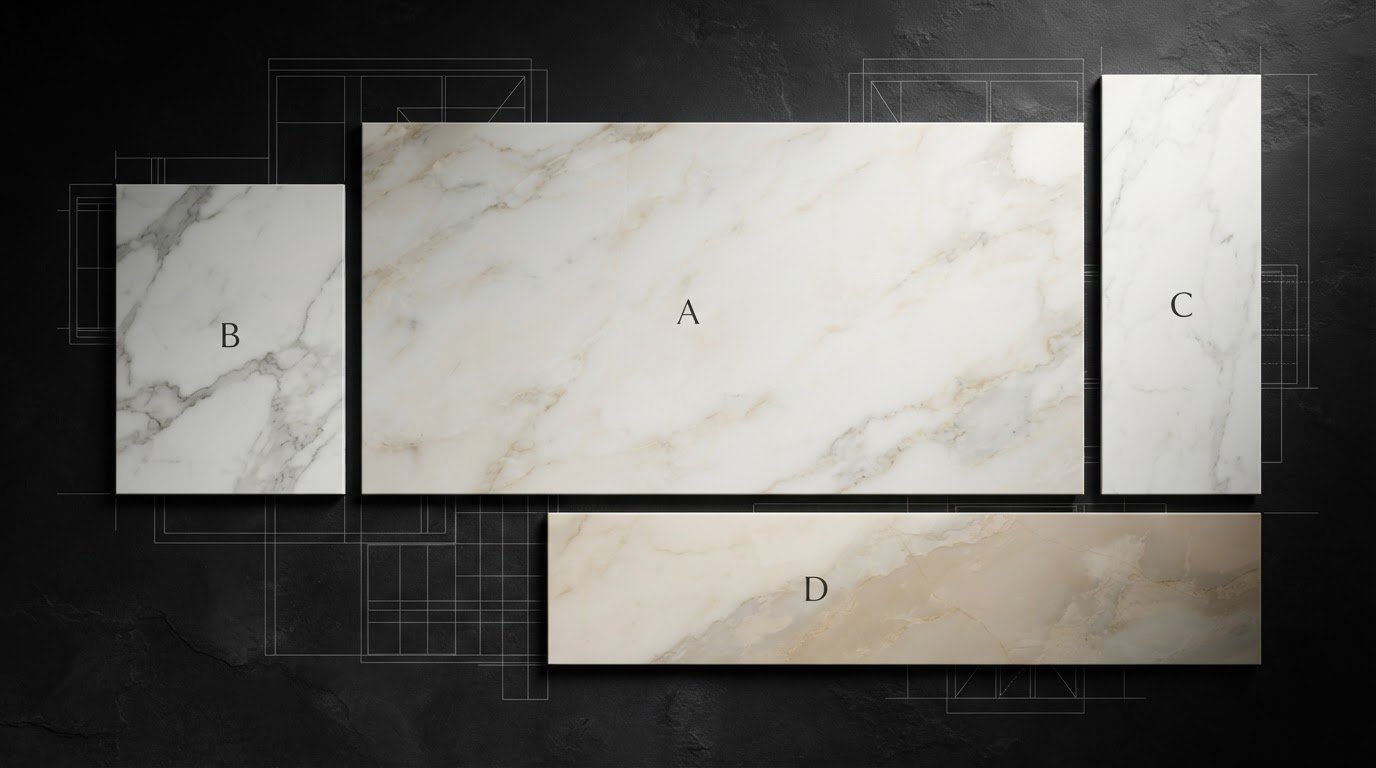
A slab of unquestionable beauty can prove unsuitable if the veining does not converse with the planned design or if the available quantity does not cover the project. In marble slab supply, the choice of material and that of the supplier proceed together: visual quality, consistency among the slabs, and clear information are essential to decide with awareness. It is useful to evaluate the background, veining, and possible defects before purchase, especially when multiple slabs must compose a harmonious surface. Format, thickness, quantity, availability, and pricing also deserve a precise comparison. A transparent dialogue helps verify that the chosen material, from Bianco Carrara to Calacatta or Arabescato, meets aesthetic and design needs. In this guide, you will discover which aspects to consider to compare suppliers, examine slabs, and ask for useful information on availability and supply conditions. MARMISAVAS specializes in the supply of natural stone slabs: knowing the proposed materials can help you set up a targeted comparison and identify options consistent with your project.
Key Points
- For a marble slab supply consistent with the project, first define material, quantity, and aesthetic requirements.
- Examine tone, veining, thickness, and visible defects in relation to the intended use of the slabs.
- Compare offers by verifying dimensions, selection, quantity, and items included in the quote.
- Prepare a clear request and share drawings or visual references if they help identify the material.
- Evaluate the materials proposed by MARMISAVAS, including Calacatta, Bianco Carrara, and Arabescato.
Table of Contents
- Marble slab supply: what to evaluate before choosing
- How to evaluate the quality of marble slabs before supply
- How to compare marble slab suppliers and offers
- How to organize a marble slab supply request
- Marble slab supply with MARMISAVAS: from material to project
Marble slab supply: what to evaluate before choosing
Marble slab supply includes the selection and procurement of material destined for a specific order. It does not necessarily coincide with installation, processing, or the creation of finished furniture. Choosing a supplier means identifying slabs suitable for the project and verifying which materials and quantities are available. A well-planned supply starts with defined requirements, continues with targeted selection, and concludes by verifying the consistency of the slabs with the project. Before submitting the request, clarifying the intended use, dimensions, and quantity helps evaluate options based on real needs, without relying solely on the impression created by a single slab.
What information to prepare to request marble slabs
Indicate the type of marble, the intended application, the required quantity and dimensions. Add references on the palette (light or dark background, desired contrast) and intensity of natural veining. These indications help guide the selection and compare proposals with homogeneous criteria. If the surface requires visual continuity, specify whether the slabs must be placed side by side in sequence or if the design must continue from one slab to another. For mirrored compositions, clarify if the bookmatching technique is relevant. Drawings and reference images, when available, can make the comparison more precise.
Natural marble and variations from slab to slab
Marble is formed through geological processes and presents natural characteristics that distinguish it from other stones; an overview of its origin and types is available under the Marble entry. Even slabs of the same material can vary in tone, distribution of veining, and intensity of the pattern. For this reason, a generic description of the color is not always enough to define the expected yield. Calacatta, Bianco Carrara, and Arabescato have different visual expressions: Calacatta is often chosen for more pronounced veining, Carrara for a luminous background and a delicate pattern, while Arabescato stands out for intricate textures. Evaluate each slab in relation to the others planned in the order. To explore light materials, consult the white marble selection. In marble slab supply, the verification of the selection should consider tone, pattern, thickness, and visible defects in relation to the intended use. Shared criteria for examining slabs help to formulate a precise request and discuss the expected visual consistency with the supplier, without assuming that natural variability can be eliminated.
How to evaluate the quality of marble slabs before supply
An accurate selection is not based on a generic judgment of "quality", it relates the observable characteristics of the stone with the project requirements. During the inspection of the slabs, it is advisable to examine each element with shared criteria and note the relevant differences. Furthermore, the aesthetic evaluation does not replace the verification of the technical information possibly required for the intended application. The main examination criteria are tone, trend and contrast of the veining, declared thickness, and presence of visible defects, evaluated with respect to the intended use and the overall composition. This summary makes the comparison clearer, without attributing to the stone performances that are not documented.
Checking veining, tone, and visual continuity
Observe the direction of the veining, their size, and the contrast with the background. A broad and marked pattern can become the focal point of a wall, while a more discreet texture can accompany a large surface without overpowering the other elements. The choice depends on the design effect, not on a universal rule. Evaluate the entire group of slabs destined for the order, not just an isolated sample. Photographs and samples guide the selection, but do not always accurately reflect the nuances and depth of the material. Ask which slabs the images refer to and what variations are present in the proposed selection. If the pattern must be reflected between adjacent elements, the bookmatch technique can help create a mirrored composition. However, verify that the veining of the slabs is suitable for this result.
Evaluating thickness and defects before selection
Ask what information on thickness is available and compare it with the requirements defined by the project. During the examination, distinguish natural variations in color and pattern from cracks, chips, or other visible marks that require clarification. Do not automatically consider them a defect: document what you observe and agree with the supplier on how to evaluate them in relation to the use.
- Record tone, veining, and visible defects for each slab.
- Note the communicated thickness and the requirements relevant to the application.
- Compare photographs, samples, and the overall selection, keeping in mind the natural variability.
To further explore practices and resources dedicated to natural stone, you can consult the Natural Stone Institute. If you wish to compare the requirements of your project with a marble selection, you can share your supply needs with MARMISAVAS.
How to compare marble slab suppliers and offers
To compare multiple proposals, start with homogeneous information. A quote referring to a specific material and a specific selection is not directly comparable to another based on different slabs, even if the type of marble has the same name. Consider together material characteristics, proposed quantity, and correspondence with the order. You can organize the comparison with a simple grid, filled out in the same way for each supplier:
- Material: indicated type and available details on the selection.
- Quantity and dimensions: number of slabs and communicated measurements, to be related to the requirement.
- Selection: references to the considered slabs and information on visual characteristics.
- Availability: declared quantity and consistency with the requested volume.
- Quote: amount and indicated items, distinguishing what is specified from what remains to be clarified.
Comparing availability, quantity, and slab specifications
Verify that the number and dimensions of the proposed slabs are compatible with the order. If the project requires a coordinated composition, ask to evaluate the planned slabs as a whole, rather than basing the choice on a single reference. Also, make sure that photographs and datasheets refer to the selection actually taken into consideration. Compare the declared availability with the necessary quantity. A wide assortment alone does not clarify which options are available for the specific request: ask which slabs can be evaluated and what information on their availability is confirmed. Do not take for granted the continuity of the selection beyond what is communicated by the supplier.
Reading the price without comparing different materials
Material and selection can affect the quote; dimensions and finish can also be relevant if specified in the offer. Before comparing the amounts, therefore, check that the proposals concern comparable slabs and that the listed items are described clearly. If details are missing, ask for a clarification instead of assuming that a certain condition is included. An isolated price is not enough to establish which proposal best responds to the project. In the evaluation of marble slab supply, compare each amount with the characteristics of the slabs, the proposed quantity, and the available information. A grid compiled with consistent criteria makes the differences between the offers more readable and helps identify the points to investigate further before choosing.  How to organize a marble slab supply request
A well-structured request facilitates the comparison between the project and the options proposed by the supplier. For a marble slab supply, it is advisable to proceed in steps: prepare an overview of the order, define the requirements, verify the available slabs, compare the information received, and clarify every detail before confirming the selection.
Prepare a clear sheet for the request
Gather the information already defined and distinguish what is yet to be decided. A summary sheet can include:
- Material: desired type of marble, for example, Calacatta, Bianco Carrara, or Arabescato.
- Project: intended application, required quantity, and necessary dimensions.
- Visual yield: background tone, intensity and direction of veining, contrast level, and expected compositional continuity.
- Elements to clarify: measurements that are still indicative, material alternatives, or aspects of the selection to be evaluated.
Attach drawings, surface diagrams, or reference images if they are available and help explain the desired composition. If you foresee a combination of multiple slabs, indicate which surfaces should converse visually. There is no need to transform a preliminary idea into a definitive specification: pointing out open points allows you to receive more targeted answers.
Verify information before confirming the selection
When you receive a proposal, check that material, quantity, and dimensions correspond to the request. Also verify that the images or information provided concern the slabs actually proposed and compare them with the agreed criteria, such as tone, veining, and visible defects. If a piece of data is missing or unclear, ask for an explicit confirmation. You can ask the supplier which slabs are available, which details of the selection are documented, and which conditions are reported in the quote. The design choice, the intended use, and the technical requirements remain to be defined with the professionals responsible for the project. In the same way, do not assume that transport, installation, or processing are included: verify if they fall within the communicated conditions, without automatically considering them part of the supply. Before proceeding, keep a summary of the request and the answers received. This way, the comparison remains traceable and expectations on the selection are more defined. To start a discussion on the supply, share your project requirements.
Marble slab supply with MARMISAVAS: from material to project
For an architectural or interior design project, turning to a supplier specialized in natural stone allows you to discuss the order starting from the project's needs. MARMISAVAS supplies slabs and tiles in marble and natural stones, with solutions for architectural and interior design applications. The availability of individual slabs and the correspondence with the requested quantities must be verified at the time of the request.
An assortment of natural stones for different project needs
Among the proposed materials are Calacatta, Bianco Carrara, and Arabescato, along with other marble varieties. The choice can lean towards a luminous background and marked veining, more delicate textures, or an intricate pattern, depending on the identity the designer wishes to give to the spaces. To consult relevant options, you can explore Calacatta marbles. MARMISAVAS deals with the supply of slabs and natural stone materials. Laying, installation, and creation of finished products are not part of the activity: precisely defining the scope of the request helps coordinate the supply with the other phases entrusted to project professionals.
Requesting information for a custom project supply
Architects, companies, and clients can present the brief indicating the material of interest, the requested volume, and the aesthetic objective. This information offers a starting point to evaluate which options to investigate further and which aspects require further verification, without taking availability or commercial conditions for granted. To start comparing the needs of the order, contact MARMISAVAS for the supply and share the project brief.
Turn project requirements into a conscious choice
A good marble slab supply arises from the meeting between project needs, visual quality, and clear information on the selection. Defining quantity and dimensions, observing tone and veining in the set of slabs, and comparing offers based on homogeneous specifications helps to choose with greater awareness. MARMISAVAS specializes in the supply of slabs and natural stones. Calacatta, Bianco Carrara, and Arabescato are some of the varieties to evaluate based on the desired palette and visual continuity. The supply concerns materials, not laying or the creation of finished products. Do you already have a brief, an indicative quantity, or an aesthetic reference? Share your project requirements and contact MARMISAVAS to start a comparison on the relevant options.
Frequently asked questions about marble slab supply
How is the quality of a marble slab evaluated before purchase?
It is evaluated by observing tone, veining, thickness, and visible defects, always in relation to the intended use and project requirements. Shared criteria help structure the check, but do not replace the technical information possibly necessary for the application. Examine the slabs as a whole, not just a sample: photographs can guide the choice, but do not represent every nuance of the natural stone.
What information is needed to request a marble slab supply?
To initiate a clear request, specify the desired material, application, quantity, and planned dimensions. Add indications on the tone, the contrast of the veining, and any visual continuity between the slabs. Drawings and reference images are useful if they help describe the composition. Also indicate which requirements are still to be defined, so the discussion with the supplier can focus on relevant information.
How do you compare quotes for marble slabs?
Compare quotes only after verifying that they concern comparable materials and selections. Compare quantities, dimensions, actually proposed slabs, and availability information. Carefully read the items in the quote and ask to clarify what is not specified, without assuming that services or conditions are included. An isolated amount does not allow a complete evaluation if the characteristics of the slabs and the quoted items are different.
Does natural marble present differences from one slab to another?
Yes. Even slabs of the same type can differ in background, tone, distribution of veining, and intensity of the pattern. This variability is part of the natural appearance of marble and can influence the yield of a surface composed of multiple elements. For projects where combination is important, ask to evaluate the slabs together and check if the available images show the proposed selection, rather than considering them an exact reproduction of the material.
What does bookmatch technique mean in marble slabs?
The bookmatch technique consists of placing consecutive slabs arranged in a mirrored way side by side, so that the veins can form a symmetrical pattern. It can enhance a wall or another visual surface, but the result depends on the natural pattern of the selected slabs. Before planning this composition, verify that the proposed elements are suitable for combination and clarify what visual references are available to evaluate its continuity.
On what factors does the price of marble slabs depend?
The quote can depend on the type of marble and the selection, as well as characteristics considered in the request, such as dimensions and finish. Even slabs belonging to the same category can have different patterns and tones, so the name of the material alone is not enough to compare amounts. Ask that the proposal clearly identifies the considered slabs or selection and which elements are included. For a reliable evaluation, compare offers with homogeneous specifications.
Does MARMISAVAS also offer laying or installation of slabs?
No. MARMISAVAS is specialized in the supply of slabs and materials in marble and natural stones; it does not offer laying or installation, nor does it create finished products. For the project, clarify separately with the professionals in charge which activities are necessary beyond the supply of the material. During the request phase, you can instead share the type of marble, quantity, dimensions, and aesthetic objective to start a comparison on the relevant options.