Marble Slabs for Flooring: Guide to Selection and Sourcing of Excellence 2026
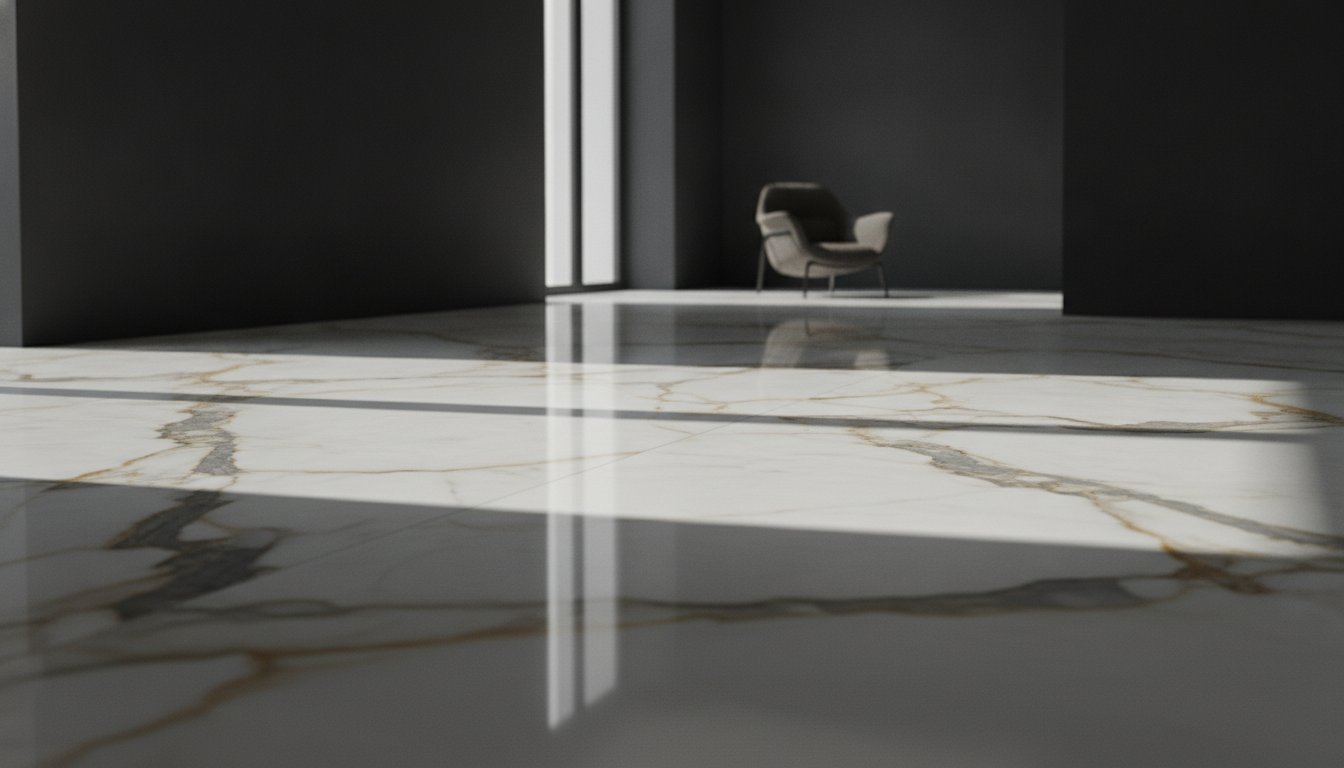
A marble floor is not just a simple walking surface, but a natural canvas that defines the soul of an entire architectural project. Choosing the right marble slabs for flooring means transforming a space into a continuous work of art, where every vein tells a story of millenary elegance and international prestige.
We perfectly understand the challenge of those who must reconcile the sublime aesthetics of natural stone with the technical demands of durability and visual consistency. Often, the fear that authentic marble is too delicate for high-traffic areas, or the difficulty of sourcing uniform lots for large surfaces, can hold back the creative ambition of the most demanding designers.
This guide will show you how to select the best Italian varieties, from Bianco Carrara to the rarest Calacatta, analyzing thicknesses and technical finishes to ensure a durable luxury floor. We will analyze the trends of excellence in sourcing for 2026, the secrets to achieving flawless visual continuity through large formats, and the UNI regulatory references for an installation that enhances the investment over time. You will discover how to transform the complexity of natural stone into an aesthetic advantage without compromise for your most ambitious projects.
Key Points
- Discover the aesthetic advantages of large format to reduce joints and visually expand the perception of luxury spaces.
- Compare the characteristics of Bianco Carrara and Calacatta to select the variety best suited to the character of your project.
- Learn to evaluate the correct thicknesses of marble slabs for flooring to ensure maximum structural stability.
- Distinguish between polished and honed finishes to find the perfect balance between visual impact and technical resistance to foot traffic.
- Optimize your construction site logistics by relying on a partner specialized in the direct sourcing of authentic Italian stone materials.
Index
- The Elegance of Marble Slabs for Flooring: Why Choose Large Format?
- The Most Requested Italian Marble Varieties for Prestigious Flooring
- Technical Characteristics: Dimensions, Thicknesses, and Treatments
- Guide to Finishes: Which Surface Treatment to Choose?
- Sourcing and Logistics: Supply of Marble Slabs with MARMISAVAS
The Elegance of Marble Slabs for Flooring: Why Choose Large Format?
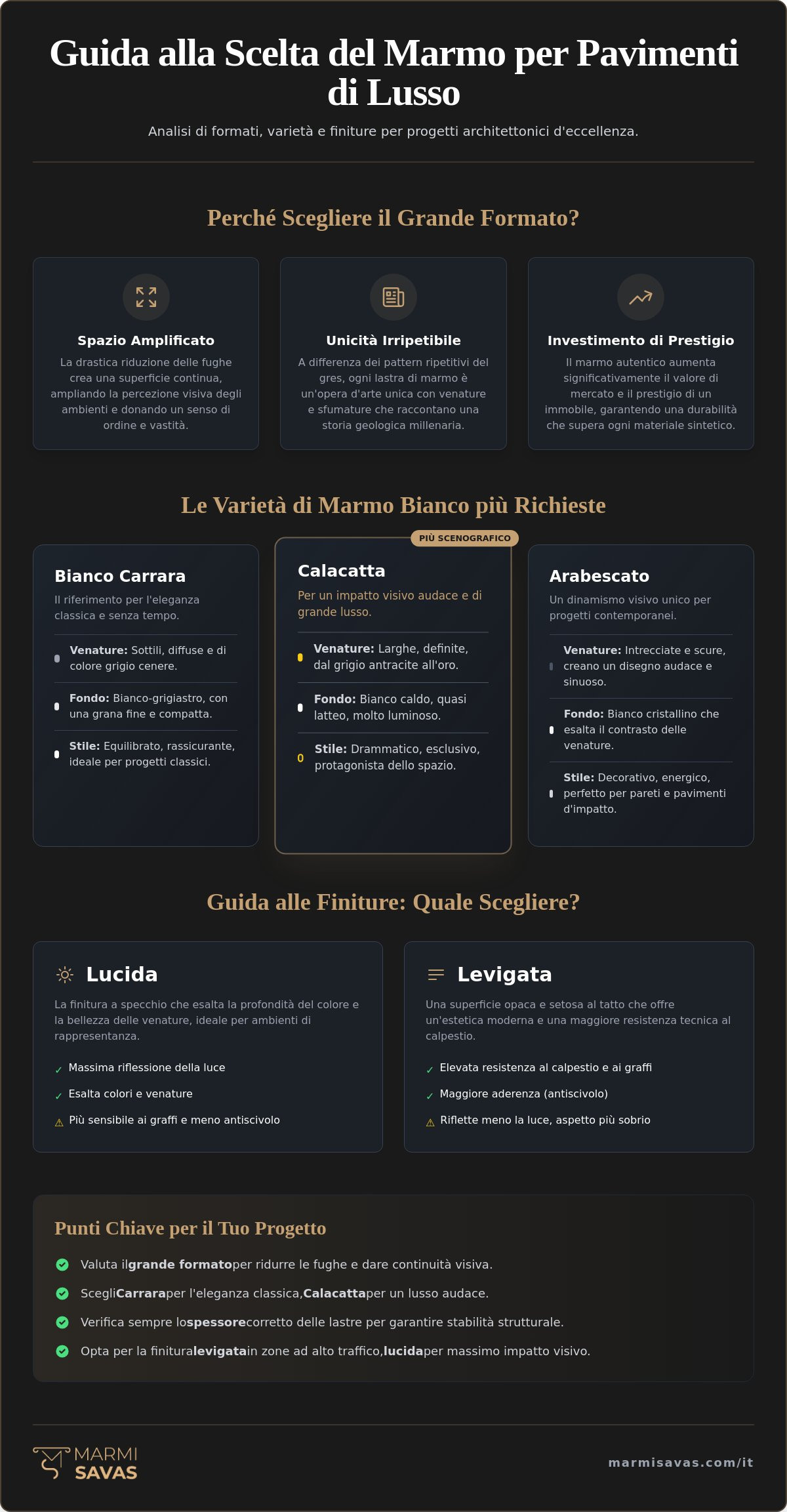
Choosing marble slabs for flooring represents a decision that transcends simple superficial aesthetics. The large format allows for a drastic reduction in the presence of joints, creating a continuous visual surface that expands the perception of spaces. While industrial imitations, such as porcelain stoneware, show repetitive and artificial patterns, natural stone offers a chromatic depth that only millennia of geological pressure can generate. Each slab is a unique fragment of history, characterized by unrepeatable veins that make every project an exclusive work of art.
Investing in authentic marble means concretely increasing the prestige and market value of the property. The durability of natural stone far exceeds that of synthetic materials, ensuring a longevity that spans generations. In addition to the economic aspect, choosing marble responds to a growing need for sustainability. As a material extracted directly from the earth, it does not require the intensive chemical processes necessary for the production of ceramics or resins, positioning itself as an ecological solution for contemporary architecture.
Slabs vs Tiles: When Large Format is Indispensable
The difference between using standard tiles and large slabs lies mainly in design freedom. Whole slabs allow for the realization of the book-match installation, where the veins of different marble varieties are placed in a mirrored pattern. This effect, known as book-matching, transforms the floors of reception halls and hotel lobbies into breathtaking natural backdrops. In private luxury residences, the large format eliminates visual interruptions, giving a sense of order and spaciousness that smaller formats cannot match.
The Role of Marble in Luxury Interior Design
The trends for 2026 see a return to material minimalism, where the quality of the material becomes the absolute protagonist. White marble slabs are particularly appreciated for their ability to reflect natural light, illuminating spaces and creating an atmosphere of refined cleanliness. The integration of marble and modern furnishings creates a sophisticated contrast that defines contemporary luxury. It is not just about covering a surface, but defining the luminous and material identity of a home, guaranteeing a result that will never go out of style.
The Most Requested Italian Marble Varieties for Prestigious Flooring
The choice of stone variety defines the visual impact and longevity of the architectural work. In Italy, we possess an unparalleled geological heritage that offers chromatic solutions suitable for every stylistic language. Choosing the right marble slabs for flooring means evaluating not only aesthetics, but also the density and porosity of the material to ensure optimal resistance to daily foot traffic. Accurate selection of the block at the source is the first step in ensuring that the final result reflects the designer's vision.
White Marbles: Calacatta, Carrara, and Arabescato
White remains the undisputed protagonist of luxury flooring. This shade guarantees unparalleled brightness and maintains the property's high resale value over time. Bianco Carrara marble is the reference point for classic projects. Its fine grain and ash-grey veins offer a balanced and reassuring surface. For those seeking a more dramatic impact, Calacatta stands out with bold veins ranging from charcoal grey to gold. Arabescato, on the other hand, introduces a unique visual dynamism, thanks to dark patterns that intertwine on a crystalline white background.
In the technical specification phase, it is essential to refer to the Natural Stone Institute standards. These international parameters help architects and contractors understand the hardness and absorption capacity of each white marble, ensuring that the selected variety is suitable for the specific intended use, whether it is a residential bathroom or the lobby of a large hotel.
Chromatic Alternatives: Black Marble and Warm Tones
Contemporary design increasingly explores the use of bold contrasts. The elegance of black marble creates sophisticated and intimate atmospheres, ideal for executive offices or minimalist living areas. The white veins that cross the dark surfaces break the monotony, adding visual depth to the flooring. If the goal is to create welcoming and organic environments, brown marble offers warm tones that integrate perfectly with wood and burnished metals.
Combining different varieties of marble slabs for flooring allows for the creation of inlays and borders that define spaces without the use of walls. This technique requires millimeter precision in the choice of slabs to ensure uniform thicknesses and material continuity. If you wish to view the rarest selections currently available in the quarry, you can request a dedicated consultation from our sourcing experts.
Technical Characteristics: Dimensions, Thicknesses, and Treatments
When designing luxury flooring, the beauty of the veins must be supported by solid technical specifications. Marble slabs for flooring are not all the same; their suitability depends on dimensions, thicknesses, and structural treatments performed during the block processing phase. The quality of a first-choice slab is recognized by the absence of micro-cracks visible to the naked eye and the regularity of the surface, factors that guarantee flawless installation and durable resistance to foot traffic.
The dimensions of the slabs depend on the original block extracted from the quarry. The commercial standard is usually around 300x180 cm, but for projects on a monumental scale, it is possible to find extra-large formats reaching 330x200 cm. Choosing the maximum format available allows visual interruptions to be minimized, but requires careful planning of site logistics. The intrinsic physical characteristics of the material, such as density and porosity, are documented in the USGS Dimension Stone data, which offer a scientific basis for understanding the compressive strength of different stone varieties.
The Ideal Thickness for Interior Flooring
In modern interior design, the 2 cm thickness represents the reference standard for floors. This measurement offers the best balance between structural resistance and manageable weight, approximately 55-60 kg per square meter. It is an ideal choice for integration with modern underfloor heating systems, as it guarantees excellent thermal conductivity. Slabs of 3 cm are chosen only in specific cases, such as areas subject to heavy loads or when the architectural design requires massive exposed edges. The relationship between thickness and breaking loads is a critical parameter that every designer must evaluate to ensure the stability of the flooring over the years.
Protective Treatments and Reinforcements
To ensure the longevity of the finest and most fragile slabs, such as Arabescato or certain selections of Calacatta, essential reinforcement processes are used. Back-mesh reinforcement consists of applying a fiberglass mesh to the back of the slab, fixed with special resins. This invisible "skeleton" prevents breakages during transport and installation. Parallelly, epoxy resin treatment allows the natural micro-porosities of the marble to be sealed, making the surface more compact and stain-resistant. Understanding the impact of these treatments is crucial to correctly analyze the Marble Prices per SQM: Complete Guide to Cost and Quality Factors 2026, as a properly treated material represents a more secure investment over time.
Finishes Guide: Which Surface Treatment to Choose?
The surface finish represents the final stage of processing, but it is the element that determines the sensory character of every environment. Choosing the correct treatment for marble floor slabs means balancing aesthetic impact with the practical needs of daily life. It is not just about aesthetics. The finish influences the perception of color, the brightness of the room and, above all, the material's response to wear and foot traffic.
While synthetic materials, such as porcelain stoneware, offer a surface resistance that irreversibly decays over time, natural marble possesses a unique characteristic: regenerability. If a slab gets scratched or loses its shine after years of use, it can be repolished and restored to its original splendor. This possibility of total restoration is what makes natural stone an eternal investment, clearly distinguishing it from industrial imitations which, once damaged, must necessarily be replaced.
Safety and Slipperiness in Marble Floors
Safety is a fundamental parameter in floor design. The polished finish, although extraordinary for its reflectivity and depth, has a lower coefficient of friction, making it potentially slippery when wet. For this reason, it is recommended to limit its use to representative areas or formal living rooms.
For entrances, high-traffic corridors, or wet areas, the honed finish represents the ideal alternative. Its satin appearance offers greater grip without sacrificing elegance, guaranteeing a safe and modern surface. For those looking for an even more natural and textured feeling, the brushed finish creates a slightly irregular texture that perfectly hides the signs of time.
The Visual Effect of Finishes on Veins
The chosen treatment can radically change the chromatic appearance of the stone. Mirror polishing enhances the contrasts and sharpness of the veins, making Calacatta marble incredibly vibrant and luxurious. Conversely, the matte honed finish tends to soften tones, offering a discreet elegance that blends perfectly with contemporary minimalist design.
Regardless of the aesthetic choice, it is essential to apply a water- and oil-repellent treatment after installation to protect the natural porosity of the marble from stains and external agents.
If you wish to evaluate the tactile performance of the different finishes in person and choose the most suitable one for your architectural project, you can contact our consultants for a dedicated selection session.
Sourcing and Logistics: Supply of Marble Slabs with MARMISAVAS
Relying on a specialized supplier means having the certainty of quality at the source. MARMISAVAS positions itself as a strategic partner for those seeking the excellence of authentic Italian marble, eliminating the uncertainties typical of generic distribution channels. We manage every phase with total transparency, following the journey of the stone from the selection of the block in the quarry to the final delivery. This approach ensures that every single slab strictly respects the aesthetic and technical standards required by the most ambitious projects. Our deep knowledge of the quarrying sector allows us to intercept the best selections, ensuring our clients access to marble lots with consistent veining and superior structural quality.
Support for Design Professionals
Architects and designers need precise tools to translate their vision into reality without surprises during the installation phase. We offer an advanced digital inspection service, sending high-resolution photo books that show the actual veins and colors of the slabs currently in stock. We provide physical samples for the creation of professional mood boards, allowing you to test material combinations and light reflectivity before the final order.
Although we do not deal with installation or on-site processing, we actively collaborate with the local marble workers chosen by the client. We provide them with all the necessary technical specifications to facilitate the final transformation of the material, ensuring that the designer's vision is respected in every detail.
Ordering Marble Slabs Nationwide
Our logistics network is structured to manage orders of any size on a national scale, from private residential projects to large contract complexes that require significant volumes. We know how critical the integrity of the material is during the transport of large formats. For this reason, we exclusively use reinforced packaging systems and specialized carriers with decades of experience in stone transport.
Ensuring the punctuality and safety of marble floor slabs is our absolute priority. Each shipment is meticulously planned to ensure that the direct supply from the source arrives on site within the established timeframes, minimizing the risk of project delays. Our reliability is the pillar on which we build lasting partnerships with design studios and construction companies throughout Italy.
Contact MARMISAVAS for a personalized consultation and discover how we can support the realization of your next architectural project with stone materials of excellence.
Towards a Timeless Architecture: Realize Your Vision with Italian Marble
Choosing marble slabs for floors is an act of conscious design that defines the value and atmosphere of every luxury space. We have explored how the large format can amplify the perception of environments and the importance of selecting appropriate thicknesses and technical finishes for the specific intended use. Whether it is the classic brightness of Bianco Carrara or the expressive strength of Calacatta, the superior quality of the stone material remains the fundamental pillar for a result that defies decades. The intrinsic regenerability of natural marble ensures an investment that grows in value over time, offering an aesthetic depth that synthetic materials cannot replicate.
As a supplier specialized in fine Italian marbles, MARMISAVAS guarantees a rigorous selection of each piece for veining consistency and structural integrity. Our dedicated support to architects and contractors ensures that every phase of sourcing is managed with technical expertise and logistical precision. Contact us today to select the perfect slabs for your next architectural project. We are ready to collaborate to transform your creative vision into a physical reality of excellence that inspires beauty and prestige.
Frequently Asked Questions about Marble Floor Slabs
- What is the price difference between marble slabs and marble tiles for floors? Whole slabs have a higher cost compared to tiles due to the complexity of extraction, handling, and selection of the material. While tiles are standardized products of smaller dimensions, marble floor slabs allow for the continuity of the veining to be maintained over large surfaces, an aesthetic added value that justifies the investment for high-profile projects. The final cost reflects the rarity of the block and the precision required to obtain uniform thicknesses on extra-large formats.
- Is marble flooring too slippery if polished? The polished finish has a reduced coefficient of friction and can be slippery if the surface is wet. For this reason, we recommend the use of mirror polish mainly in formal living rooms or representative reception halls. For areas subject to moisture or entrances, it is preferable to opt for a honed or brushed finish, which guarantees greater grip without compromising the natural elegance of the stone.
- What thickness is recommended for a marble floor slab? The thickness of 2 cm is the ideal standard for most residential and commercial indoor flooring. This measurement guarantees excellent structural strength and perfect thermal conductivity for underfloor heating systems. The thickness of 3 cm is usually reserved for specific architectural projects or areas subject to particularly heavy mechanical loads, where the stability of the slab requires a higher mass.
- Is it possible to create a 'bookmatched' floor with any marble? No, bookmatched installation requires slabs cut consecutively from the same block and characterized by distinct, directional veining. Varieties such as Calacatta or Arabescato are perfect for this mirror effect, as their natural patterns allow for the creation of symmetrical geometric designs. Marbles with patterns that are too uniform or granular do not offer the necessary contrast to enhance this specific installation technique.
- How are marble floor slabs cleaned daily? Daily cleaning requires only warm water and pH-neutral detergents specific for natural stones. Acidic products, limescale removers, or bleach must be absolutely avoided, as they could corrode the surface and dull the finish. It is essential to always dry the floor after washing to avoid water pooling and preserve the protective water- and oil-repellent treatment applied after installation over time.
- Does MARMISAVAS also install the marble? No, MARMISAVAS is an excellent supplier specialized exclusively in the sourcing and distribution of high-quality slabs. Our role is to support architects and contractors in selecting the best material directly from the source. We constantly collaborate with the trusted marble workers chosen by our clients, providing them with all the necessary technical advice for a state-of-the-art transformation and installation.
- Which marbles are the most resistant for high-traffic flooring? Compact marbles with low porosity, such as Bianco Carrara or certain varieties of gray marble, offer the best performance in high-foot-traffic contexts. Resistance depends on the mineral density of the stone, often documented in quarry technical data sheets. For contract projects, we always recommend evaluating the hardness of the material in relation to the surface finish to minimize signs of wear in the long term.
- How are marble slabs transported to prevent breakage? Transport is carried out by specialized carriers using reinforced wooden A-frames and certified anchoring systems. For more fragile slabs or those with pronounced natural veins, we pre-apply a protective fiberglass mesh backing. This structural reinforcement process ensures that the material maintains its integrity during all phases of handling, from national logistics to unloading at the construction site.