Mistakes to avoid when choosing marble: A practical guide for your project
A marble that looks perfect in a sample can look very different once installed. One of the mistakes to avoid when choosing marble is stopping at the color without considering the entire slab, the trend of the veins, and the dimensions of the surface to be covered. Each slab is different; this is why it is important to evaluate it in relation to the project before confirming the choice. The decision must combine appearance and intended use. A glossy, honed, or matte finish modifies the perception of color and light, while the application determines which technical characteristics to verify. In this guide, we see how to compare marbles like Bianco Carrara, Calacatta, and Arabescato, evaluate vein continuity, and check format and possible defects. We will also see what information to share with the supplier, from measurements to the desired visual effect, to identify slabs consistent with the project and reduce the risk of unharmonious choices.
Key Points
- Define application, dimensions, light, and visual effect before selecting the marble, so you can evaluate the color in the context of the project.
- Among the mistakes to avoid when choosing marble is evaluating a single slab without considering the vein trend on large or repeated surfaces.
- Compare background, veins, finish, and format as distinct characteristics, verifying their consistency with the intended use.
- Before ordering, check chromatic variations, thickness, and possible defects by referring to the information available on the slab.
- Share measurements, quantities, project images, and aesthetic preferences with the supplier to identify the most relevant slabs.
Table of Contents
- Mistakes to avoid when choosing marble: starting from the project, not just the color
- Veins, dimensions, and sequence: errors that compromise marble continuity
- Finish and variety of marble: how to avoid irrelevant comparisons
- Checking the quality of the slab before ordering: a useful checklist
- From marble selection to the supplier: defining next steps without surprises
Mistakes to Avoid When Choosing Marble: Starting from the Project, Not Just the Color
A marble may look ideal in a photograph and turn out different when observing the slab or placing it in the environment. Choosing it solely for a shade, without having defined the desired effect, is one of the mistakes to avoid when choosing marble. Before comparing materials, clarify where they will be used, which surfaces they will cover, and what role light and veins will play in the overall result. Marble is a natural stone, with visual characteristics that can vary from one slab to another. For an overview of its formation and different types, consult what is marble. Background and vein variations are part of the natural appearance of the material and, by themselves, do not indicate a defect. To evaluate any anomalies, however, it is necessary to observe the slab and verify the information available on the specific material.
Choosing Marble Solely Based on Color
Color is a starting point, not a sufficient criterion. Consider together the tone of the background, the intensity and trend of the veins, comparing them with the palette of the environment. Bianco Carrara is appreciated for its luminous background and delicate veins; Calacatta often features more marked and scenic veins. Even within the same type, however, the appearance can vary from one slab to another. A small sample shows a detail of the marble, not necessarily the chromatic balance and design of the entire slab. A photograph or a cutout may not render the variations and proportions visible on a larger surface. When possible, compare the depository slabs by placing them next to the project materials and observing them with a light similar to that planned in the environment.
Ignoring Application and Overall Effect
The destination guides both the aesthetic choice and the technical checks to be requested, but the two aspects must be evaluated separately. On an extensive floor, repetition or variations of veins may stand out; a vertical cladding can become a focal point, especially if the stone's design is pronounced. To delve deeper into the choice based on the surface, consult the guide to marble for flooring. A clear method helps reduce uncertainties: define application and dimensions, compare marbles based on background and veins, examine the slabs and verify technical information with the supplier or in available documentation. In this way, the choice is based on coherence between material, application, and expected visual result, not on an isolated impression.
Veins, Dimensions, and Sequence: Errors That Compromise Marble Continuity
On a large surface, the stone's design is not read slab by slab: what matters is how the veins continue, change direction, or interrupt between elements. For this reason, examining an isolated slab may not be enough if the project involves contiguous or repeated surfaces. The chosen sequence contributes to visual continuity and overall balance.
Evaluating Veins on the Entire Slab
Observe the complete slab, considering together background tones, vein density, and color variations. A discrete design can accompany an essential environment; wide and contrasted veins can instead become protagonists. There is no absolute hierarchy: the choice depends on the surface dimensions and the desired effect. To delve into the appearance of more marked veins, consult Calacatta marble. Compare the design with the actual dimensions of the cladding. A balanced vein on a single element might appear fragmented or too dominant if repeated on an extended wall. If technical bookmatch is planned, verify in advance which consecutive slabs make up the sequence and what symmetry is to be obtained. Finish also changes the perception of the surface: for an introductory comparison between polished or honed marble, consider how the visual rendering changes in different light conditions.
Neglecting Format, Waste, and Slab Matching
Before confirming selection, compare the necessary measurements with the actual ones of the slabs and with the planned cutting scheme. Format depends, vein direction and piece layout affect the amount of usable material. Avoid applying a standard waste percentage: the requirement depends on the design and cutting plan. Share with the supplier the dimensions of each surface, a diagram of the areas to be covered and visual priorities: vein continuity, symmetry, background uniformity or contrast. Agreeing before ordering the matching criterion between consecutive slabs helps define the expected result. To compare slabs with respect to design and project quantities, you can share project details with the supplier.
Finish and Variety of Marble: How to Avoid Irrelevant Comparisons
The trade name helps orient oneself, but does not alone describe the appearance of the slab that will be selected. Two marbles of the same variety can present natural differences in background and design; furthermore, finish and format modify the perception of the material. Among the mistakes to avoid when choosing marble is comparing only labels, without observing individual characteristics and their relationship to the project.
Distinguishing Calacatta, Bianco Carrara, and Arabescato
Bianco Carrara is appreciated for its luminous background and delicate veins; Calacatta is often distinguished by a light background with wider and marked signs. Arabescato can present gray veins with an articulated design. These are indicative guidelines, not descriptions valid for every slab: natural variation makes it essential to examine the specific material. To explore available varieties, consult the white marble selection.
Connecting Finish to the Desired Effect
A glossy surface reflects light more and can make contrasts and depth more evident; a honed or matte finish returns a softer image and attenuates reflections. There is no absolute best solution: evaluate the effect together with the surface destination, ambient light, and the appearance of the chosen marble. For a reliable comparison, observe samples of the finish on the intended material and, if possible, in lighting conditions similar to those of the project. Also check with the supplier for technical and maintenance instructions relevant to the slab.
To Make the Comparison Concrete, Evaluate Each Option Using the Same Parameters:
- Material: Calacatta, Bianco Carrara, or Arabescato. Ask which specific slabs are available for the requested quantity.
- Appearance: background, tone, intensity, and direction of the veins. Is the design proportional to the intended surface?
- Finish to evaluate: polished, honed, or matte. What rendering does it offer with the light and project application?
- Format: slab dimensions and necessary measurements. Is the cutting plan compatible with the selection?
This scheme avoids absolute rankings and focuses the comparison on verifiable aspects. The most consistent choice stems from the balance between design, finish, and destination, not from an isolated preference for a name or a surface.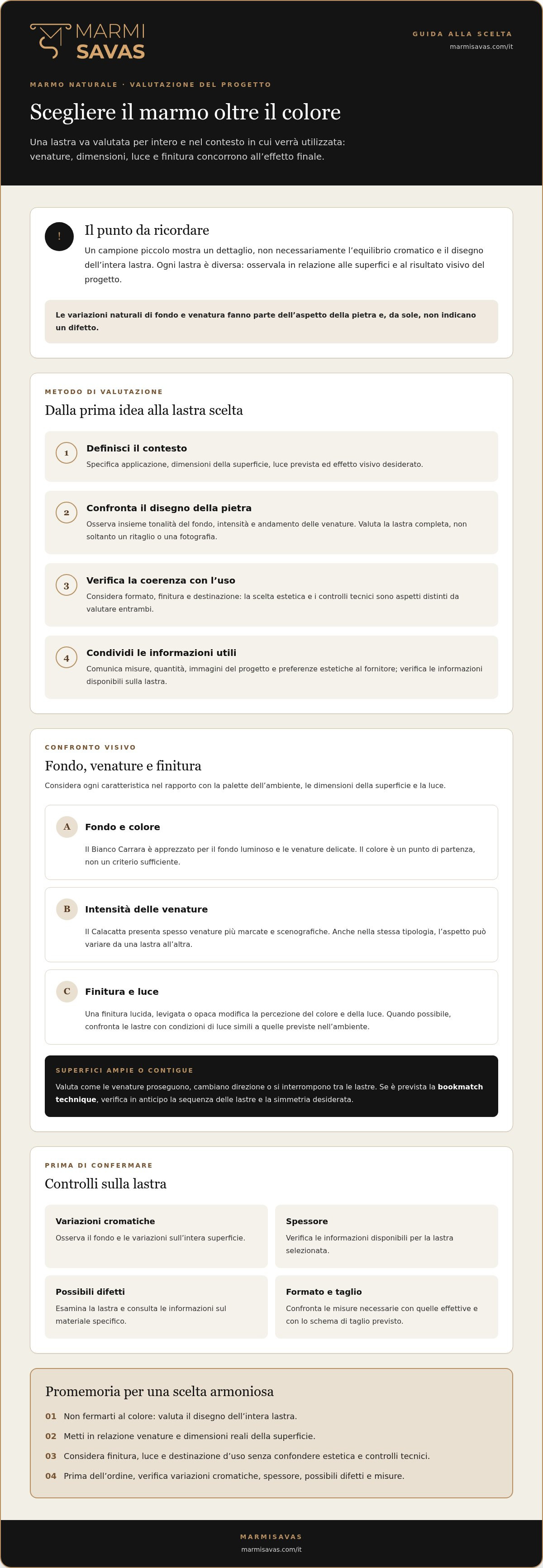
Checking the Quality of the Slab Before Ordering: A Useful ChecklistThe evaluation should not be based solely on the name of the marble or a representative photograph. Before confirming, ask for information regarding the slabs considered for the project. A visual and documentary check helps clarify natural variations, dimensions, and finish. If you have doubts about structural integrity, images are not enough: the opinion of a qualified professional is needed. When possible, examine the chosen slab in its entirety. Note aspects to be clarified and ask for confirmation of specific characteristics, without presuming that thickness or format are standard. This preventive check is an important step to avoid surprises in marble selection. Pre-Confirmation Checklist1. Material identity. Verify that the variety shown corresponds to the proposed one. Question: To which material and selection do the images or documentation refer? 2. Background and veins. Observe tones, intensity, design direction, and visible variations across the entire slab. Question: Does the slab destined for supply present variations compared to the shared images? 3. Surface and visible edges. Check for apparent marks, cavities, stains, or fissures, and ask for clarifications on aspects you cannot evaluate by sight. Question: Which characteristics are natural and which require technical verification? 4. Dimensions and thickness. Compare the available dimensions with those required by the project and have the expected thickness for the considered slabs specified. Question: What are the actual measurements and thickness of the selected material? 5. Finish and matching. Confirm the requested finish and, if multiple slabs are planned, the agreed criterion for matching them. Question: Do the finish and sequence correspond to the defined visual effect? Keep confirmations relating to material, quantity, dimensions, finish, and matching. If it is not possible to examine the slab directly, request legible images and information referring to the proposed selection. Images, however, do not replace a structural evaluation. To clarify slab details and compare project information, consult with the MARMISAVAS team. From Marble Selection to the Supplier: Defining Next Steps Without SurprisesOnce the visual language is established, translate the selection into verifiable information. Destination, design, finish, measurements, and quantity help the supplier understand the project and indicate which slabs to evaluate. Preparing this data makes the comparison more targeted and reduces the risk that an aesthetic preference remains too generic or that the selection does not meet surface requirements. Information to Send for a More Targeted EvaluationBefore requesting information, gather the essential elements of the project. Complex descriptions are not needed: precise instructions make the comparison more useful. Destination and dimensions: Indicate the application and measurements of the surfaces involved. Quantity: Indicate the anticipated requirement to verify availability for the project. Aesthetic preferences: Share reference images and describe the desired background, tone, and vein density. Finish and continuity: Report the preferred finish and the possible importance of continuous veins, special combinations, or a specific sequence. Slabs to evaluate: Ask for information regarding the availability, dimensions, and characteristics of the relevant slabs. These details allow discussing options with concrete criteria, without taking for granted that a photograph or trade name describes every slab. The final choice must refer to the material actually proposed and the project requirements. Consulting a Supplier Specialized in Natural StonesMARMISAVAS is specialized in the supply of marble, tiles, and custom solutions in marble and natural stone. Its offer includes varieties such as Calacatta, Bianco Carrara, and Arabescato, as well as marbles in other tones. Availability must be verified based on the material, quantity, and specific project: it should not be assumed that a particular slab is always available. Consulting a supplier specialized in natural stone can help clarify visual differences between alternatives and define which information to check before confirmation. Among the mistakes to avoid when choosing marble is proceeding without having shared measurements, preferences, and selection criteria. MARMISAVAS supplies the materials, while laying and site installation must be organized separately. To consult on the most relevant slabs, contact MARMISAVAS and share project details. Turn Selection Criteria into a Consistent ProjectChoosing marble with care means starting from application and desired effect, then verifying that veins, finish, format, and slab characteristics are consistent with each other. Among the mistakes to avoid when choosing marble is stopping at the color or trade name without examining the specific material and its performance on the anticipated surface. Before proceeding, gather measurements, quantities, reference images, and aesthetic preferences. Also share any requirements for drawing continuity or slab matching. This information makes the comparison with the supplier more concrete and helps clarify availability and characteristics relevant to the project. MARMISAVAS specializes in the supply of slabs and natural stone for architecture and interior design projects. Its offer includes various marble varieties, whose availability must be verified based on material and specific needs. Consult with MARMISAVAS and share your project to discuss the slabs and characteristics best suited to your needs. Frequently Asked Questions on Marble SelectionWhat Are the Most Common Mistakes in Marble Selection?The most common mistakes are choosing solely based on color or a photograph, not considering application and light, comparing materials only by name, and ignoring vein continuity. Also confirming the order without verifying the specific slabs can create expectations different from the expected result. To avoid them, define measurements and desired effect, then examine finish, format, and available material. How Is the Quality of a Marble Slab Evaluated Before Purchase?Quality is evaluated by examining the slab allocated to the project and verifying available technical information. Observe background, veins, and color variations; check dimensions, declared thickness, and finish, asking for clarifications on visible defects. A photograph does not allow certifying structural integrity: if you notice fissures or have doubts about stability, request a professional evaluation and compare indications with slab documentation. Is It Enough to Choose Marble from a Photograph or a Sample?No. A photograph or partial sample can guide the comparison, but does not necessarily represent the entire slab. Tone and vein distribution can vary naturally, and the design may look different on a large surface. When possible, observe the specific slabs proposed together with the project materials and under a light similar to the planned one. If you cannot view them directly, request legible images referring to the actual selection. How to Choose Marble Based on the Intended Use?Start from the surface to be covered and the desired visual result, then verify technical characteristics with the supplier or in material documentation. On an extensive floor, pattern repetition and combinations stand out; a vertical cladding can value wide veins as a focal point. Also evaluate light and finish, because they modify the perception of marble. Do not base the choice on aesthetic criteria separate from the project application. What Is the Difference Between Calacatta, Bianco Carrara, and Arabescato?Generally, Bianco Carrara features a luminous background with often delicate veins; Calacatta is associated with a light background and sometimes wider and marked veins. Arabescato may show a more complex grey pattern. These are indicative descriptions, not uniform characteristics of every slab: natural variations make it necessary to evaluate the specific material by observing background, contrast, and the trend of the selection's marks. How Is Vein Continuity Evaluated Between Slabs?Arrange or observe the slabs in the order provided for the surface and compare the direction, color, and trend of the veins at the joints. For a symmetrical composition, ask if the sequence provided for the bookmatch technique can be evaluated. Continuity depends on the design of the selected slabs and the cutting plan: therefore share the project schema and measurements before agreeing on combinations. What Information Should Be Provided to the Supplier Before Selecting Marble? Provide the destination, surface dimensions, indicative quantity, and reference images. Describe the preferred background and veins, the desired finish, and the need for continuity or symmetry between slabs. Ask which materials are available for the project and request details regarding specific slabs, including measurements and declared thickness. Precise information allows comparing options pertinently, without assuming unconfirmed availability or characteristics.